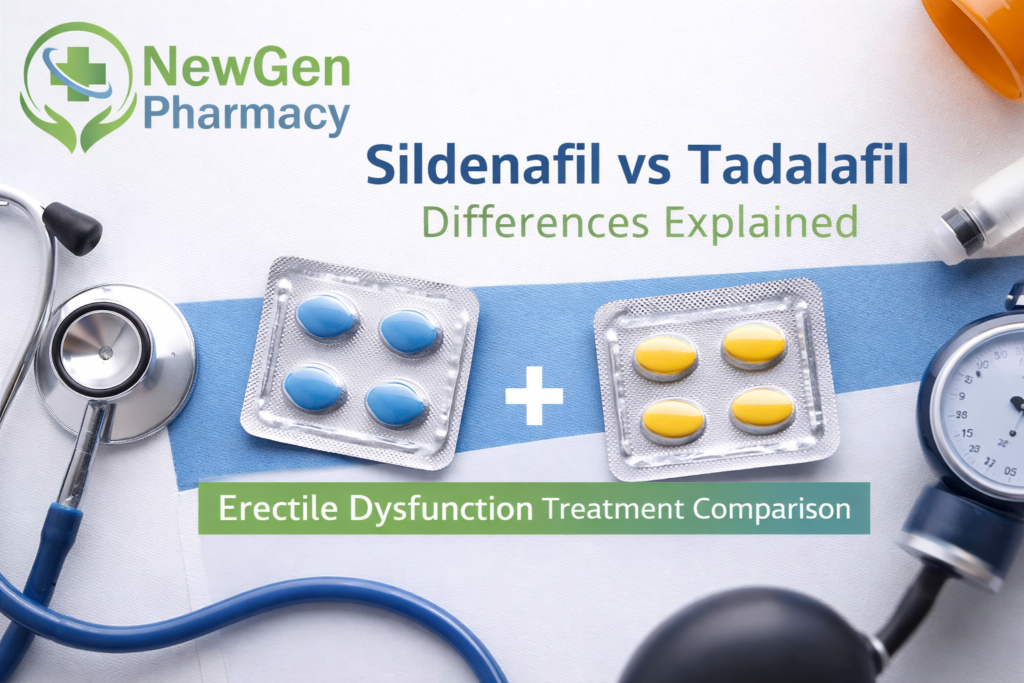
Sildenafil and tadalafil treat erectile dysfunction (ED), a common condition that affects many men in the UK. Erectile dysfunction means regularly finding it difficult to get or keep an erection firm enough for sexual activity. While occasional erection problems can happen from time to time, ongoing symptoms can affect confidence, relationships, and overall wellbeing.
Both sildenafil and tadalafil belong to a group of medicines called phosphodiesterase type 5 inhibitors, often shortened to PDE5 inhibitors. These medicines help increase blood flow to the penis during sexual stimulation. They do not increase sexual desire, and they do not cause an automatic erection without arousal. Instead, they support the body’s natural response to sexual stimulation.
Although both medicines treat the same condition, they differ in how quickly they start to work, how long their effects last, and how they fit into a person’s lifestyle. Some people prefer a shorter-acting option, while others want a medicine that lasts longer and offers more flexibility.
It is also important to remember that erectile dysfunction is not always just a sexual health issue. In some cases, it links to wider physical or psychological factors, including stress, anxiety, diabetes, high blood pressure, obesity, or cardiovascular disease. The NHS information on erectile dysfunction explains that persistent symptoms should not be ignored, especially when they happen regularly.
If you want to understand more about symptoms, causes, and support options, you can also read our guide to erectile dysfunction treatment and support.
How These Medicines Work
Sildenafil and tadalafil work in a similar way. During sexual stimulation, the body releases chemical signals that relax the blood vessels in the penis. This process allows more blood to flow into the area, which helps produce and maintain an erection. PDE5 inhibitors support this process by blocking the enzyme that would otherwise reduce that effect.
This means the medicines can improve erectile function, but only when sexual arousal is present. They do not work without stimulation, and they do not create an erection automatically. This point matters because clear expectations help patients use treatment safely and effectively.
A healthcare professional decides whether one of these medicines is appropriate by reviewing symptoms, medical history, current medicines, and any risk factors. Erectile dysfunction can have more than one cause, so treatment should not follow a one-size-fits-all approach. In some cases, patients also need lifestyle changes, treatment for an underlying health condition, or further medical review.
For trusted patient information, the NHS provides separate medicine guides for sildenafil and tadalafil. These resources explain how each medicine works, list common side effects, and show who may need extra caution.
Key Differences Between Sildenafil and Tadalafil
The main differences between sildenafil and tadalafil usually relate to onset, duration, and dosing options.
People usually take sildenafil as needed before sexual activity. For many, it starts to work within around 30 to 60 minutes. Its effects usually last for up to around 4 hours, although that does not mean an erection continues for that whole time. Instead, it creates a window during which sexual stimulation may more easily lead to an erection.
People can also take tadalafil as needed, but it lasts much longer. Its effects may continue for up to 36 hours in some people. Because of this longer duration, many people choose tadalafil when they want a wider window of opportunity and less pressure around timing. In certain cases, prescribers may also use a low-dose daily regimen when it suits the patient clinically.
Feature comparison
| Feature | Sildenafil | Tadalafil |
|---|---|---|
| Usual onset | Around 30 to 60 minutes | Around 30 minutes |
| Approximate duration | Up to around 4 hours | Up to around 36 hours |
| Dosing | Usually taken as needed | Taken as needed or, in some cases, daily low dose |
| Typical preference | Shorter treatment window | Longer flexibility |
Food can also affect how these medicines work. Sildenafil may take longer to work after a heavy meal, especially a high-fat meal. Tadalafil is generally less affected by food. That difference can matter when patients choose which option fits more easily into their routine.
Neither option is automatically better than the other. The most suitable choice depends on the individual. One person may prefer sildenafil because it suits occasional use and has a shorter treatment window. Another may prefer tadalafil because its longer duration feels less restrictive. A clinician or pharmacist will review lifestyle, medical history, current medicines, previous treatment response, and possible interactions before advising further.
If you are thinking about remote treatment, our online consultation service explains how clinical assessment works before any treatment is considered.
Important Considerations
Sildenafil and tadalafil are not suitable for everyone. Patients should only use them after an appropriate clinical assessment, especially when other medical conditions, ongoing symptoms, or interacting medicines may affect safety.
Extra caution may be needed if a person:
- takes nitrates for chest pain
- has significant heart or circulation problems
- has low blood pressure
- has serious liver or kidney problems
- has had a recent heart attack or stroke
- has been advised to avoid sexual activity for medical reasons
- takes other medicines that may affect blood pressure or interact with PDE5 inhibitors
Like all medicines, sildenafil and tadalafil can cause side effects. Common side effects include headache, flushing, indigestion, nasal congestion, and dizziness. Some people who take tadalafil also report muscle aches or back pain. Side effects are often mild, but patients should seek advice if symptoms become severe, persist, or feel unusual.
Some situations require urgent medical help. A painful erection lasting more than 4 hours needs emergency attention. The same applies to sudden chest pain during sexual activity, sudden loss of vision, or severe allergic symptoms. Clear counselling on these risks forms an essential part of responsible pharmacy care.
Patients should also avoid buying erectile dysfunction medicines from unregulated or unknown sources. Counterfeit medicines may contain the wrong ingredients, the wrong dose, or unsafe substances. In the UK, patients should use a regulated provider that carries out an appropriate assessment and clearly identifies who is responsible for clinical care. The General Pharmaceutical Council provides information about pharmacy regulation and patient safety.
At NewGen Pharmacy, patient safety comes first. If you are ready to seek confidential support, you can book a consultation with our team.
When to Seek Advice
If erectile dysfunction happens regularly, seek advice rather than ignore it. ED can point to broader health concerns, so repeated symptoms need proper assessment. In some cases, erectile dysfunction may act as an early sign of cardiovascular risk, diabetes, high blood pressure, hormonal problems, medicine side effects, or mental health factors such as anxiety or depression.
You should consider seeking medical advice if:
- erectile dysfunction happens often
- symptoms are becoming more frequent or more severe
- you have other symptoms such as low sexual desire, tiredness, chest pain, or urinary symptoms
- you have diabetes, heart disease, or high blood pressure
- you are not sure whether your current medicines may be contributing
- you feel distressed or worried about the problem
A clinical assessment may include questions about general health, current medicines, alcohol intake, smoking, stress, sleep, and relationship factors. In some cases, the clinician may also recommend blood pressure checks, blood tests, or referral to another healthcare professional.
Lifestyle measures may also improve symptoms in some individuals. These can include reducing alcohol intake, stopping smoking, increasing physical activity, losing excess weight, managing stress, and improving sleep. Erectile dysfunction often reflects overall health, so treatment may involve more than medicine alone.
How NewGen Can Help
At NewGen Pharmacy, we understand that sexual health concerns can feel personal and difficult to discuss. We provide confidential, respectful, and clinically focused support. We can help you understand the difference between sildenafil and tadalafil, explain how assessment works, and discuss what appropriate treatment pathways may look like.
Our pharmacists and clinicians can also:
- explain the main differences between sildenafil and tadalafil
- talk through timing, side effects, and important safety points
- help identify when symptoms need GP review or further investigation
- support patients with information about appropriate treatment pathways following assessment, where clinically suitable
- provide confidential, judgement-free guidance on men’s health concerns
Book your consultation: https://newgenpharmacy.co.uk/book-a-consultation/
Read more about ED: https://newgenpharmacy.co.uk/erectile-dysfunction/
Learn how online consultations work: https://newgenpharmacy.co.uk/online-consultations/
Frequently Asked Questions
What is the main difference between sildenafil and tadalafil?
The main difference is how long the effects may last. Sildenafil typically works for up to around 4 hours, while tadalafil may last for up to 36 hours in some people. This does not mean an erection lasts for that whole time. Instead, it means the medicine may help during a longer window when sexual stimulation occurs.
Does sildenafil or tadalafil work faster?
Both medicines may start to work within around 30 to 60 minutes, although this varies from person to person. Sildenafil may take a little longer to work after a heavy meal, while tadalafil is generally less affected by food.
Is tadalafil stronger than sildenafil?
Not necessarily. Sildenafil and tadalafil work in a similar way, but tadalafil lasts longer. The most suitable option depends on the individual, including medical history, lifestyle, current medicines, and whether the treatment is intended for occasional use or greater flexibility.
Can I choose between sildenafil and tadalafil myself?
A healthcare professional should help decide which option is most suitable. Although both medicines treat erectile dysfunction, they are not appropriate for everyone. A proper assessment checks for underlying health conditions, possible interactions, and overall suitability.
Should I worry if erectile dysfunction keeps happening?
If erectile dysfunction happens regularly, it is important to seek advice. Ongoing ED can link to conditions such as diabetes, high blood pressure, cardiovascular disease, anxiety, or side effects from medicines. A proper assessment can help identify whether treatment or further investigation is needed.
Compliance note: We do not publicly advertise prescription-only medicines in a promotional way. Treatment options are only discussed privately after an appropriate assessment by a qualified prescriber or healthcare professional, where clinically safe and suitable.
Author & Content Writer: Dr Naeem Aslam