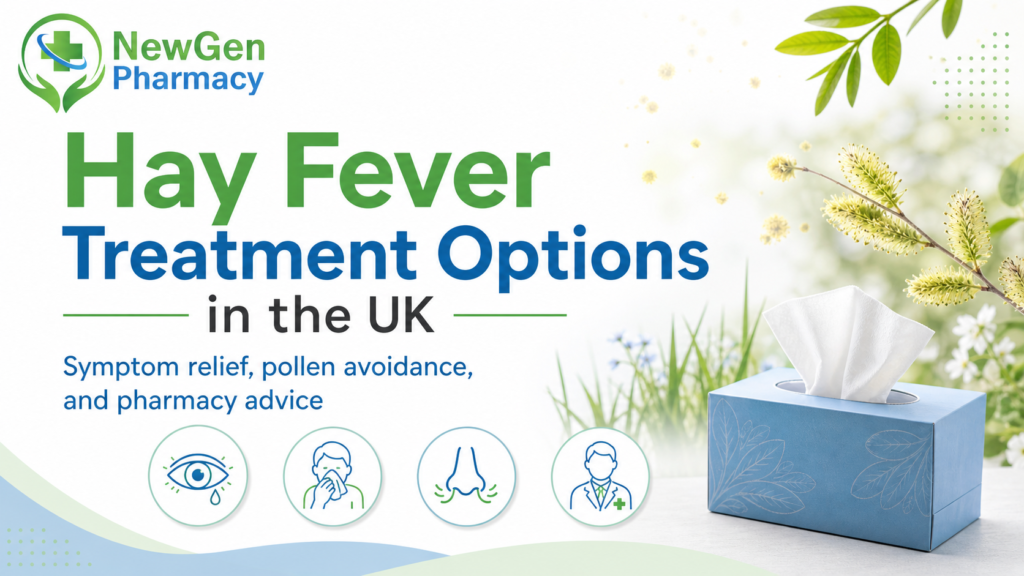
Hay fever, also called seasonal allergic rhinitis, is a common allergy caused by pollen. Symptoms often get worse in spring and summer, when tree, grass, and weed pollen levels rise. The NHS notes that hay fever can cause sneezing, a runny or blocked nose, itchy eyes, and other symptoms that affect daily life.
For some people, hay fever is a minor nuisance. For others, it can disturb sleep, reduce concentration, and make work, school, or time outdoors much less comfortable. Knowing the main treatment options can help people manage symptoms earlier and more effectively.
If you want advice from a regulated provider, NewGen Pharmacy’s online consultation service explains how private support and follow-up may work in practice. For trusted public guidance, the NHS hay fever page is one of the strongest resources to read because it covers symptoms, pharmacy treatment options, and when to seek extra help.
Common Symptoms of Hay Fever
Hay fever symptoms can vary from person to person, but they often include sneezing, a runny or blocked nose, itchy eyes, watery eyes, and an itchy throat, mouth, nose, or ears. Some people also feel tired because symptoms disturb sleep. The NHS lists sneezing, coughing, a runny or blocked nose, itchy or watery eyes, and an itchy throat, mouth, nose, or ears among the common symptoms.
Symptoms may feel mild on some days and much more troublesome on others. Pollen levels, time spent outdoors, weather conditions, and individual sensitivity all play a part. For example, windy days can spread pollen more widely, while spending time outside during high pollen periods may make symptoms worse. NICE also classifies allergic rhinitis by severity, from mild to more troublesome disease that affects sleep, daily activities, work, or school.
Hay fever can also overlap with other conditions. A blocked nose may look like a viral infection. Red, itchy eyes may seem like conjunctivitis from another cause. That is why pharmacists and clinicians usually ask about timing, triggers, and pattern of symptoms before advising treatment.
Treatment Options
A range of treatments may help control hay fever symptoms. The right option depends on the main symptoms, how often they happen, and how much they affect daily life. NICE CKS and NHS guidance both support matching treatment to the pattern and severity of symptoms.
Antihistamines
Antihistamines may help reduce symptoms by blocking the effects of histamine, a chemical involved in allergic reactions. They often help with sneezing, itching, and watery eyes. The NHS explains that antihistamines are commonly used for allergies such as hay fever, and many can be bought from pharmacies and shops.
Some antihistamines can cause drowsiness. Because of that, people who need to drive, work, revise, or stay alert should ask about non-drowsy options first. The NHS hay fever page specifically advises speaking to a pharmacist about non-drowsy antihistamines if sleepiness is a concern.
Nasal sprays
Steroid nasal sprays often help reduce inflammation inside the nose. They can be especially useful for a blocked nose and ongoing nasal symptoms. NICE CKS recommends intranasal corticosteroids as an important treatment option in allergic rhinitis, and the BNF notes that treatment for seasonal allergic rhinitis may start before the pollen season begins for people with predictable symptoms.
Nasal sprays often work best when people use them regularly rather than only when symptoms become severe. They may take a little time to reach their full effect, so starting early can help during peak pollen periods.
Eye drops
Eye drops may help relieve itchy, watery, or irritated eyes caused by pollen exposure. This can be useful for people whose eye symptoms are one of the main problems. NHS guidance says pharmacists can suggest antihistamine drops as part of hay fever treatment.
Combination treatment
Some people manage well with one product. Others need a combination, such as an antihistamine plus a steroid nasal spray, especially when symptoms are more persistent or affect both the eyes and nose. NICE CKS and NHS guidance both support using treatment based on symptom pattern and response.
If you want to understand how pharmacy support works for common seasonal symptoms, you can also visit the NewGen Pharmacy homepage and follow the most suitable service route.
Reducing Pollen Exposure
Treatment helps, but practical steps can also make a real difference. The NHS advises several self-care steps to reduce pollen exposure and lower symptom burden. These include keeping windows and doors shut as much as possible, especially when pollen counts are high, showering and changing clothes after being outdoors, wearing wraparound sunglasses, and avoiding drying clothes outside because pollen can cling to fabric.
Many people also benefit from planning ahead. Checking pollen forecasts, avoiding mowing grass, and staying indoors more during very high pollen times can all help. NICE CKS also recommends allergen avoidance measures and notes that saline nasal rinsing may help some people reduce symptoms.
These steps do not cure hay fever, but they can reduce the amount of pollen that reaches the nose and eyes. That can make pharmacy treatments work better and reduce the chance that symptoms build up through the day.
If you want more support with practical symptom management, NewGen Pharmacy’s online consultation service can help explain the next steps.
When to Seek Advice
You should seek advice if symptoms are severe, if they are not improving, if over-the-counter treatments are not helping, or if hay fever is affecting sleep, work, school, or normal daily activities. The NHS says a pharmacist can advise on hay fever and suggest the best treatments, including antihistamines and steroid nasal sprays.
You should also seek advice if you are unsure whether symptoms are due to hay fever or another condition. A clinician may need to review symptoms if they do not follow a seasonal pattern, if one side of the nose stays blocked, or if symptoms seem unusual or persistent. NICE CKS supports further review when symptoms remain uncontrolled or when another cause may be present.
A second strong external resource for this blog is the NICE CKS guidance on allergic rhinitis, which supports the treatment and referral advice in a trusted UK clinical source.
How NewGen Can Help
NewGen Pharmacy understands that hay fever can affect comfort, sleep, and everyday routines. Our team offers practical, judgement-free advice about hay fever and other common allergy concerns. We can explain what symptoms may mean, what treatment options are available, and how to reduce pollen exposure more effectively.
Our pharmacists can also:
- help you choose suitable over-the-counter hay fever treatments
- explain how antihistamines, nasal sprays, and eye drops are used
- talk through ways to reduce pollen exposure during peak season
- direct you to appropriate services if symptoms need further assessment
If you want to take the next step, you can use these links:
Book your consultation: https://newgenpharmacy.co.uk/book-a-consultation/
Read more about NewGen Pharmacy: https://newgenpharmacy.co.uk/
Learn how online consultations work: https://newgenpharmacy.co.uk/online-consultations/
Frequently Asked Questions
What is the best treatment for hay fever in the UK?
There is no single best treatment for everyone. Some people respond well to antihistamines, while others need a steroid nasal spray or a combination of products. Choice depends on the main symptoms and how much they affect daily life.
Can a pharmacist help with hay fever?
Yes. The NHS says pharmacists can advise on hay fever and suggest treatments such as antihistamine drops, tablets, nasal sprays, and steroid nasal sprays.
Do steroid nasal sprays work for hay fever?
Yes, they can help, especially for blocked noses and ongoing nasal symptoms. NICE CKS and the BNF both support intranasal corticosteroids as an important treatment option for seasonal allergic rhinitis.
How can I reduce pollen exposure?
Keeping windows closed, showering after being outside, changing clothes, wearing sunglasses, and not drying clothes outdoors on high-pollen days may all help reduce exposure.
When should I seek more advice for hay fever?
Seek advice if symptoms are severe, if they are not getting better, if pharmacy treatment is not helping, or if hay fever is affecting sleep, work, school, or daily life.
Compliance note: Treatment advice should be based on symptoms, medical history, age, other medicines, and suitability. Prescription-only options should only be discussed privately after an appropriate assessment, where clinically appropriate. This approach is in line with UK pharmacy and prescribing standards.
Author & Content Writer: Dr Naeem Aslam