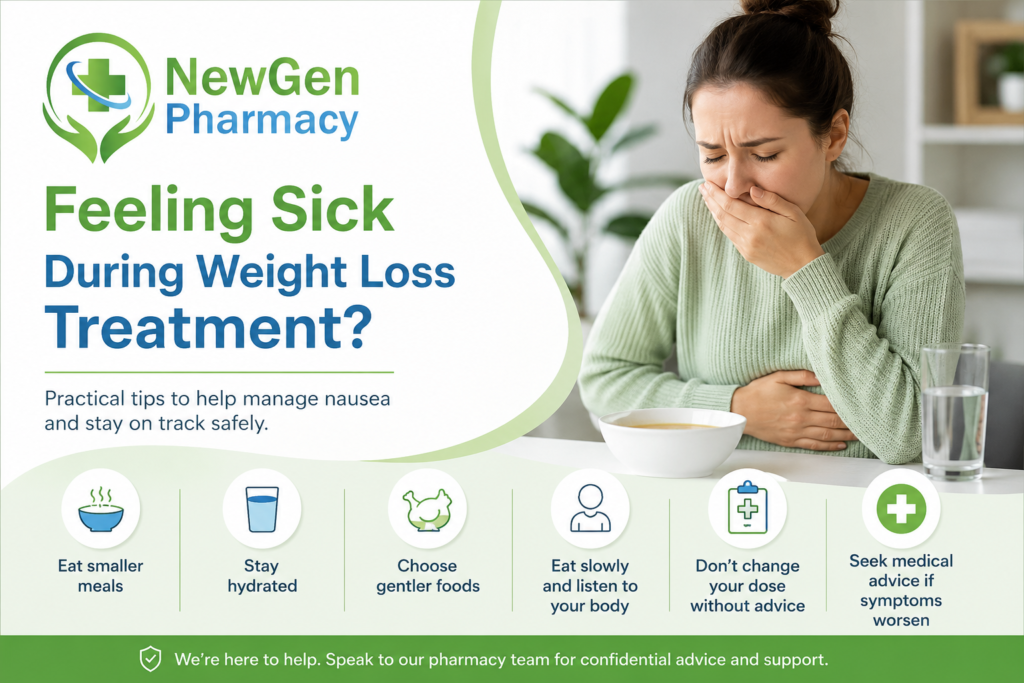
Feeling sick, nauseous, or unusually full can happen during some types of weight loss treatment. For many people, symptoms are mild and improve with small changes to food choices, meal size, hydration, and routine. For others, nausea may be more persistent and need advice from a pharmacist, prescriber, GP, or urgent care service.
This matters because weight loss treatment should support your health, not make you feel unable to eat, drink, or continue daily life. Some appetite changes may be expected during treatment, but ongoing vomiting, dehydration, severe abdominal pain, or feeling very unwell should never be ignored.
The NHS provides general advice on feeling sick and vomiting, including when symptoms may need medical help. If sickness affects fluid intake, the NHS also explains the warning signs of dehydration.
If you are using or considering treatment, NewGen Pharmacy’s guide to common side effects of GLP-1 weight loss medications may help you understand why side effects should be monitored and when to ask for support.
Why Nausea May Happen During Treatment
Some weight loss treatments can affect appetite, fullness, and digestion. This may help some patients eat smaller portions or feel less hungry, but it can also make large meals or rich foods harder to tolerate.
Nausea may be more noticeable when starting treatment, after a dose change, or after eating too much in one sitting. Some people also find that high-fat meals, spicy foods, alcohol, fizzy drinks, or eating too quickly make symptoms worse.
This does not mean every patient will feel sick. Some people have very few side effects. Others may need practical changes and pharmacy support to manage symptoms safely.
Eat Smaller Meals
One of the simplest changes that may help is eating smaller meals. If treatment makes you feel full sooner, large portions may feel uncomfortable and can increase nausea, reflux, or bloating.
Instead of forcing yourself to finish a large plate, try eating slowly and stopping when comfortably full. Some people find smaller meals spread across the day easier to manage than one or two large meals.
This should not mean skipping nutrition completely. Even smaller meals should ideally include useful nutrients, such as protein, fibre, vegetables or fruit, and enough fluids through the day.
NewGen Pharmacy’s article on what to eat while using weight loss treatment gives more practical food guidance.
Choose Gentler Foods When Symptoms Flare
If nausea is mild, bland or lighter foods may be easier to tolerate for a short period. Examples may include toast, crackers, soup, yoghurt, porridge, rice, potatoes, eggs, bananas, or simple meals that are not too greasy or rich.
Very fatty, spicy, fried, or heavy meals may worsen nausea for some people. This does not mean you must remove every enjoyable food, but it may help to reduce rich meals while symptoms settle.
Patients should also be careful with alcohol. Alcohol can affect appetite, sleep, hydration, and food choices. For some people, it may also worsen nausea or reflux.
Eat Slowly and Notice Fullness Signals
Eating quickly can make nausea worse because it is easier to eat past the point of comfortable fullness. During treatment, your usual portion size may suddenly feel too large.
Try slowing down meals and paying attention to early fullness. You may find it helpful to pause halfway through a meal and ask whether you are still hungry or simply eating out of habit.
This is not about strict dieting. It is about listening to your body and reducing discomfort while still supporting nutrition.
Stay Hydrated
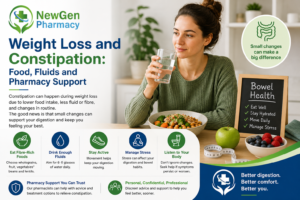
Hydration is important, especially if you feel nauseous. Some people drink less when they feel unwell, but this can increase tiredness, headaches, dizziness, constipation, and dehydration risk.
Small, regular sips may be easier than large drinks. Water is usually the best option, but other low-sugar drinks may also help with fluid intake.
You should seek advice if you are vomiting repeatedly, cannot keep fluids down, pass very little urine, feel faint, or have signs of dehydration. These symptoms need more than simple home care.
Do Not Change Your Dose Without Advice
If nausea happens, do not change your dose, repeat doses, skip doses, restart treatment, or combine treatment with other products unless you have been advised to do so by your prescriber or pharmacist.
Changing treatment incorrectly may increase side effects or make symptoms harder to manage. It may also make it more difficult for the clinical team to know what has caused the problem.
If symptoms are troublesome, contact the pharmacy or prescriber for advice. They can help review your symptoms, treatment stage, food intake, hydration, and whether further medical advice is needed.
Medicine-specific safety information should always be checked in the official patient leaflet. The electronic medicines compendium provides official patient information leaflets for UK medicines.
When Nausea Needs Medical Advice
Mild nausea may improve with practical changes, but some symptoms need urgent attention. You should seek medical help if you have severe or persistent abdominal pain, repeated vomiting, signs of dehydration, fainting, symptoms of an allergic reaction, or if you feel seriously unwell.
You should also ask for advice if nausea stops you from eating or drinking properly, if it continues after simple changes, or if it appears after a dose change and does not settle.
NewGen Pharmacy’s guide on when to stop and seek medical advice during weight loss treatment explains safety symptoms in more detail.
How NewGen Can Help
NewGen Pharmacy offers confidential consultations where patients can receive advice on weight-management treatment and side-effect support where appropriate. If you feel sick during treatment, our pharmacy team can help review possible triggers and advise on safe next steps.
Our pharmacists and clinicians can also:
provide guidance on common treatment-related side effects
explain how food choices and meal size may affect nausea
advise when symptoms need further clinical review
support patients with hydration and safety advice
signpost patients to GP, NHS 111, or urgent care when needed
If you want to take the next step, you can use these links:
Book your consultation: https://newgenpharmacy.co.uk/book-a-consultation/
Read more about weight management support: https://newgenpharmacy.co.uk/newgen-pharmacy-weight-management-treatment/
Learn how online consultations work: https://newgenpharmacy.co.uk/online-consultations/
Frequently Asked Questions
Is nausea common during weight loss treatment?
Nausea can happen with some weight loss treatments, especially when starting treatment or after dose changes. It should still be monitored, especially if symptoms are persistent or severe.
What can help mild nausea?
Smaller meals, eating slowly, avoiding very rich or greasy foods, and taking small sips of fluid may help some patients.
Should I stop treatment if I feel sick?
Do not stop, restart, or change treatment without advice unless symptoms are severe or urgent. Contact the pharmacy, prescriber, GP, or NHS 111 if you are concerned.
What foods should I avoid if I feel sick?
Some people find that large meals, fried foods, high-fat foods, spicy foods, alcohol, or fizzy drinks worsen nausea.
When is nausea urgent?
Seek medical advice if nausea is linked with repeated vomiting, dehydration, severe abdominal pain, fainting, allergic symptoms, or feeling seriously unwell.
Can nausea affect weight loss progress?
Yes. Nausea may affect meal quality, hydration, energy, and activity levels. It should be managed safely rather than ignored.
Can I take anti-sickness medicine?
Ask a pharmacist, GP, or prescriber first, especially if you take other medicines or have ongoing symptoms.
Compliance note: We do not promote prescription-only medicines publicly in a promotional way. A clinician only discusses potential treatment options privately after an appropriate assessment and only where this is safe, lawful, and suitable. UK guidance supports using weight-management medicines within a broader clinical and lifestyle plan.
Author & Content Writer: Dr Naeem Aslam