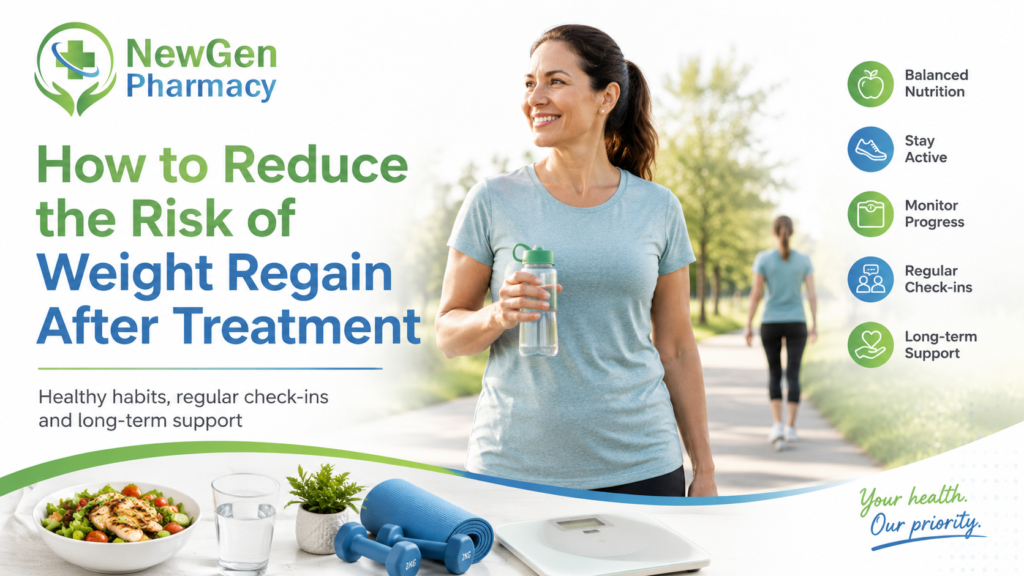
Losing weight is one part of the journey. Keeping weight off can be just as important, and for many people it can feel even more challenging.
Weight regain after treatment can happen. It may occur if appetite returns, routines become less structured, activity reduces, or old habits slowly come back.
This does not mean that weight loss was pointless. It also does not mean the patient has failed. Weight maintenance is an active phase of care. It needs planning, realistic habits, self-monitoring, and support where needed.
The NHS Better Health weight loss guidance supports practical lifestyle changes that people can repeat over time. NHS Inform’s guidance on maintaining weight loss also explains that weight maintenance is an ongoing process and that progress matters more than perfection.
If you are thinking about stopping treatment or have already stopped, NewGen Pharmacy’s article on what happens when you stop weight loss treatment can help you understand what may happen next.
Why Weight Regain Can Happen After Treatment
Weight regain can happen for several reasons. Appetite may increase after treatment stops. Portion sizes may gradually rise. Snacking may return. Activity levels may reduce.
Stress, poor sleep, alcohol, weekends, social events, and emotional eating can also affect your routine.
The body may also need fewer calories after weight loss than it did before. This means returning to previous eating habits can lead to weight regain, even if those habits feel normal.
Understanding this can help reduce blame. Maintenance is not about willpower alone. It is about creating a routine that supports your current weight, your health goals, and your lifestyle.
A good maintenance plan should feel realistic. It should not depend on perfect discipline every day.
Weight Maintenance Is a New Phase
Many people focus strongly on the weight loss phase. They plan how to start, what to eat, and how to track progress. However, fewer people plan what happens after they reach a goal or stop treatment.
This is where problems can begin. Without a maintenance plan, old routines can return gradually.
Weight maintenance needs its own structure. This may include regular meals, movement, sleep support, stress management, and follow-up where needed.
The goal is not to keep dieting forever. The aim is to build habits that support your health without feeling extreme or unmanageable.
Maintenance may feel less exciting than active weight loss, but it is just as important. It helps protect progress and supports long-term wellbeing.
Keep Regular Check-Ins
Regular check-ins can help you notice changes early. This does not mean you need to weigh yourself obsessively.
For many people, a weekly weight check is enough. Others may prefer to monitor waist measurement, clothing fit, energy levels, activity habits, or general wellbeing.
The key is to avoid waiting until weight regain feels overwhelming. Small increases are usually easier to address than larger changes.
If weight starts to rise, try to review your routine early. Look at food structure, portion size, snacking, alcohol, sleep, stress, and movement.
You may also benefit from pharmacy or clinical follow-up. This can be especially helpful if you have weight-related conditions such as type 2 diabetes, high blood pressure, sleep apnoea, or joint pain.
Maintain Protein and Fibre Habits
Protein and fibre can support fullness, digestion, and long-term eating routines. These habits matter during active weight loss and after treatment stops.
Protein options include eggs, fish, chicken, lean meat, Greek yoghurt, cottage cheese, beans, lentils, chickpeas, tofu, and tempeh.
Fibre-rich foods include vegetables, fruit, oats, wholegrain bread, brown rice, lentils, beans, peas, and potatoes with the skin on.
The NHS Eatwell Guide can help patients maintain a balanced diet. NewGen Pharmacy’s article on protein, fibre and hydration for weight loss also explains why these foundations matter.
A simple meal structure can help. Try to include a protein source, vegetables or fruit, a fibre-rich carbohydrate, and enough fluids across the day.
This approach does not need to be perfect. It simply gives your routine a strong foundation.
Build Meals That Keep You Satisfied
After treatment, some people notice that hunger feels stronger than before. A satisfying meal structure can help reduce grazing and unplanned snacking.
A balanced breakfast might include Greek yoghurt with berries and oats, eggs on wholegrain toast, or porridge with seeds and fruit.
Lunch could include soup with lentils, a chicken salad wrap, beans on wholegrain toast, or a tuna and salad jacket potato.
Dinner may include fish, chicken, tofu, lentils, or lean meat with vegetables and a sensible portion of potatoes, rice, pasta, or wholegrains.
You can still enjoy flexible meals. The aim is not restriction. The aim is to make your usual meals filling enough to support maintenance.
NewGen Pharmacy’s article on what to eat during weight loss treatment may still be useful after treatment, because the same nutrition principles can support long-term habits.
Continue Movement in a Realistic Way
Movement supports weight maintenance, mood, strength, cardiovascular health, sleep, and blood sugar control. It does not need to be extreme, but it should be regular.
Walking more, taking stairs, cycling, swimming, strength training, home workouts, gardening, or active hobbies can all help.
Strength-based activity is especially useful. It helps maintain muscle and supports long-term health. This matters because muscle supports function, mobility, balance, and daily energy use.
The NHS physical activity guidelines for adults provide useful targets and advice.
NewGen Pharmacy’s guide to lifestyle changes that support weight loss treatment also explains how activity fits into weight management.
Choose activities that fit your life. A short walk that happens most days is better than a demanding routine that stops after a week.
Plan for High-Risk Situations
Weight regain often starts during predictable moments. Holidays, stressful periods, family events, illness, poor sleep, alcohol, and busy work weeks can all disrupt routines.
Planning for these situations helps. You may decide how often to weigh yourself during holidays, what meals to keep consistent, how to manage alcohol, or how to return to routine after a difficult week.
The goal is not perfection. The goal is to avoid letting one disrupted week turn into several months of lost routine.
For example, you might decide to keep breakfast consistent during a holiday, walk each morning, or return to normal meals the day after a social event.
If weekends are a common challenge, NewGen Pharmacy’s article on weekend eating and weight loss may help you build a more flexible routine.
Avoid Returning to Old Portions
After weight loss, your body may need less energy than before. If old portion sizes return, weight may gradually increase.
This does not mean you need to count every calorie forever. It may mean staying aware of portions, eating slowly, using smaller plates if helpful, and stopping when comfortably full.
Regular meal timing can also help. Long gaps without eating may increase the risk of overeating later.
It can help to pause before second portions and ask whether you are still hungry. You can also serve meals on a plate rather than eating from packets, trays, or containers.
These small changes can reduce automatic eating without making meals feel strict.
Review Alcohol, Snacks and Takeaways
Alcohol, snacks and takeaways can all fit into real life. However, they can also make weight maintenance harder if they become frequent or unplanned.
Alcohol contains calories and may increase appetite. It can also affect sleep and make food choices harder. Takeaways may be larger or higher in calories than home-prepared meals. Snacks can add up quickly, especially when eaten while watching television or working.
A realistic plan does not need to remove these completely. It may help to decide how often you want them, choose smaller portions, or plan them rather than eat them automatically.
For example, you may choose one takeaway per week, alcohol-free drinks on some nights, or a planned evening snack rather than grazing.
The goal is to enjoy flexibility while keeping your weekly routine steady.
Sleep and Stress Management Matter
Sleep and stress are often overlooked during weight maintenance. Poor sleep can increase cravings, reduce energy, and make healthy choices harder.
Stress can trigger emotional eating, alcohol intake, skipped meals, or lower activity levels.
Maintenance plans should include realistic ways to manage these triggers. This may involve walking, relaxation, journalling, talking to someone, planning meals, or improving bedtime routines.
You do not need a perfect stress-management routine. Simple, repeatable actions can help.
If emotional eating is a major challenge, NewGen Pharmacy’s article on emotional eating and weight management may help.
If eating feels linked with distress, secrecy, purging, harmful restriction, or repeated loss of control around eating, professional support is important.
Do Not Use Extreme Dieting to Correct Regain
If weight starts to increase, some people respond with crash dieting. This can create a cycle of restriction and overeating.
Very strict dieting may also lead to tiredness, poor nutrition, constipation, low mood, and frustration.
A safer approach is to return to structured habits. Review meals, snacks, alcohol, activity, sleep, and stress. Then make small adjustments.
This might mean adding a walk, planning breakfast, reducing alcohol, improving protein intake, or returning to regular meals.
If you need more support, ask for it early. Weight maintenance works best when it is steady and realistic.
When to Seek Professional Help
Seek support if weight regain is rapid, appetite feels difficult to control, side effects continue, you are considering restarting treatment, or emotional eating feels distressing.
You should also seek medical advice if weight changes link with new symptoms. These may include swelling, breathlessness, fatigue, low mood, changes in blood sugar, or changes in blood pressure.
If you are thinking about restarting treatment, do not restart without clinical review. Your health, medicines, weight, side effects, and suitability may have changed.
A pharmacist, prescriber, GP, or specialist service can help you decide what support fits your situation.
Practical Maintenance Checklist
A simple checklist can help you stay on track after treatment.
You may want to review:
- Am I eating regular meals?
- Do my meals include protein and fibre?
- Am I drinking enough fluids?
- Has snacking increased?
- Has alcohol intake changed?
- Am I moving regularly?
- Am I doing any strength-based activity?
- How is my sleep?
- How is my stress level?
- Have weekends or social events changed my routine?
- Do I need a follow-up review?
- Am I noticing early weight regain?
This checklist should support you, not judge you. Use it as a tool to spot patterns and take action early.
How NewGen Pharmacy Can Help
NewGen Pharmacy offers confidential consultations where patients can discuss weight management support, maintenance planning, and treatment questions where appropriate.
Our pharmacy team can help patients understand weight regain risk and practical ways to reduce it.
Our pharmacists and clinicians can support patients with long-term weight management advice, explain why weight regain can happen after treatment, advise on nutrition, movement, hydration, and routine, support patients considering reassessment where appropriate, and signpost patients to GP or urgent care if symptoms need review.
If you want to take the next step, you can book a confidential consultation with NewGen Pharmacy.
You can also read more about NewGen Pharmacy’s weight management support and how our online consultations work.
Frequently Asked Questions
Is weight regain common?
Yes. Weight regain can happen, especially if appetite returns, old habits resume, or follow-up support stops. A maintenance plan can help reduce this risk.
How often should I weigh myself?
Many people find weekly checks useful. Daily weighing may be misleading because weight naturally fluctuates due to fluid balance, bowel habits, hormones, food volume, and activity.
What habits matter most after treatment?
Regular meals, protein, fibre, hydration, movement, sleep, stress management, and early action if weight starts rising are all important.
Can I restart treatment if I regain weight?
Possibly, but you need a new clinical assessment. Do not restart treatment without advice from a prescriber or pharmacist.
How do I stay motivated?
Focus on health, energy, mobility, routine, confidence, and small wins rather than only the number on the scale.
Should I follow a strict diet after treatment?
Not usually. A realistic routine that you can maintain is usually safer and more effective than a strict short-term diet.
What should I do if regain starts?
Review your routine early. Look at portions, snacks, alcohol, activity, sleep, stress, and whether you need professional support.
Does maintenance mean I have to diet forever?
No. Maintenance should not feel like constant dieting. It should focus on repeatable habits that support your health and help you notice changes early.
Final Thoughts
Weight regain after treatment can happen, but it is not a personal failure. It is a common challenge in long-term weight management.
The best approach is to plan ahead. Regular check-ins, meal structure, protein, fibre, hydration, movement, sleep support, stress management, and early action can all help.
Maintenance is not about perfection. It is about building a routine that supports your health most of the time.
If you feel unsure or notice weight starting to rise, NewGen Pharmacy can help you review your options and take safe next steps.
Compliance note: This article provides general information only. It does not promote prescription-only medicines publicly in a promotional way. A clinician or prescribing pharmacist can only discuss suitable treatment options privately after an appropriate assessment and only where treatment is safe, lawful, and clinically appropriate.
Author & Content Writer: Dr Naeem Aslam