Tracking weight loss progress can be helpful, but it can also become stressful if you rely only on the number on the scale. Many patients feel motivated when the number goes down, then discouraged when it stays the same or rises slightly.
This is understandable. However, body weight naturally changes from day to day. Fluid balance, salt intake, bowel habits, hormones, sleep, stress, exercise, and meal timing can all affect the scale. A small increase does not always mean you have gained body fat. It may simply reflect normal body changes.
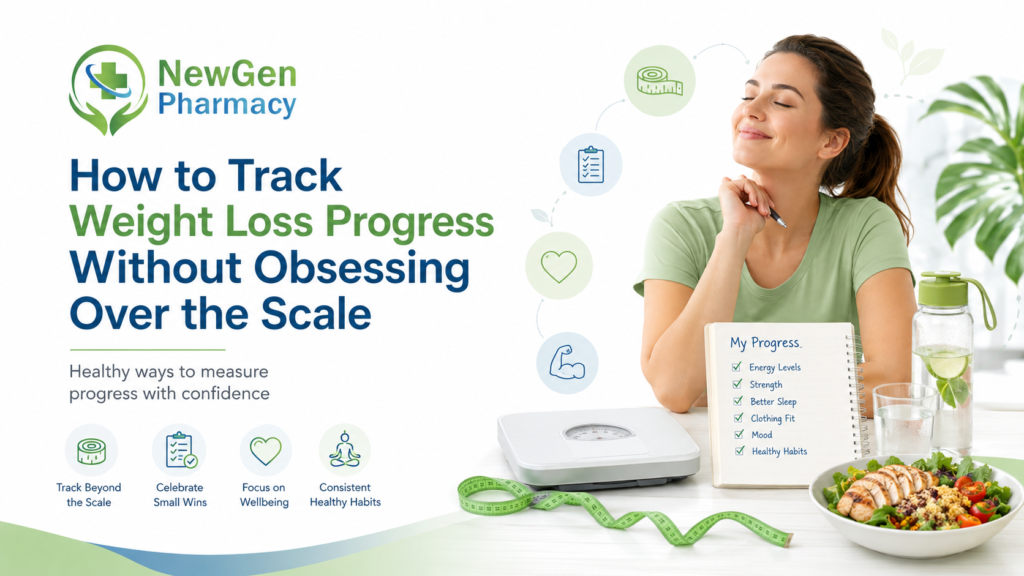
Healthy weight management should support your wellbeing. It should not make you anxious, guilty, or obsessed with daily weighing. A better approach is to track progress in several ways, including energy, clothing fit, appetite, waist measurement, activity levels, confidence, and health improvements.
If you are using weight management treatment, it is also important to understand that results vary. Some people see changes quickly. Others lose weight slowly and steadily. Both patterns can still be meaningful.
NewGen Pharmacy’s guide on how long it may take to see results can help you understand why progress does not look the same for everyone. You may also find our article on weight loss that lasts useful if you want a more balanced, long-term approach.
Why the Scale Does Not Tell the Full Story
The scale measures total body weight at one moment in time. It does not show the full picture.
Your body weight includes fat, muscle, water, food in the digestive system, and other normal body contents. This means your weight can move up or down even when your overall progress is still moving in the right direction.
For example, you may weigh more after a salty meal because your body holds more water. You may also weigh more if you are constipated, tired, stressed, close to a menstrual period, or recovering from exercise.
These short-term changes can feel frustrating, but they are normal. They do not always show true fat gain.
This is why it helps to look at trends over time rather than daily changes. A single weigh-in should not decide whether your plan is working.
Why Daily Weighing Can Increase Anxiety
Some people like weighing daily because it helps them feel accountable. For others, it can become stressful.
Daily weighing can make normal changes feel like failure. If the number rises by a small amount, you may feel tempted to restrict food, skip meals, over-exercise, or give up completely.
This can create an unhealthy cycle. You may start judging your whole day by one number. That can affect mood, confidence, food choices, and motivation.
Weight management should not make you feel trapped by the scale. Tracking should support you, not control you.
If daily weighing makes you anxious, consider weighing once a week instead. Choose the same day, same time, and similar conditions each week. For example, you might weigh on a Monday morning after using the toilet and before breakfast.
This gives a clearer trend and reduces unnecessary stress.
Look at Weekly and Monthly Trends
Weekly and monthly trends are usually more useful than daily changes. They help you see the bigger picture.
A helpful approach is to record your weight once per week and look at the pattern over four to eight weeks. This can show whether weight is generally moving down, staying stable, or increasing.
Some weeks may show little change. That does not automatically mean your plan has failed. Weight loss rarely happens in a straight line.
You may lose weight one week, stay the same the next, then lose again later. This pattern can happen even when you are following your plan well.
If progress stops for several weeks, it may be time to review your routine. NewGen Pharmacy’s article on why weight loss plateaus happen explains why progress can slow and what you can review safely.
Track Waist Measurement
Waist measurement can be a useful way to track progress beyond the scale. Some people notice changes in waist size even when the scale moves slowly.
This can happen because body composition, fluid levels, and digestion can affect weight. Clothing fit and waist measurements may show changes that the scale does not clearly show.
To measure your waist, use a soft tape measure. Measure around the middle of your body, usually around the level of your belly button. Try to measure at the same time of day and in the same way each time.
You do not need to measure every day. Once every two to four weeks is enough for many people.
Avoid pulling the tape too tight. The aim is to track a trend, not force a lower number.
Notice How Clothes Fit
Clothing fit is another simple way to track progress. You may notice that trousers feel looser, a shirt fits more comfortably, or clothes feel better around the waist.
This can be encouraging because it reflects daily life. It may also feel less stressful than relying only on numbers.
Choose one or two items of clothing that you can use as a reference. Try them on every few weeks. Notice how they feel rather than judging yourself harshly.
Clothing changes may happen slowly. That is okay. Small changes can still show progress.
Many patients find this method helpful because it focuses on comfort, confidence, and real-world changes.
Track Energy and Daily Function
Weight loss progress is not only about appearance or body weight. It can also show up in how you feel.
You may notice that you have more energy, walk more easily, sleep better, feel less breathless, or move with more confidence. These changes matter.
Some patients also notice that stairs feel easier, joints feel less strained, or daily tasks feel less tiring.
These improvements can be easy to miss if you focus only on the scale. Try writing them down when they happen.
For example, you might record:
- “I walked for 20 minutes today.”
- “My work trousers feel more comfortable.”
- “I had more energy after lunch.”
- “I slept better this week.”
- “I chose a balanced meal instead of skipping lunch.”
These notes can remind you that progress is broader than weight alone.
Monitor Appetite and Eating Patterns
If you are using weight management treatment, appetite changes may form part of your progress. You may feel fuller sooner, snack less often, or feel more in control around food.
However, treatment does not replace healthy routines. It should sit alongside balanced meals, hydration, movement, sleep, and behaviour change.
Tracking appetite can help you understand your habits. You might notice whether you feel hungry at certain times, whether stress affects eating, or whether weekends change your routine.
This can help you make practical changes. For example, you may realise that you need more protein at lunch, more fluids during the day, or a planned evening snack to avoid late-night grazing.
If you feel that progress is slower than expected, NewGen Pharmacy’s article on what to do if you are losing weight slowly on treatment may help you review common factors safely.
Track Habits, Not Just Results
One of the best ways to reduce scale anxiety is to track habits. Habits are actions you can control more directly than weight.
Useful habits may include drinking enough water, eating regular meals, including protein, choosing fibre-rich foods, walking, sleeping better, reducing alcohol, or planning meals.
Tracking habits helps you see effort even when the scale is slow. It also helps you build consistency.
For example, you could track:
- Protein with most meals
- Two portions of fruit or vegetables daily
- A daily walk
- Enough fluids
- A regular bedtime
- Reduced snacking
- Planned meals
- Less alcohol during the week
You do not need to track everything. Choose two or three habits that matter most to your current goal.
This approach can feel more positive because it focuses on progress you can repeat.
Use Progress Photos Carefully
Progress photos can help some people see changes that they may not notice day to day. However, they are not right for everyone.
If photos make you feel anxious, critical, or upset, you do not need to use them.
If you do use photos, take them in similar lighting, clothing, and posture every four to six weeks. Avoid checking them daily. Body changes usually become clearer over time.
Photos should be used as one tool, not as a way to judge yourself harshly.
If you prefer not to take photos, clothing fit, waist measurement, energy levels, and health markers can still provide helpful information.
Pay Attention to Health Markers
For some patients, health markers may be more important than weight alone. These may include blood pressure, blood sugar, cholesterol, sleep quality, mobility, or joint pain.
If you have a long-term condition such as type 2 diabetes, high blood pressure, heart disease, sleep apnoea, or joint problems, your GP, nurse, pharmacist, or specialist team may help monitor your progress.
Do not change prescribed medicines because you are losing weight unless a healthcare professional tells you to do so.
Weight management should support overall health. It should not lead to unsafe medicine changes, dehydration, extreme dieting, or ignored symptoms.
If you are unsure what to monitor, ask a healthcare professional for advice.
Understand Normal Weight Fluctuations
Normal weight changes can happen for many reasons. These include fluid retention, constipation, exercise, hormones, stress, sleep, salt intake, alcohol, and meal timing.
For example, strength training can cause temporary water retention as muscles recover. A salty takeaway can also increase water weight for a day or two. Constipation can make the scale appear stuck.
These changes are not the same as gaining body fat overnight.
Understanding this can reduce panic. It can also stop you from making extreme changes after one higher weigh-in.
If constipation or side effects are affecting your progress, speak to the pharmacy. Persistent symptoms should be reviewed rather than ignored.
Avoid Punishing Yourself After a Higher Weigh-In
A higher weigh-in can feel disappointing. However, the response matters.
Try not to punish yourself by skipping meals, cutting food too aggressively, or over-exercising. These reactions can increase hunger, reduce energy, and make weight management harder.
A better response is to return to your normal routine. Eat balanced meals, drink fluids, move your body, and sleep well.
Ask yourself what may have affected the reading. Did you eat later than usual? Was the meal salty? Are you constipated? Did you sleep badly? Have you been stressed? Are you close to your period?
Sometimes the answer is simple. Sometimes there is no clear reason. Either way, one reading does not define your progress.
What to Do If Progress Slows
If your progress slows for several weeks, review your routine calmly. Do not assume treatment has failed.
Start with the basics. Look at portion sizes, snacks, alcohol, takeaways, movement, sleep, stress, hydration, and bowel habits.
Small changes can make a difference. You may need to walk more, improve meal planning, add protein, increase fibre, reduce alcohol, or manage weekend eating more consistently.
If you are using treatment, do not change your dose without advice. Contact the pharmacy or prescriber if you are unsure what to do.
A plateau can be frustrating, but it can also be a useful signal. It may show that your plan needs a review rather than a complete restart.
When Tracking Becomes Unhelpful
Tracking should support your health. It should not make you feel trapped, guilty, or anxious.
You may need to step back from tracking if you weigh yourself many times a day, feel distressed by normal changes, skip meals after a higher reading, avoid social events because of the scale, or feel your mood depends on your weight.
You should also seek support if weight management becomes linked with severe restriction, purging, loss of control around eating, intense fear of food, or distress around body image.
In these situations, stricter tracking may not be the right answer. Speaking to a GP, pharmacist, mental health professional, or specialist service may be safer.
Weight management should protect your physical and mental wellbeing.
A Balanced Tracking Routine
A balanced tracking routine does not need to be complicated.
You might choose:
- Weekly weight check
- Monthly waist measurement
- Clothing fit review every few weeks
- Two or three habit goals
- Notes on energy, sleep, appetite, and movement
- Pharmacy or clinical check-ins when needed
This gives you a wider view of progress. It also reduces the pressure on one number.
You can adjust this routine to suit your needs. Some patients like more structure. Others do better with less tracking and more focus on habits.
The best method is one that supports consistency without increasing anxiety.
How NewGen Pharmacy Can Help
NewGen Pharmacy offers confidential consultations and pharmacist-led weight management support where appropriate after clinical assessment.
Our team can help patients understand how to track progress in a healthier way, why scale changes happen, and when progress may need review.
Our pharmacists and clinicians can support patients with realistic expectations, treatment information, side-effect guidance, lifestyle advice, and signposting when further care is needed.
If you want to take the next step, you can access pharmacist-led weight management support through NewGen Pharmacy.
You can also book a confidential consultation or learn more about how online consultations work.
Frequently Asked Questions
How often should I weigh myself?
Many people find weekly weighing more helpful than daily weighing. It reduces stress and gives a clearer trend over time.
Why does my weight change every day?
Daily weight can change because of water, salt, food volume, constipation, hormones, exercise, stress, and sleep. These changes do not always mean fat gain.
What else can I track besides weight?
You can track waist measurement, clothing fit, energy, sleep, appetite, activity, mood, health markers, and daily habits.
Are progress photos useful?
They can help some people, but they are not essential. If photos make you anxious or self-critical, choose other methods instead.
What should I do if the scale stops moving?
Review your food habits, portions, activity, sleep, stress, hydration, alcohol, and bowel habits. You can also read about why weight loss plateaus happen.
Is slow progress still progress?
Yes. Slow progress can still support long-term health and may be easier to maintain than very rapid changes.
Should I weigh myself every day during treatment?
Not necessarily. Daily weighing can create anxiety for some patients. Weekly tracking may be more balanced.
When should I ask for help?
Ask for help if progress has stopped for several weeks, side effects affect your routine, you feel unwell, or tracking is causing distress.
Final Thoughts
Weight loss progress is not only about the number on the scale. The scale can be useful, but it does not show the full picture.
Waist measurement, clothing fit, energy, movement, appetite, sleep, health markers, and daily habits all matter. These signs can help you see progress even when weight changes slowly.
A balanced tracking routine can improve motivation without creating anxiety. Focus on trends, not daily changes. Track habits, not only results. Seek support if progress feels confusing or if tracking starts to affect your wellbeing.
NewGen Pharmacy can help patients understand realistic progress, safe treatment support, and healthier ways to track results over time.
Compliance note: This article provides general information only. It does not promote prescription-only medicines publicly in a promotional way. A clinician or prescribing pharmacist can only discuss suitable treatment options privately after an appropriate assessment and only where treatment is safe, lawful, and clinically appropriate.
Author & Content Writer: Dr Naeem Aslam