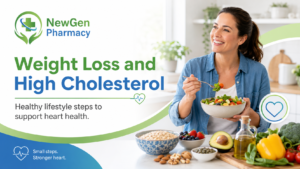
High cholesterol is common, and many people only discover it after a blood test. It usually does not cause symptoms on its own, but it can increase the risk of heart and circulatory problems over time.
Weight management can support cholesterol and heart health for some patients. Gradual weight loss, healthier food choices, regular activity, and suitable medicines may all help reduce cardiovascular risk when used in the right way.
Cholesterol is not only about body weight. Age, family history, genetics, smoking, alcohol, diabetes, blood pressure, thyroid problems, kidney disease, activity levels, diet, and some medicines can all affect cholesterol.
A safe plan should look at the whole person. Crash diets and quick promises rarely support long-term health. Instead, steady lifestyle changes often work better because patients can continue them in everyday life.
If you are concerned about both weight and cardiovascular risk, NewGen Pharmacy’s guide to heart health and weight loss explains how weight, blood pressure, lifestyle, and heart health can connect.
What is cholesterol?
Cholesterol is a fatty substance in the blood. Your body needs some cholesterol to build healthy cells and make important hormones. Problems can develop when certain types become too high.
Many people hear about “good” and “bad” cholesterol. Low-density lipoprotein, often called LDL cholesterol, can contribute to fatty deposits inside blood vessels when levels rise too much.
High-density lipoprotein, often called HDL cholesterol, helps carry cholesterol away from the arteries. This is why healthcare professionals often describe HDL as “good” cholesterol.
Triglycerides are another type of blood fat. Raised triglycerides can also affect heart health, especially when they appear alongside higher weight, type 2 diabetes risk, lower activity levels, or higher alcohol intake.
The NHS guide to high cholesterol explains cholesterol, testing, and treatment options in a clear patient-friendly way.
Why high cholesterol matters for heart health
High cholesterol can contribute to fatty build-up inside the arteries. Over time, this build-up may make blood vessels narrower and less flexible.
Narrower arteries can increase the risk of heart attack, stroke, angina, and peripheral arterial disease. This risk usually develops over time, which is why early checks and lifestyle support matter.
Cholesterol is only one part of cardiovascular risk. A clinician may also consider blood pressure, smoking, diabetes, age, sex, ethnicity, kidney function, family history, and previous heart problems.
This wider view helps healthcare professionals decide whether lifestyle changes, medicines, or further checks may be needed. NICE guidance on cardiovascular disease risk assessment and lipid modification explains how clinicians assess risk and consider cholesterol-lowering treatment.
For many patients, cholesterol can feel confusing at first. The main message is simple: heart health often improves most when diet, movement, weight, smoking status, alcohol intake, blood pressure, and medicines are reviewed together.
How weight loss may affect cholesterol
Weight loss may help improve cholesterol for some people. This can be especially relevant when higher weight sits alongside increased waist measurement, high blood pressure, insulin resistance, or type 2 diabetes risk.
Safe weight loss can support the way the body uses fats and sugars. Some patients may see improvements in triglycerides, non-HDL cholesterol, blood pressure, blood glucose, sleep, energy, and mobility.
Results vary from person to person. Weight loss does not guarantee normal cholesterol, and some people with a healthy body weight still have high cholesterol because of genetics or another medical reason.
Familial hypercholesterolaemia is one example. This inherited condition can cause high cholesterol from a young age and may need specialist assessment and treatment.
A realistic plan should include medical review and blood testing where appropriate. Lifestyle changes can help, but they do not replace prescribed medicines when a clinician has recommended them.
NewGen Pharmacy’s guide to healthy weight loss explains why steady, sustainable changes are safer than extreme dieting.
Diet changes that may support cholesterol
Food choices can affect cholesterol and heart health. The aim is not to follow a perfect diet. A better goal is to build meals you can repeat most days.
Reducing saturated fat can help many people lower cholesterol. Saturated fat appears in foods such as fatty cuts of meat, butter, ghee, cream, cheese, pastries, cakes, biscuits, and some processed foods.
You do not need to remove every favourite food. Smaller portions, less frequent intake, and simple swaps can make the plan easier to maintain.
Replacing saturated fats with unsaturated fats may help more than simply choosing very low-fat foods. Unsaturated fats appear in olive oil, rapeseed oil, nuts, seeds, avocado, and oily fish.
The British Heart Foundation guide to reducing high cholesterol gives practical advice on diet, activity, and cholesterol management.
Protein, fibre and hydration
Protein, fibre, and hydration can make weight management feel easier. These areas may also support a more heart-friendly eating pattern.
Protein helps with fullness and supports muscle maintenance during weight loss. Useful options may include fish, chicken, eggs, low-fat yoghurt, tofu, beans, lentils, chickpeas, and lean meat.
Fibre is especially important for cholesterol. Soluble fibre, found in foods such as oats, beans, lentils, peas, fruit, and some vegetables, can support healthier cholesterol levels.
Higher-fibre meals can also help people feel fuller for longer. This may reduce grazing and make portion control easier.
Hydration matters too. Thirst can sometimes feel like hunger, and dehydration may affect energy, concentration, and activity levels.
NewGen Pharmacy’s guide to protein, fibre and hydration explains how these habits can support safer weight management.
Activity, cholesterol and heart health
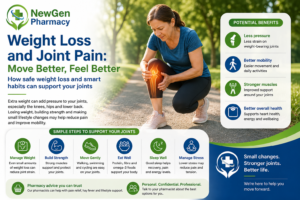
Regular physical activity can support cholesterol, blood pressure, blood sugar control, mood, sleep, and weight management. It can also improve heart and lung fitness.
You do not need intense exercise to start. Walking, cycling, swimming, dancing, gardening, resistance bands, or chair-based activity can all help depending on your ability and health needs.
The NHS physical activity guidance for adults encourages regular movement and muscle-strengthening activities where suitable. Patients who are inactive should start gradually and build up.
A simple first step might be a 10-minute walk after one meal each day. Once that feels easier, you could increase the time, pace, or number of walks.
Speak to a GP or suitable healthcare professional before starting a new exercise plan if you have chest pain, severe breathlessness, dizziness, recent heart symptoms, or complex medical needs.
Weight loss, cholesterol and medicines
Some people improve cholesterol through lifestyle changes alone. Others need medicines as well, especially when cardiovascular risk is higher or cholesterol remains raised.
Statins are commonly used cholesterol-lowering medicines. A clinician may recommend them after reviewing your overall cardiovascular risk, blood test results, medical history, and preferences.
Other lipid-lowering medicines may suit certain patients. This can apply when statins are not suitable, side effects occur, or cholesterol targets are not reached.
Taking medicine does not make lifestyle changes unnecessary. Diet, activity, stopping smoking, reducing alcohol, managing weight, and controlling blood pressure can still support heart health.
Do not stop prescribed cholesterol medicine without speaking to a healthcare professional. If side effects or concerns develop, ask for advice. A clinician can review the dose, timing, alternative options, or other possible causes.
Weight management treatment and cholesterol
Some patients ask whether weight management treatment can help cholesterol. The answer depends on the individual.
Weight management treatment is not a cholesterol medicine. For eligible patients, it may support weight loss as part of a wider lifestyle plan.
When patients lose weight safely and maintain progress, some may notice improvements in cholesterol, blood pressure, blood glucose, waist measurement, mobility, and general wellbeing.
Treatment is not suitable for everyone. A clinician must review medical history, current medicines, BMI, weight-related health risks, previous attempts, contraindications, side effects, and safety factors.
NewGen Pharmacy’s weight management consultation can help eligible patients understand whether support may be suitable after a confidential assessment.
Lifestyle changes that support long-term progress
Lifestyle changes work best when they fit real life. A plan that feels too strict may become difficult to maintain after the first few weeks.
Helpful changes may include meal planning, cooking more at home, reducing sugary drinks, choosing higher-fibre foods, eating more vegetables, improving sleep, reducing alcohol, and becoming more active.
Small steps can still make a difference. You might add oats at breakfast, take a short walk most days, swap butter for an unsaturated spread, or choose fruit instead of biscuits more often.
NewGen Pharmacy’s guide to lifestyle changes explains how everyday routines can support weight management treatment and long-term results.
When to get your cholesterol checked
High cholesterol usually has no symptoms, so testing matters. A cholesterol test can measure total cholesterol, HDL cholesterol, non-HDL cholesterol, LDL cholesterol, and triglycerides, depending on the test used.
You may receive testing through your GP surgery, an NHS Health Check, or another healthcare setting. Adults aged 40 to 74 in England may receive an NHS Health Check if they meet the criteria.
Some people need checks earlier. This may apply if they have diabetes, high blood pressure, kidney disease, previous cardiovascular disease, or a family history of early heart problems.
Ask for advice if close relatives had high cholesterol, heart attack, stroke, or heart disease at a young age. This could suggest inherited risk and may need further assessment.
When to seek medical advice
Speak to a GP, pharmacist, or suitable healthcare professional if you have been told your cholesterol is high and feel unsure what to do next.
You should also ask for advice if you have other risk factors. These include high blood pressure, type 2 diabetes, smoking, kidney disease, previous heart problems, or a family history of early heart disease.
Seek urgent medical help if you have chest pain, severe breathlessness, sudden weakness on one side, facial drooping, difficulty speaking, sudden severe headache, or collapse.
These symptoms may need emergency assessment. Call 999 in an emergency.
Weight management also needs extra care if you are pregnant, breastfeeding, have a history of eating disorders, take complex medicines, or live with a long-term medical condition.
How NewGen Pharmacy can help
NewGen Pharmacy understands that cholesterol, weight, and heart health can feel worrying. Many patients know they need to make changes but feel unsure where to start.
Our team can provide confidential, judgement-free support. We can help you think through realistic lifestyle changes, safer weight management options, and whether pharmacist-led support may be suitable.
NewGen Pharmacy can support patients with:
healthy weight loss advice
lifestyle planning
weight management consultations
support around treatment suitability where appropriate
signposting to GP or NHS services when needed
general pharmacy advice on heart health and medicines
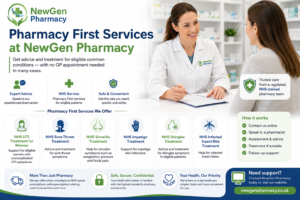
To take the next step, you can arrange a confidential weight management consultation or learn more about NewGen Pharmacy’s wider NewGen Pharmacy services.
Frequently Asked Questions
Can weight loss lower cholesterol?
Weight loss may help improve cholesterol for some people, especially when higher weight is linked with raised triglycerides, high blood pressure, insulin resistance, or type 2 diabetes risk. Results vary, and some people need medicines as well as lifestyle changes.
What foods help with high cholesterol?
Helpful foods may include oats, beans, lentils, fruit, vegetables, wholegrains, nuts, seeds, oily fish, and unsaturated oils. It can also help to reduce foods high in saturated fat, such as butter, cream, fatty meats, pastries, and some processed foods.
Is cholesterol only caused by diet?
No. Diet can affect cholesterol, but genetics, age, weight, activity, smoking, alcohol, diabetes, thyroid disease, kidney disease, and some medicines may also play a role.
Can exercise improve cholesterol?
Regular activity can support cholesterol, blood pressure, blood sugar control, weight management, and heart health. Start gradually if you are inactive, and seek medical advice first if you have heart symptoms or complex health needs.
Do I still need lifestyle changes if I take statins?
Yes. Statins can lower cholesterol, but lifestyle changes still support overall heart health. Diet, activity, weight management, smoking cessation, and blood pressure control all remain important.
Can high cholesterol cause symptoms?
High cholesterol usually does not cause symptoms. Many people only find out through a blood test. This is why testing and cardiovascular risk assessment are important.
What is the link between cholesterol and heart health?
High cholesterol can contribute to fatty build-up in the arteries. Over time, this may increase the risk of heart attack, stroke, and other circulatory problems.
Can NewGen Pharmacy help with weight loss and cholesterol?
NewGen Pharmacy can provide pharmacist-led weight management support and lifestyle guidance. If cholesterol needs medical review, testing, or prescription treatment, we may signpost you to your GP or another suitable NHS service.
Is weight management treatment suitable for high cholesterol?
Weight management treatment is not a cholesterol medicine. It may be considered for eligible patients after clinical assessment where weight loss support is suitable, safe, lawful, and clinically appropriate.
When should I seek urgent help?
Seek urgent help if you have chest pain, severe breathlessness, sudden weakness, facial drooping, difficulty speaking, collapse, or symptoms that may suggest a heart attack or stroke. Call 999 in an emergency.
Compliance note
This article provides general health information only and does not replace medical advice, diagnosis, or treatment. High cholesterol and cardiovascular risk should be assessed by a suitable healthcare professional. Weight management needs vary between individuals.
Treatment may be considered after consultation where suitable. Any medicine-related option should only be discussed privately after appropriate clinical assessment and only where safe, lawful, and clinically appropriate. Speak to a pharmacist, GP, NHS 111, or urgent care service where needed, especially if you have chest pain, severe breathlessness, stroke symptoms, complex medical conditions, pregnancy, a history of eating disorders, or concerns about medicines.
Author & Content Writer: Dr. Naeem Aslam