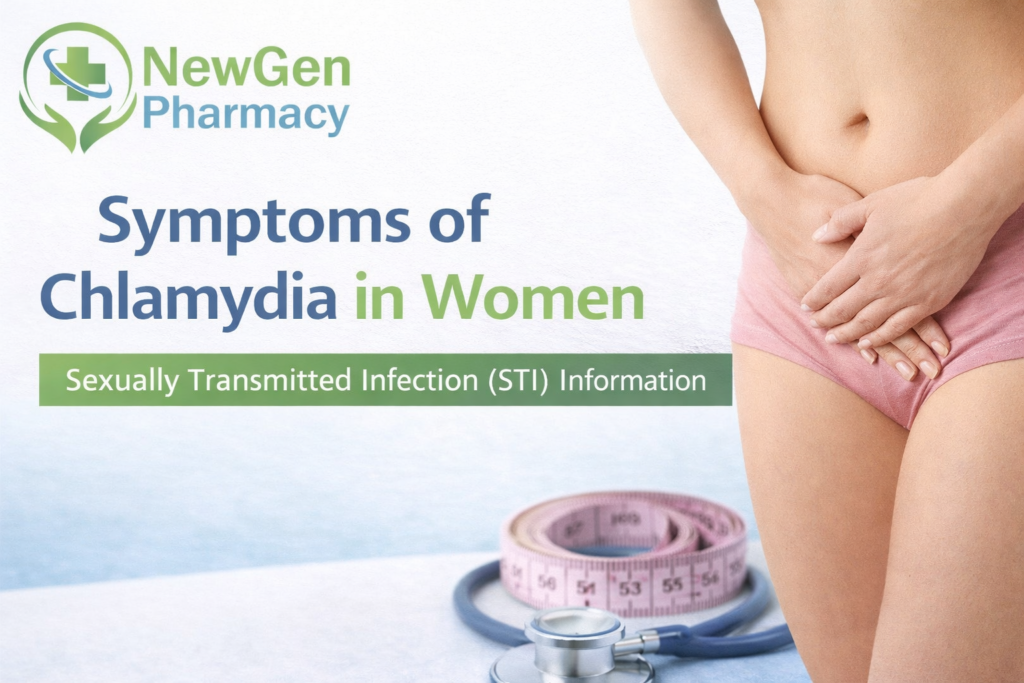
Chlamydia is one of the most common sexually transmitted infections (STIs) in the UK. The bacterium Chlamydia trachomatis causes it, and it usually spreads through unprotected vaginal, anal, or oral sex. People can also pass it on by sharing sex toys that they have not washed or covered with a new condom. One of the biggest problems with chlamydia is that many women do not notice any symptoms, so the infection often stays untreated until someone arranges a test. The NHS chlamydia guide explains that chlamydia often causes no symptoms, particularly in women.
Because symptoms may be mild, vague, or completely absent, some women only discover they have chlamydia after a partner tests positive or after complications develop. Learning the symptoms of chlamydia in women can help people seek testing earlier and lower the risk of longer-term problems. If you want confidential support from a regulated provider, NewGen Pharmacy’s online consultation service explains how private assessment and follow-up work in practice.
It is also worth remembering that vaginal discharge, pelvic pain, or bleeding between periods can happen for several reasons. These symptoms do not automatically point to chlamydia. Even so, you should not ignore them, especially after unprotected sex or contact with a partner who may have an STI.
Common Symptoms of Chlamydia in Women
Some women with chlamydia notice unusual vaginal discharge, pain or burning when urinating, lower abdominal or pelvic pain, pain during sex, bleeding between periods, or bleeding after sex. The infection can trigger these symptoms when it affects the cervix, urethra, or reproductive tract. However, many women feel completely well and never notice obvious signs. The NHS lists pain when peeing, unusual discharge, tummy pain, bleeding after sex, and bleeding between periods among the possible symptoms in women.
This lack of obvious symptoms helps chlamydia spread easily. Someone may pass it on without realising they have it. In some women, the signs feel so mild that they seem like irritation, cystitis, hormonal changes, or another common problem.
Symptoms do not always appear quickly. Some women notice them within a few weeks of infection, while others never notice them at all. That is why it helps to seek advice after unprotected sex, after a new sexual partner, or after hearing that a partner has tested positive. If you are looking for confidential support, you can also start through the NewGen Pharmacy homepage and then follow the appropriate consultation route.
Why Testing Matters
Testing often gives the only reliable way to confirm chlamydia. Because the infection frequently causes no symptoms, many women would never know they had it without a test. The NHS page on finding STI testing and treatment explains that sexual health clinics and some other services offer STI tests and treatment confidentially.
If a person leaves chlamydia untreated, it can lead to important complications. These include pelvic inflammatory disease (PID), chronic pelvic pain, ectopic pregnancy risk, and fertility problems linked to damage in the fallopian tubes. NICE Clinical Knowledge Summaries note that untreated chlamydia can lead to PID, and PID raises the risk of tubal infertility, ectopic pregnancy, and chronic pelvic pain.
Testing is usually simple. Depending on the situation, you may need to provide a urine sample or take a self-swab from the vagina. Many people choose testing because it is quick, discreet, and gives clear next steps. If you want to understand how confidential assessment works before arranging care, NewGen Pharmacy’s online consultations page can explain the process.
How Chlamydia Is Treated
Clinicians usually treat chlamydia with antibiotics. When they find the infection early, treatment is often straightforward. The exact antibiotic and the instructions still depend on the patient’s circumstances, including pregnancy status, symptoms, allergies, and other health factors. The NHS confirms that antibiotics treat chlamydia and that patients should follow professional advice.
If you need treatment, you should complete the course exactly as instructed. You should also avoid sexual activity until the time advised by the clinician has passed. Current or recent sexual partners also need testing or treatment when appropriate. Partner notification matters because reinfection can happen when one partner completes treatment and the other does not. NHS guidance also recommends telling current and recent partners so they can get tested.
Do not rely on self-diagnosis when symptoms such as pelvic pain or bleeding are present. Severe pain, fever, or worsening symptoms need prompt medical attention, especially when clinicians suspect PID. Because antibiotics for chlamydia are prescription-only, a clinician should only discuss them after an appropriate clinical assessment. If you are ready to seek private support, you can book a consultation through NewGen Pharmacy.
When to Seek Advice
Seek advice if you have symptoms that could suggest an STI, if you have had unprotected sex, if a partner has tested positive, or if you simply want reassurance and testing guidance. Early assessment helps protect your health and the health of your partners. Even mild symptoms deserve attention because testing can prevent delayed diagnosis and lower the risk of complications.
You should also seek advice promptly if you have lower abdominal pain, bleeding after sex, bleeding between periods, or pain during sex, especially when these symptoms are new or persistent. These signs do not always mean chlamydia, but they still need proper assessment. The same applies if you think you may have been exposed to an STI but feel well.
Some people delay testing because they feel embarrassed or worry about confidentiality. In reality, sexual health services handle these concerns sensitively and privately every day. NHS sexual health services are confidential, and many routes make access straightforward.
How NewGen Can Help
NewGen Pharmacy understands that sexual health worries can feel personal. Our team offers confidential, judgement-free support for chlamydia and other common STIs. We can explain how testing works, what results may mean, and what a typical treatment pathway may involve where appropriate.
Our pharmacists can also:
- help you understand antibiotic instructions after prescribing, where clinically appropriate
- talk through partner notification and safer-sex strategies
- explain when symptoms may need urgent assessment or referral
- direct you to appropriate local or online services for testing and treatment
If you want to take the next step, you can use these links:
Book your consultation: https://newgenpharmacy.co.uk/book-a-consultation/
Read more about sexual health support: https://newgenpharmacy.co.uk/
Learn how online consultations work: https://newgenpharmacy.co.uk/online-consultations/
Frequently Asked Questions
What are the first signs of chlamydia in women?
Some women notice unusual vaginal discharge, pain when peeing, pelvic discomfort, bleeding between periods, or pain during sex. However, many women do not notice any symptoms at all, which is why testing matters so much.
Can you have chlamydia without symptoms?
Yes. Chlamydia often causes no symptoms, especially in women. A person can still have the infection and pass it on even if they feel completely well.
Can chlamydia cause fertility problems?
Yes, it can if someone leaves it untreated. Untreated chlamydia can lead to pelvic inflammatory disease, which can then increase the risk of tubal infertility, ectopic pregnancy, and chronic pelvic pain.
How is chlamydia tested?
Testing is usually simple and may involve a urine sample or a vaginal swab. Sexual health clinics, some GP surgeries, and some pharmacies offer access to STI testing and treatment.
Should I get tested if my partner tested positive?
Yes. If a current or recent partner has tested positive, you should seek advice and arrange testing even if you do not have symptoms.
Compliance note: We do not promote prescription-only antibiotics publicly in a promotional way. A clinician only discusses potential treatment options privately after an appropriate assessment, and only where this is safe and suitable.
Author & Content Writer: Dr Naeem Aslam