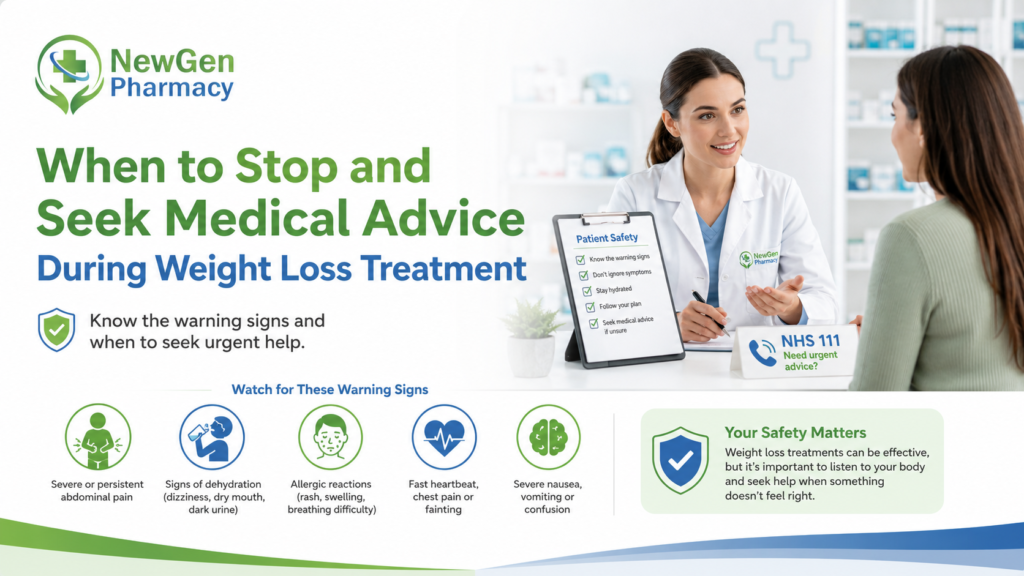
Weight loss treatment should support health and wellbeing. However, patients still need to know when symptoms require medical advice. Some mild side effects may improve with simple changes, but other symptoms need prompt review.
This is especially important because weight management treatment can affect appetite, digestion, food intake, hydration, and sometimes blood sugar patterns. If you develop severe symptoms, persistent vomiting, dehydration, allergic symptoms, or severe abdominal pain, you should seek medical help promptly.
For urgent health concerns, patients can use NHS 111 online or call 111 when appropriate. If symptoms are life-threatening, such as severe breathing difficulty, collapse, chest pain, or signs of a severe allergic reaction, call 999.
NewGen Pharmacy’s guide to common side effects of GLP-1 weight loss medications explains common treatment-related symptoms. This article focuses on warning signs that may need urgent attention.
Why Safety Monitoring Matters
Weight loss treatment should only be used after a proper clinical assessment and with clear guidance. Even when treatment suits a patient, side effects can still happen.
Most side effects are mild. However, some symptoms may point to a more serious problem that needs professional review.
Safety monitoring helps patients identify problems early. It also helps people understand the difference between symptoms they may manage with simple advice and symptoms that need medical help.
You should not feel that you need to “push through” severe symptoms to lose weight. If treatment makes you feel seriously unwell, ask for advice.
A safe treatment plan should protect your health first. Weight management should never come at the cost of ignoring worrying symptoms.
Severe or Persistent Abdominal Pain
Severe or persistent abdominal pain needs careful attention. This is especially important if the pain feels intense, keeps getting worse, sits in the upper abdomen, spreads to the back, or appears with vomiting, fever, yellowing of the skin or eyes, or feeling very unwell.
Abdominal pain can have many causes. Not all abdominal pain links directly to weight loss treatment. However, severe or ongoing pain needs medical assessment.
Do not take another dose or continue treatment without advice if you develop severe unexplained abdominal pain. Depending on the severity, contact a healthcare professional, NHS 111, or emergency services.
You should also seek help if the pain feels different from symptoms you have had before. New, severe, or unusual pain should not be dismissed as a normal side effect.
Persistent Vomiting or Dehydration
Vomiting can become risky if it continues or stops you from keeping fluids down. Dehydration can develop quickly, especially if you already eat and drink less than usual.
The NHS explains that dehydration may cause symptoms such as dizziness, dry mouth, tiredness, passing very little urine, confusion, or feeling faint.
You should seek advice if vomiting happens repeatedly, if you cannot keep fluids down, or if you notice signs of dehydration. Patients with diabetes, kidney problems, older adults, and people taking medicines that affect fluid balance may need extra care.
Small sips of fluid may help with mild nausea. However, persistent vomiting needs clinical review rather than home care alone.
NewGen Pharmacy’s article Feeling Sick During Weight Loss Treatment? gives practical advice for mild nausea. Repeated vomiting or dehydration symptoms need more urgent support.
Symptoms of an Allergic Reaction
Allergic reactions can range from mild to severe. Severe allergic symptoms need emergency help.
The NHS page on anaphylaxis explains that severe allergic reactions may include breathing difficulty, swelling of the lips, tongue or throat, collapse, confusion, clammy skin, or a widespread rash.
If you think you are having a severe allergic reaction, call 999. Do not wait to see if symptoms improve.
Milder symptoms can still matter. If you develop a rash, itching, swelling, or symptoms that concern you, contact a healthcare professional promptly for advice.
Do not restart treatment after allergic symptoms unless a healthcare professional has told you it is safe.
Symptoms of Low Blood Sugar
Some patients need extra care during weight loss treatment, especially people with diabetes or those using medicines that lower blood sugar. Reduced appetite and smaller meals can affect blood sugar levels.
Symptoms of low blood sugar can include shaking, sweating, hunger, dizziness, confusion, weakness, blurred vision, or feeling unusually anxious.
Patients with diabetes should follow their personal diabetes plan. They should also seek advice from their GP, diabetes team, pharmacist, or NHS 111 if symptoms happen or if blood sugar levels become difficult to manage.
Do not change diabetes medicines without professional advice. If you use insulin or certain diabetes tablets, clinical review may be especially important before and during treatment.
You should also tell the pharmacy or prescriber about any blood sugar concerns. This helps the clinical team decide whether your treatment plan needs review.
Gallbladder-Type Symptoms
Some symptoms may suggest a gallbladder problem or another condition that needs assessment. These symptoms can include severe pain in the upper right abdomen, pain after fatty meals, pain spreading to the back or shoulder, fever, vomiting, yellowing of the skin or eyes, or dark urine.
These symptoms should be reviewed by a healthcare professional. Do not assume they are normal side effects.
Gallbladder symptoms can sometimes feel similar to indigestion or stomach pain. However, severe, persistent, or repeated pain needs proper medical review.
If pain appears with fever, vomiting, jaundice, or feeling very unwell, seek urgent advice.
Severe Constipation or Bowel Symptoms
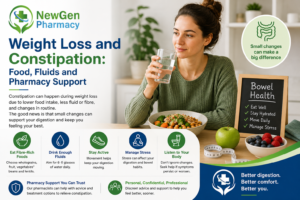
Constipation can happen during weight loss treatment, especially when food intake, fibre intake, fluid intake, or activity levels reduce. Mild constipation may improve with practical steps such as drinking more fluids, increasing fibre gradually, and moving more.
However, severe bowel symptoms should not be ignored. Seek advice if constipation appears with severe abdominal pain, vomiting, swelling, blood in stools, fever, or feeling seriously unwell.
You should also ask for advice if you have not opened your bowels for several days and feel increasingly uncomfortable.
NewGen Pharmacy’s article on constipation during weight loss treatment explains practical steps and warning signs in more detail.
A pharmacist can also advise whether a pharmacy product may help or whether symptoms need medical review.
Mental Health or Eating Pattern Concerns
Weight management can sometimes affect mental wellbeing. Treatment, dieting, or rapid changes in appetite may feel emotionally difficult for some patients.
You should seek support if treatment or dieting leads to severe anxiety around food, purging, harmful restriction, low mood, distress about body image, or feeling out of control around eating.
Weight loss should never come at the cost of mental health. Some patients may need support from their GP, a mental health professional, or specialist eating disorder services rather than weight loss treatment alone.
If you feel that food, weight, or treatment is becoming emotionally overwhelming, speak to a healthcare professional. Early support can help protect both physical and mental wellbeing.
Do Not Restart After Serious Symptoms Without Advice
If you stop treatment because of severe symptoms, do not restart it without speaking to a healthcare professional.
Restarting without advice may increase risk, especially if symptoms involved dehydration, severe abdominal pain, allergic symptoms, blood sugar concerns, or persistent vomiting.
A pharmacist, prescriber, GP, or urgent care service can help decide what should happen next. They may advise a review, further assessment, treatment pause, or urgent medical care depending on your symptoms.
It is always safer to ask for guidance before continuing.
When to Use NHS 111 or 999
It can be difficult to know who to contact when symptoms develop. As a general rule, use NHS 111 when you need urgent medical advice but the situation does not appear life-threatening.
You can use NHS 111 online or call 111 when appropriate. NHS 111 can help direct you to the right service.
Call 999 if symptoms appear life-threatening. This includes severe breathing difficulty, collapse, chest pain, signs of a severe allergic reaction, severe confusion, or symptoms that make you feel at immediate risk.
If you feel unsure and symptoms are serious, it is better to seek urgent advice.
How NewGen Pharmacy Can Help
NewGen Pharmacy offers confidential support for patients using weight management treatment where clinically appropriate. If you develop side effects or worrying symptoms, our pharmacy team can help advise on next steps and signpost you to urgent care when needed.
Our pharmacists and clinicians can explain which symptoms may need urgent medical advice, support patients with common side-effect guidance where appropriate, advise when treatment should pause pending review, help patients understand hydration and safety risks, and signpost patients to GP, NHS 111, or emergency services when needed.
If you want to take the next step, you can book a confidential consultation with NewGen Pharmacy.
You can also read more about NewGen Pharmacy’s weight management support and how our online consultations work.
Frequently Asked Questions
When should I stop weight loss treatment and seek advice?
Seek advice if you develop severe abdominal pain, persistent vomiting, dehydration, allergic symptoms, fainting, blood sugar concerns, or symptoms that make you feel seriously unwell.
Is vomiting dangerous during treatment?
Occasional mild nausea may not be dangerous, but repeated vomiting can lead to dehydration. If you cannot keep fluids down or you feel faint, seek medical advice.
What abdominal pain is concerning?
Severe, persistent, worsening, or upper abdominal pain should be assessed. This is especially important if pain appears with vomiting, fever, back pain, dark urine, or yellowing of the skin or eyes.
What are signs of dehydration?
Signs may include dizziness, dry mouth, passing very little urine, confusion, tiredness, feeling faint, or being unable to keep fluids down.
Who should I contact in an emergency?
Use NHS 111 for urgent advice when appropriate. Call 999 if symptoms are life-threatening, such as severe allergic reaction symptoms, collapse, chest pain, or severe breathing difficulty.
Should I restart treatment after severe symptoms?
Do not restart treatment after serious symptoms without advice from a pharmacist, prescriber, GP, or urgent care service.
Can mental health symptoms matter during weight loss treatment?
Yes. If treatment or dieting causes distress, harmful restriction, purging, severe anxiety around food, or loss of control around eating, seek professional support.
Should I contact the pharmacy for mild side effects?
Yes, especially if symptoms continue, affect eating or drinking, or make you unsure about treatment. A pharmacist can help you decide whether self-care, review, or urgent advice is needed.
Final Thoughts
Weight loss treatment should support health, safety, and wellbeing. Mild side effects may improve with simple steps, but severe or persistent symptoms need professional advice.
Do not ignore severe abdominal pain, repeated vomiting, dehydration, allergic symptoms, blood sugar concerns, severe constipation, or symptoms that make you feel seriously unwell.
If you are unsure what to do, contact the pharmacy, prescriber, GP, NHS 111, or emergency services depending on the severity. NewGen Pharmacy can help you understand safe next steps and signpost you to the right support.
Compliance note: This article provides general information only. It does not promote prescription-only medicines publicly in a promotional way. A clinician or prescribing pharmacist can only discuss suitable treatment options privately after an appropriate assessment and only where treatment is safe, lawful, and clinically appropriate.
Author & Content Writer: Dr Naeem Aslam