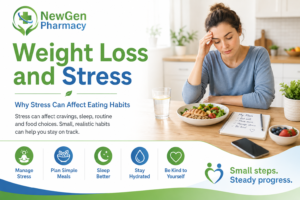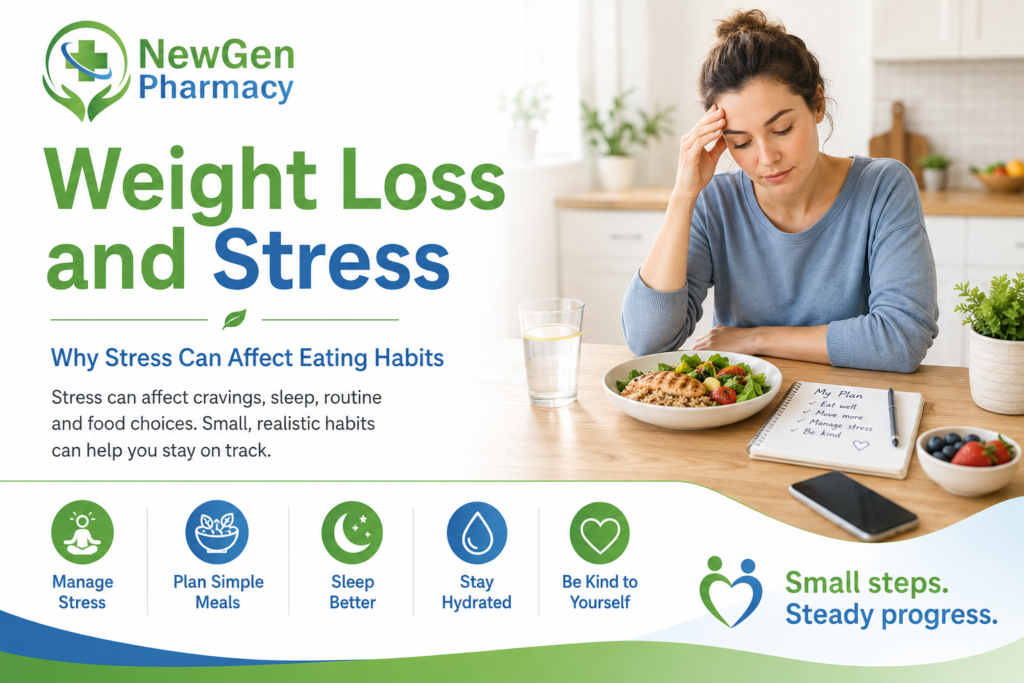
Stress can affect weight loss in many ways. It may change appetite, increase cravings, disrupt sleep, reduce motivation, affect alcohol intake, and make routines harder to follow.
Some people eat more when life feels stressful. Others skip meals, lose appetite during the day, then feel very hungry later. During difficult periods, quick comfort foods, takeaways, snacks, and sugary drinks may feel more tempting.
Stress does not automatically cause weight gain. Weight management depends on many factors, including food, movement, sleep, medicines, hormones, health conditions, routines, and emotional wellbeing. However, pressure and worry can make healthy habits harder to maintain.
The NHS explains that stress can cause physical symptoms, mental symptoms, and changes in behaviour. It also offers practical advice through its guide on stress and mental wellbeing. The NHS also advises people to talk about their feelings, use breathing exercises, plan ahead for stressful days, and avoid using alcohol, cigarettes, gambling, or drugs to relieve stress in its guidance on getting help with stress. NHS Inform also recommends focusing on realistic, sustainable changes that fit daily life when trying to lose weight safely. You can read more in its guide to tips for losing weight safely.
If pressure affects your eating patterns, NewGen Pharmacy’s article on emotional eating may help you understand the link between feelings, food choices, and routines.
Why Stress Can Affect Weight Loss
Stress changes how people think, feel, and behave. When life feels pressured, it can become harder to plan meals, shop carefully, cook, move regularly, or sleep well.
Many food choices do not happen in calm conditions. They happen while people feel rushed, tired, upset, or overwhelmed. In those moments, quick options often feel easier than balanced meals.
A stressful day can also reduce patience. One person may intend to cook dinner, then order takeaway because they feel drained. Another person may plan to walk after work, then stay on the sofa because the day felt too much.
These responses are understandable. They do not mean failure. They show why weight management needs to consider real life, not just willpower.
A good plan should include stress support, flexible routines, simple meals, and realistic goals.
Stress Eating Is Common
Stress eating means eating in response to pressure, emotions, or overwhelm rather than physical hunger. It can involve snacks, larger portions, sugary foods, takeaways, or eating when you do not feel physically hungry.
Some people notice this pattern after work. Others notice it late at night, at weekends, during conflict, while studying, or when caring responsibilities feel heavy.
Food can give short-term comfort. It may also feel like a reward after a difficult day. However, frequent stress eating can become frustrating if it affects weight, mood, confidence, or health.
A kind approach works better than shame. Instead of asking, “Why did I do that?” try asking, “What was I feeling, and what did I need?”
That question can help you find the trigger and choose a different response next time.
Hunger Versus Stress Cravings
Physical hunger and stress cravings can feel different.
Physical hunger usually builds gradually. You may feel low energy, a rumbling stomach, or difficulty concentrating. A range of foods may sound appealing.
A stress craving can feel sudden and specific. You may want chocolate, crisps, biscuits, takeaway food, alcohol, or another quick comfort food. The urge may appear even if you ate recently.
Neither response makes you wrong. Both give useful information.
If you are physically hungry, eat a balanced meal or snack. When stress drives the urge, food may still feel tempting, but another type of support may help too.
A two-minute pause can help. Ask yourself: Am I hungry, tired, stressed, bored, lonely, or upset? Do I need food, rest, water, movement, a break, or a conversation?
Cortisol and Weight Management
Cortisol is often called the stress hormone. The body releases cortisol as part of the stress response. This response can help the body deal with pressure or threat.
Short-term stress is normal. Problems may happen when stress continues for a long time and begins to affect sleep, appetite, alcohol intake, mood, and routine.
It is important not to oversimplify cortisol and weight. Stress does not affect everyone in the same way. Some people eat more, while others eat less. Some gain weight, some lose weight, and others notice no clear change.
For weight management, the practical effects often matter most. Ongoing pressure can lead to skipped meals, cravings, poor sleep, lower activity, more alcohol, and less planning.
Managing stress is not just about hormones. It is about building a routine that protects your health when life feels difficult.
Stress Can Disrupt Meal Planning
Meal planning often becomes harder when stress levels rise. You may have less time, less energy, or less interest in cooking.
Without a plan, food choices can become reactive. You may grab snacks, skip meals, buy lunch on impulse, or order takeaway food.
A simple plan can reduce pressure. It does not need to be perfect.
Useful options may include:
- Keeping easy breakfasts at home
- Preparing two simple lunches
- Batch cooking one meal
- Keeping soup, eggs, beans, yoghurt, fruit, and frozen vegetables available
- Planning one backup dinner
- Writing a short shopping list
- Keeping a water bottle nearby
These steps make helpful choices easier when your day feels stressful.
The aim is not to create a perfect diet. The aim is to reduce the number of decisions you have to make when you feel overwhelmed.
Stress and Sleep
Pressure and worry can affect sleep. You may find it harder to fall asleep, wake during the night, or feel tired even after being in bed for long enough.
Poor sleep can then affect appetite, cravings, mood, and energy. This can create a cycle. Stress affects sleep, poor sleep affects eating, and eating patterns may then affect confidence or motivation.
A calming evening routine may help. You could reduce screen time, prepare tomorrow’s lunch, dim lights, avoid late caffeine, write down worries, or use breathing exercises.
The NHS Every Mind Matters guide includes practical advice to fall asleep faster and sleep better.
If sleep problems continue for several weeks, affect daily life, or link with anxiety or low mood, speak to a GP or healthcare professional.
Stress, Alcohol and Weight Loss
Some people use alcohol to unwind after stressful days. This can feel relaxing in the short term, but it may affect weight management in several ways.
Alcohol can add calories, increase appetite, reduce inhibition, worsen sleep quality, and make snacks or takeaways more tempting. It may also make the next day harder if you feel tired or hungover.
The NHS advises people not to use alcohol as a way to relieve stress and provides practical support through its alcohol advice. NHS Better Health also offers tools and tips to help people drink less alcohol.
A small change may help. You might choose alcohol-free days, drink water between alcoholic drinks, plan a non-alcohol way to relax, or avoid keeping alcohol at home during stressful weeks.
If alcohol feels difficult to control, speak to a GP or another healthcare professional. Do not stop suddenly without medical advice if you have withdrawal symptoms.
Stress and Weekend Eating
Stress can build during the week and show up at the weekend. Some people stay controlled Monday to Friday, then feel they deserve food, alcohol, takeaways, or a full break from structure at the weekend.
Enjoyment matters. Social meals and flexible choices can fit into weight management. The issue is when weekends repeatedly undo weekday progress or leave you feeling guilty and stuck.
A more realistic approach is to plan flexibility. You might choose one takeaway, plan breakfast before a social event, alternate alcohol with water, or keep Sunday evening simple.
NewGen Pharmacy’s article on weekend eating explains how to manage social meals, takeaways, and relaxed routines without becoming too strict.
Stressful weeks need recovery, but recovery does not have to rely only on food and alcohol.
Stress and Night-Time Snacking
Evening stress can make night-time snacking more likely. After a long day, food may feel like the easiest comfort, reward, or distraction.
Night-time snacking can also link with tiredness, skipped meals, poor hydration, low protein, alcohol, or habit.
A planned evening routine may help. Eat a balanced dinner. Prepare one planned snack if needed. Drink water. Brush your teeth after eating. Move away from the kitchen if grazing starts. Choose a calming activity that is not food-based.
NewGen Pharmacy’s guide to night-time snacking gives practical steps for building a better evening routine.
The goal is not to ban evening food. The goal is to reduce automatic snacking that happens because stress has taken over.
Stress and Motivation
Stress can reduce motivation. Tasks that usually feel manageable may feel too difficult. Exercise, meal planning, shopping, cooking, and tracking progress can all become harder.
This is why a weight loss plan should include low-energy options. You need habits you can do even when motivation is low.
Examples include a ten-minute walk, a simple breakfast, a ready-made soup, a glass of water, a basic lunch, or going to bed earlier.
These actions may seem small, but they help protect routine during stressful periods.
Avoid waiting until you feel fully motivated. Start with the smallest useful step.
Protein, Fibre and Fluids During Stress
Stress can make people skip balanced meals and rely on quick foods. This may increase hunger and cravings later.
Protein, fibre, and fluids can help meals feel more satisfying. They can also support digestion, energy, and routine.
Protein options include eggs, fish, chicken, Greek yoghurt, cottage cheese, tofu, beans, lentils, and chickpeas.
Fibre-rich foods include vegetables, fruit, oats, wholegrain bread, brown rice, beans, lentils, peas, and potatoes with skin.
Hydration matters too. Low fluid intake can contribute to tiredness, headaches, constipation, and poor concentration.
If stress makes food planning difficult, aim for simple meals. Eggs on toast, soup with wholegrain bread, yoghurt with oats and fruit, beans on toast, or a tuna jacket potato can still support your plan.
Practical Coping Strategies That Do Not Involve Food
Food can be one coping tool, but it does not need to be the only one.
Try building a short list of non-food coping strategies before stress hits. This makes it easier to choose something helpful when emotions feel strong.
Options may include:
- A ten-minute walk
- Slow breathing
- A shower
- Calling someone
- Writing worries down
- Stretching
- Listening to music
- Doing one small household task
- Stepping outside
- Going to bed earlier
- Preparing tomorrow’s breakfast or lunch
Different emotions need different responses. If you feel lonely, connection may help. If you feel overwhelmed, a short list may help. If you feel tired, rest may be better than food.
Use a Stress Eating Pause
A pause helps create space between the trigger and eating.
Before eating during stress, ask:
- What just happened?
- What am I feeling?
- Am I physically hungry?
- Did I eat enough today?
- What do I need right now?
- Would food help, or would rest, water, movement, or support help more?
Sometimes you may still choose food. That is okay. The pause is not about perfection. It is about awareness.
Over time, this can reduce automatic eating and improve confidence.
Avoid All-or-Nothing Thinking
Stress often triggers all-or-nothing thinking. One snack becomes “I have ruined the day.” One takeaway becomes “I might as well start again Monday.”
This mindset can make weight management harder.
A more helpful approach is to return to routine at the next meal. Drink water, eat a balanced meal, move gently if you can, and avoid punishment.
Do not skip meals to make up for stress eating. This may increase hunger and cravings later.
Progress comes from repeated returns to helpful habits, not perfect control.
Stress During Weight Loss Treatment
Weight loss treatment may help some suitable patients manage appetite, but it does not remove stress, emotional triggers, or daily pressures.
Difficult weeks can still affect food choices, alcohol intake, sleep, activity, and routines during treatment. They may also make side effects feel harder to manage.
Treatment should sit alongside lifestyle support, not replace it. This includes stress management, balanced meals, hydration, movement, sleep, and realistic planning.
NewGen Pharmacy’s article on lifestyle support explains how behaviour, routine, food, activity, sleep, and stress work together during weight management.
If stress or side effects affect your ability to eat, drink, sleep, or function, speak to the pharmacy or prescriber.
When Stress Needs Professional Support
Stress is common, but you should seek help if it feels constant, overwhelming, or difficult to manage.
Speak to a GP or mental health professional if stress affects sleep, appetite, work, relationships, concentration, alcohol use, or daily life for several weeks.
You should seek urgent support if you feel unsafe, have thoughts of self-harm, or feel unable to cope. In an emergency, call 999. You can also contact NHS 111, your GP, or Samaritans on 116 123 for support.
Weight management should never come before mental health and safety.
If eating patterns become distressing, involve loss of control around eating, purging, severe restriction, or intense guilt, ask for professional help.
A Simple Stress and Weight Loss Plan
A simple plan can help you stay steady during stressful weeks.
Try this:
- Choose two easy breakfasts.
- Keep three simple lunches available.
- Prepare one backup dinner.
- Drink water before caffeine.
- Walk for ten minutes when possible.
- Plan one non-food stress relief option.
- Avoid using alcohol as your main coping tool.
- Go back to routine after difficult moments.
- Ask for support when stress feels too much.
Small steps can protect your progress without adding more pressure.
The best plan is one you can follow during real life, not only during calm weeks.
How NewGen Pharmacy Can Help
NewGen Pharmacy offers confidential weight management support where appropriate after clinical assessment.
Our pharmacy team can help patients understand how stress, sleep, appetite, cravings, emotional eating, alcohol, night-time snacking, and routines may affect progress.
Our pharmacists and clinicians can support patients with realistic weight management advice, treatment suitability assessment, side-effect guidance, lifestyle support, and signposting where GP or urgent care review may be needed.
You can contact NewGen Pharmacy if stress, eating patterns, treatment questions, or side effects are affecting your progress.
You can also learn more about online consultations and NewGen Pharmacy’s weight management consultation service.
Frequently Asked Questions
Can stress affect weight loss?
Yes. Stress can affect appetite, cravings, sleep, alcohol intake, motivation, routines, and food choices. These factors can make weight loss harder for some people.
What is stress eating?
Stress eating means eating in response to pressure or emotions rather than physical hunger. It may involve snacks, comfort foods, takeaways, or larger portions.
Does cortisol cause weight gain?
Cortisol is part of the stress response. Long-term stress may affect weight indirectly through appetite, sleep, cravings, alcohol, activity, and routines. It does not affect everyone in the same way.
Why do I crave sugar when stressed?
Stress, poor sleep, tiredness, and low energy can make quick-energy foods feel more appealing. Balanced meals, rest, hydration, and stress support may help.
Can stress cause night-time snacking?
Yes. Stress can make evening snacking more likely, especially after a long day. Tiredness, skipped meals, alcohol, and habit can also contribute.
How can I stop stress eating?
Start by noticing triggers. Use a pause before eating, eat regular balanced meals, plan non-food coping tools, improve sleep where possible, and ask for support if eating feels distressing.
Should I follow a stricter diet when stressed?
Usually no. Very strict dieting can increase pressure and cravings. A simple, flexible routine is often more helpful during stressful periods.
Can weight loss treatment stop stress eating?
Treatment may help appetite for some suitable patients, but it does not remove emotional triggers or stress. Behaviour support and lifestyle routines still matter.
When should I seek help for stress?
Seek help if stress feels constant, affects daily life, sleep, alcohol use, mood, or eating patterns, or if you feel unable to cope.
Can NewGen Pharmacy help?
NewGen Pharmacy can provide weight management advice, treatment guidance where appropriate, and signposting if stress or eating patterns need further support.
Final Thoughts
Stress can affect weight loss by changing appetite, cravings, sleep, alcohol intake, motivation, and daily routines.
This does not mean you have failed. Stress eating is common and understandable. The key is to notice patterns and build practical coping strategies.
Balanced meals, hydration, sleep support, simple planning, non-food stress relief, and flexible routines can all help.
NewGen Pharmacy can support patients with realistic weight management advice and help them understand safe next steps through confidential pharmacy-led care.
Compliance note: This article provides general information only. It does not replace personalised medical advice, diagnosis, or mental health support. Patients with severe stress, low mood, anxiety, loss of control around eating, harmful restriction, alcohol dependence, thoughts of self-harm, or symptoms that feel unsafe should seek GP, NHS 111, urgent care, emergency services, or mental health support as appropriate. Prescription treatment can only be discussed privately after an appropriate consultation and where safe, lawful and clinically suitable.
Author & Content Writer: Dr Naeem Aslam