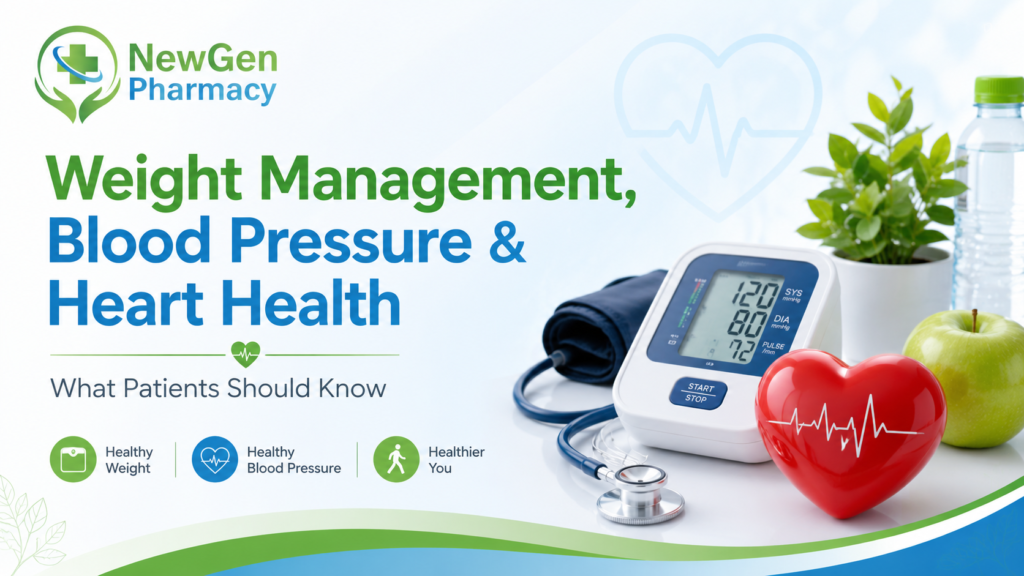
Weight management can play an important role in supporting heart health. This is especially true for people living with high blood pressure, raised cholesterol, type 2 diabetes risk, or other cardiovascular risk factors.
However, anyone with heart or blood pressure conditions should approach weight loss carefully. A safe plan should consider your medical history, current medicines, blood pressure, activity level, diet, sleep, stress, and overall wellbeing.
Weight loss should never rely on extreme dieting or unsafe treatment choices. The aim should be long-term health, not quick changes that leave you feeling weak, dizzy, dehydrated, or unwell.
The British Heart Foundation explains that maintaining a healthy weight can help reduce the risk of heart and circulatory diseases. You can read more in its guide to managing your weight. The NHS also explains that high blood pressure can increase the risk of serious problems such as heart attacks and strokes.
If you are considering support, NewGen Pharmacy’s article on how pharmacies support weight management explains how pharmacist-led advice can fit into a broader weight management plan.
Why Heart Health Matters in Weight Management
Weight management often gets discussed in terms of appearance, clothing size, or the number on the scale. However, the health reasons can matter much more.
For some patients, losing weight safely may support blood pressure, cholesterol, blood sugar, mobility, sleep, and energy levels. It may also help reduce pressure on joints and make daily movement easier.
A safe weight management plan should support the whole person. It should not focus only on fast scale changes.
Extreme diets, unsafe medicines, dehydration, or sudden major changes in food intake can create risks. These risks can matter more for people with heart disease, blood pressure problems, kidney disease, diabetes, irregular heartbeat, or those taking several medicines.
If you have a heart condition or take heart or blood pressure medicines, tell your healthcare team before making major changes to your diet, activity, weight loss treatment, or fluid intake.
The Link Between Weight and Blood Pressure
Carrying excess body weight can increase the workload on the heart. In some people, it may also contribute to high blood pressure.
Weight management may help support blood pressure control. However, it should sit alongside other important factors. These include salt intake, physical activity, alcohol, smoking, stress, sleep, and prescribed medicines.
It is important not to think of weight loss as the only answer. Some people at a lower weight can still have high blood pressure. Others may have several health factors that need review before starting a weight loss plan.
A healthy plan should focus on overall cardiovascular risk. The number on the scale is only one part of the picture.
Blood Pressure Medicines Need Careful Review
Blood pressure and heart medicines need to be considered before weight loss treatment starts. This may include blood pressure tablets, diuretics, medicines for angina, anticoagulants, cholesterol medicines, diabetes medicines, and other long-term treatments.
Some medicines can affect fluid balance, blood pressure, dizziness, or kidney function. If appetite reduces or fluid intake drops, some patients may feel lightheaded or dehydrated.
This can become more important during hot weather, illness, vomiting, diarrhoea, or periods of very low food intake. You should ask for advice if you feel faint, confused, unusually weak, very thirsty, or unable to keep fluids down.
Do not stop or reduce blood pressure medicines because you are losing weight unless your GP or prescriber advises you to do so. Blood pressure treatment needs proper review.
NewGen Pharmacy’s article on what happens before you start weight loss treatment online explains why current medicines are an important part of the consultation.
Healthy Eating for Blood Pressure and Weight
Diet can support both weight management and blood pressure. Many patients benefit from practical changes rather than strict or extreme rules.
Helpful steps may include reducing salt, eating more fruit and vegetables, choosing wholegrains, including lean protein, reducing highly processed foods, and moderating alcohol.
The NHS Eatwell Guide provides a useful framework for balanced eating. It shows how much of what we eat overall should come from each food group to support a healthy, balanced diet.
The British Dietetic Association also provides information on diet and hypertension, including healthy eating patterns and the role of salt.
Patients using weight loss treatment may also need to think about meal size, protein, fibre, and hydration. Eating too little or becoming dehydrated can cause dizziness, constipation, tiredness, or headaches.
For practical food support, see NewGen Pharmacy’s article on protein, fibre and hydration for weight loss.
Salt, Alcohol and Processed Foods
Salt can affect blood pressure in some people. Many patients focus only on the salt they add at the table, but processed foods can also contain high amounts of salt.
Ready meals, processed meats, crisps, sauces, takeaways, soups, and some breads can all contribute to salt intake. Checking labels can help you understand where salt is coming from.
You do not need to make every change at once. Small swaps can help. For example, you might choose lower-salt options, use herbs and spices for flavour, reduce takeaways, or cook more meals at home.
Alcohol can also affect both weight and blood pressure. It adds calories, may increase appetite, can reduce sleep quality, and may make food choices harder. For some people, reducing alcohol supports both weight management and heart health.
If you drink alcohol regularly or feel unsure about safe limits, ask a healthcare professional for advice.
Physical Activity and Heart Health
Regular physical activity can support heart health, blood pressure, weight management, mood, sleep, and energy levels. It does not need to mean intense exercise.
Walking, cycling, swimming, gardening, gentle resistance exercise, or building more movement into daily life can all help. The best starting point depends on your current fitness, health conditions, and confidence.
If you have not exercised for a long time, start gently. A short walk can be a better first step than a demanding routine that feels impossible to maintain.
Strength-based activity can also help. It supports muscle, function, balance, and long-term health. This matters during weight loss because the aim is not only to lose weight, but also to stay strong and well.
If you have heart disease, chest pain, severe breathlessness, dizziness, or symptoms during activity, speak to a healthcare professional before starting a new exercise plan.
NewGen Pharmacy’s guide to lifestyle changes that support weight loss treatment explains how activity fits into weight management support.
Sleep, Stress and Heart Health
Sleep and stress can affect both weight and cardiovascular health. Poor sleep may increase cravings, reduce motivation, and make daily routines harder to manage.
Stress can also affect eating patterns. Some people eat more when stressed. Others skip meals, drink more alcohol, sleep poorly, or move less.
These patterns can make weight management more difficult. They can also affect blood pressure and general wellbeing.
Small routine changes can help. A regular sleep schedule, short walks, simple meal planning, hydration, and breathing exercises may support consistency.
If stress, low mood, anxiety, or poor sleep feels difficult to manage, speak to your GP or another healthcare professional. Weight management should support health, not add pressure or distress.
Monitoring Progress Beyond the Scale
Weight is only one measure of progress. Patients with blood pressure or heart health concerns may benefit from tracking other signs too.
Useful measures can include blood pressure, waist measurement, energy levels, sleep, activity tolerance, breathlessness, and general wellbeing.
If you monitor blood pressure at home, follow advice from your GP, nurse, or pharmacist. Home readings can be useful, but they need proper interpretation.
Do not make medicine changes based only on home readings unless a healthcare professional advises you to do so.
Safe progress should feel manageable. It should support your wider health and daily life.
Warning Symptoms That Need Urgent Help
Some symptoms should never be ignored. You should seek urgent medical advice if you have chest pain, severe breathlessness, fainting, sudden weakness, symptoms of stroke, severe headache with neurological symptoms, severe allergic symptoms, or severe abdominal pain.
You should also seek advice if you feel repeatedly dizzy, dehydrated, confused, or unwell after changing your eating pattern or starting treatment.
Weight loss should not make you feel unsafe. If symptoms worry you, ask for help promptly.
Use NHS 111 when you need urgent medical advice and the situation does not appear life-threatening. Call 999 if symptoms feel life-threatening, such as chest pain, collapse, severe breathing difficulty, or signs of a stroke.
Who Should Seek Extra Advice First?
Some people should get medical advice before making major weight loss changes. This includes people with heart disease, previous heart attack or stroke, irregular heartbeat, severe breathlessness, kidney disease, diabetes, very high blood pressure, or a history of fainting.
Extra advice may also be needed if you take blood thinners, diuretics, several blood pressure medicines, insulin, or medicines that affect blood sugar.
This does not mean weight management support is unavailable. It means the plan needs to match your health needs.
A safer plan may involve your GP, practice nurse, pharmacist, diabetes team, cardiology team, or another healthcare professional.
How Pharmacists Can Support Safer Weight Management
Pharmacists can play a useful role in weight management support. They can help patients understand medicines, side effects, lifestyle changes, and when to seek further care.
A pharmacist can also help explain why blood pressure, heart health, current medicines, and hydration matter before weight loss treatment is supplied.
Where appropriate, pharmacists can signpost patients to their GP or urgent care. This matters when symptoms or medical history suggest that pharmacy support alone is not enough.
Pharmacist-led care works best when patients provide accurate information. This includes medical conditions, medicines, allergies, recent symptoms, blood pressure history, and any concerns about heart health.
How NewGen Pharmacy Can Help
NewGen Pharmacy offers confidential consultations where patients can discuss weight management support and treatment suitability where appropriate.
Our pharmacy team can help explain why blood pressure, heart health, current medicines, and lifestyle factors need to be considered before treatment is supplied.
Our pharmacists and clinicians can support patients with pharmacist-led weight management advice, explain why medicines and blood pressure history matter, provide lifestyle guidance around food, activity, and hydration, advise when GP review may be safer, and signpost patients to urgent care when symptoms need prompt attention.
If you want to take the next step, you can book a confidential consultation with NewGen Pharmacy.
You can also read more about NewGen Pharmacy’s weight management support and how our online consultations work.
Frequently Asked Questions
Can weight loss help blood pressure?
For some people, losing weight safely may support blood pressure control. It should be part of a broader plan that includes diet, activity, alcohol moderation, sleep, stress management, and prescribed medicines where needed.
Can I use treatment if I take blood pressure tablets?
Possibly, but your medicines and health history must be reviewed first. Some patients may need GP input before treatment can be considered.
Should I monitor my blood pressure?
If you have high blood pressure, regular monitoring may be useful. Follow advice from your GP, nurse, or pharmacist.
Should I stop blood pressure tablets if I lose weight?
No. Do not stop or reduce prescribed medicines unless your GP or prescriber advises you to do so.
What symptoms need urgent help?
Chest pain, severe breathlessness, fainting, sudden weakness, stroke symptoms, severe allergic symptoms, or feeling seriously unwell need urgent medical advice.
Can pharmacists support heart health?
Yes. Pharmacists can help with medicine advice, lifestyle support, blood pressure awareness, and signposting to GP or urgent care when needed.
Does alcohol affect blood pressure and weight?
Alcohol can add calories, affect sleep, increase appetite, and contribute to high blood pressure in some people. Moderation may support both weight and heart health.
Is exercise safe if I have high blood pressure?
Many people with high blood pressure benefit from regular activity, but you should seek advice first if you have heart symptoms, severe breathlessness, chest pain, dizziness, or other concerns.
Final Thoughts
Weight management can support heart health and blood pressure for some patients. However, the safest approach depends on your health history, current medicines, lifestyle, and symptoms.
A good plan should support long-term wellbeing. It should not rely on extreme diets, unsafe medicine changes, dehydration, or intense activity that does not match your health needs.
If you live with high blood pressure, heart disease, or cardiovascular risk factors, ask for advice before making major changes. NewGen Pharmacy can help you understand safe next steps and signpost you to further care where needed.
Compliance note: This article provides general information only. It does not promote prescription-only medicines publicly in a promotional way. A clinician or prescribing pharmacist can only discuss suitable treatment options privately after an appropriate assessment and only where treatment is safe, lawful, and clinically appropriate.
Author & Content Writer: Dr Naeem Aslam