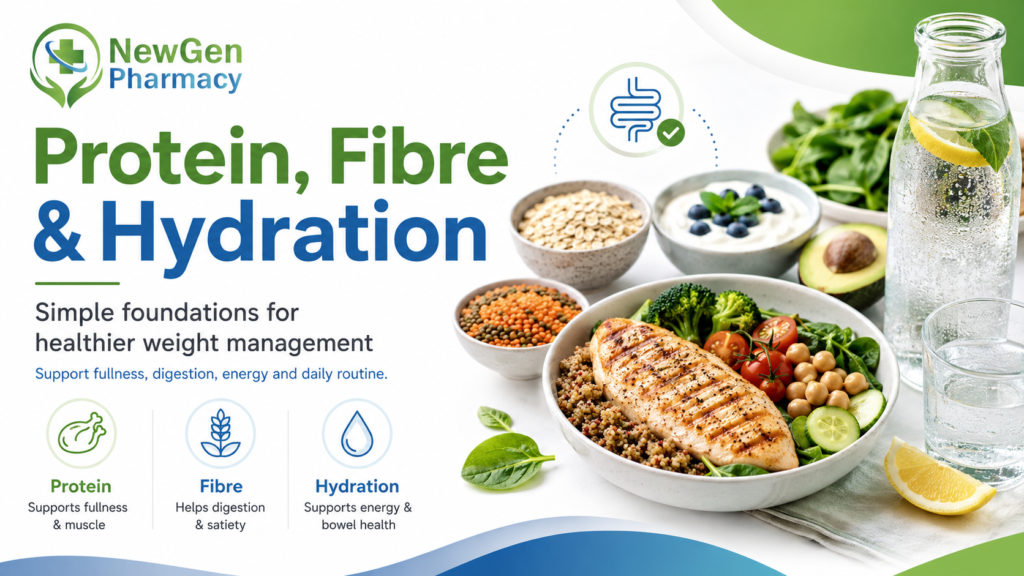
Weight management advice can sometimes feel complicated. Patients may hear about strict diets, calorie tracking, fasting plans, low-carbohydrate approaches, high-protein diets, supplements, and meal replacements. While some approaches may suit some people, many patients benefit most from getting the basics right first.
Protein, fibre, and hydration are three simple foundations that can support healthier weight management. They may help with fullness, digestion, energy levels, bowel regularity, and long-term routine. They are also practical because they can be built into everyday meals without needing extreme rules.
The NHS Eatwell Guide explains how different food groups can support a balanced diet. The NHS Better Health weight loss guidance also encourages small, realistic changes that can be repeated over time.
If you are using or considering treatment, NewGen Pharmacy’s article on what to eat while using weight loss treatment can help you apply these principles in daily life.
Why Simple Foundations Matter
Weight loss does not usually fail because someone does not know about the latest diet trend. It often becomes difficult because routines are hard to maintain, hunger returns, energy drops, life gets busy, or side effects make eating harder.
Protein, fibre, and hydration are not magic solutions, but they are useful basics. They can help meals feel more satisfying, reduce the need for constant snacking, support digestion, and lower the risk of constipation.
For patients using weight-management treatment, these basics may be especially important. Appetite may change, portions may become smaller, and side effects such as nausea or constipation may affect food choices. A simple structure can help patients stay nourished while still working toward weight goals.
Why Protein Matters
Protein helps the body repair and maintain tissues, including muscle. During weight loss, this matters because the body can lose muscle as well as body fat, especially if food intake is very low or activity levels are reduced.
Protein can also support fullness. Meals that include protein may feel more satisfying than meals made mostly from refined carbohydrates or high-fat snack foods. This can help reduce grazing and make portion control easier.
Useful protein sources include eggs, fish, chicken, turkey, lean meat, Greek yoghurt, cottage cheese, beans, lentils, chickpeas, tofu, tempeh, and other plant-based options. The best choice depends on your dietary preferences, health needs, budget, and routine.
The British Dietetic Association food facts resources provide dietitian-led information about nutrition topics and can be useful for patients who want more detail.
How to Add Protein Practically
Adding protein does not need to mean eating large portions of meat or using supplements. Small changes can help. You might add Greek yoghurt to breakfast, include eggs or beans at lunch, choose fish or chicken at dinner, or add lentils to soups and curries.
Plant-based protein can be very useful. Beans, lentils, chickpeas, tofu, and tempeh can add protein and fibre at the same time. They are often affordable and can be used in meals such as dhal, chilli, soups, salads, wraps, and stews.
Some people choose protein shakes for convenience, but they are not necessary for everyone. Whole foods can usually provide enough protein for many patients. If you have kidney disease or a medical condition requiring dietary restrictions, ask a healthcare professional before increasing protein intake significantly.
Why Fibre Matters
Fibre is important for digestion, bowel health, and fullness. It can help meals feel more satisfying and may support more stable eating patterns throughout the day.
Fibre-rich foods include vegetables, fruit, oats, wholegrain bread, brown rice, beans, lentils, chickpeas, peas, seeds, and potatoes with the skin on. These foods can make meals more filling without relying only on large portions.
Fibre may also help reduce constipation, which can be a concern during weight loss treatment. Constipation may happen if food intake drops, fluid intake is low, activity reduces, or fibre intake is limited.
NewGen Pharmacy’s guide to lifestyle changes that support weight loss treatment explains how nutrition and daily routines support long-term progress.
Increase Fibre Gradually
Although fibre is helpful, increasing it too quickly can cause bloating, wind, or discomfort. It is usually better to build up slowly. For example, you might add one extra portion of vegetables per day, switch to oats at breakfast, or include beans or lentils a few times per week.
Fluids matter when increasing fibre. Fibre works best when you drink enough. If you increase fibre but do not drink enough fluids, constipation or bloating may become worse.
Patients who have bowel conditions, severe digestive symptoms, or ongoing abdominal pain should seek professional advice before making major dietary changes.
Why Hydration Matters
Hydration supports digestion, energy, concentration, temperature regulation, and bowel regularity. During weight loss treatment, some people drink less because they feel less hungry, feel nauseous, or eat smaller meals.
Dehydration can make you feel tired, dizzy, headachy, or constipated. It can also make it harder to stay active and follow healthy routines.
Water is usually the best choice, but tea, coffee, sugar-free drinks, and other fluids may also contribute. People who feel nauseous may find small, regular sips easier than large drinks.
If you are vomiting, unable to keep fluids down, passing very little urine, or feeling faint, seek medical advice.
How These Foundations Support Treatment
Protein, fibre, and hydration can support treatment in several practical ways. Protein may help preserve muscle and improve fullness. Fibre may support digestion and bowel habits. Hydration may reduce headaches, tiredness, and constipation.
Together, these foundations can make it easier to follow a healthier routine. They can also help reduce the temptation to rely on extreme diets, skipped meals, or poor-quality snacks.
For patients using treatment, these habits may also support comfort. Smaller meals that still include protein and fibre may be easier to tolerate than large, rich meals.
Common Mistakes to Avoid
A common mistake is eating very little but not eating well. This may lead to poor energy, cravings, and nutrient gaps. Another common issue is reducing food intake so much that protein and fibre become too low.
Some people also forget about fluids, especially when appetite changes. Others focus only on the scale and ignore constipation, energy, sleep, and overall wellbeing.
Weight management should be about improving health, not simply eating less at any cost.
When to Ask for Advice
You should ask for advice if you have persistent constipation, ongoing nausea, vomiting, severe abdominal pain, dizziness, dehydration symptoms, or difficulty eating enough.
You should also seek personalised advice if you have diabetes, kidney disease, liver disease, bowel disease, pregnancy, breastfeeding, eating disorder history, or another condition that affects your diet.
For patients using treatment, NewGen Pharmacy’s article on common side effects of GLP-1 weight loss medications may also be useful.
How NewGen Can Help
NewGen Pharmacy offers confidential consultations where patients can receive weight-management advice and treatment support where appropriate. Our pharmacy team can help explain how nutrition habits may support treatment and when side effects need further review.
Our pharmacists and clinicians can also:
explain why protein, fibre, and hydration matter
support patients with practical lifestyle advice
advise on side effects such as nausea or constipation where appropriate
help patients understand safe and realistic weight-management habits
signpost patients to GP or urgent care when symptoms need review
If you want to take the next step, you can use these links:
Book your consultation: https://newgenpharmacy.co.uk/book-a-consultation/
Read more about weight management support: https://newgenpharmacy.co.uk/newgen-pharmacy-weight-management-treatment/
Learn how online consultations work: https://newgenpharmacy.co.uk/online-consultations/
Frequently Asked Questions
Does protein help with weight loss?
Protein can support fullness and help maintain muscle during weight loss. It is useful as part of a balanced diet.
Does fibre help appetite?
Yes. Fibre-rich foods can help meals feel more filling and may support better digestion and bowel regularity.
Why is hydration important during weight loss?
Hydration supports digestion, energy, concentration, and bowel habits. Low fluid intake can contribute to constipation and tiredness.
Are protein shakes necessary?
Not for everyone. Many people can get enough protein from normal foods. Some may use shakes for convenience, but they are not essential.
Can I increase fibre quickly?
It is usually better to increase fibre gradually. Adding too much too quickly can cause bloating or discomfort.
What are easy high-protein foods?
Eggs, Greek yoghurt, fish, chicken, beans, lentils, chickpeas, tofu, cottage cheese, and lean meats are common options.
What are easy high-fibre foods?
Vegetables, fruit, oats, wholegrains, beans, lentils, chickpeas, peas, and potatoes with skin are good examples.
When should I seek advice?
Seek advice if you have persistent constipation, vomiting, dehydration, severe abdominal pain, or a medical condition that affects your diet.
Compliance note: We do not promote prescription-only medicines publicly in a promotional way. A clinician only discusses potential treatment options privately after an appropriate assessment and only where this is safe, lawful, and suitable. UK guidance supports using weight-management medicines within a broader clinical and lifestyle plan.
Author & Content Writer: Dr Naeem Aslam