Interest in oral weight management tablets has grown quickly in the UK. Many people now want to know how tablet options work, who they may suit, and why a prescriber must review each request before treatment can go ahead.
This guide explains the key points in simple language. It also shows why safe weight management support should include clinical checks, realistic lifestyle advice and ongoing pharmacy guidance.
At NewGen Pharmacy, we give clear and responsible information. Prescription-only medicines do not suit everyone. A qualified prescriber must check your health, current medicines and personal circumstances before any treatment can be considered.
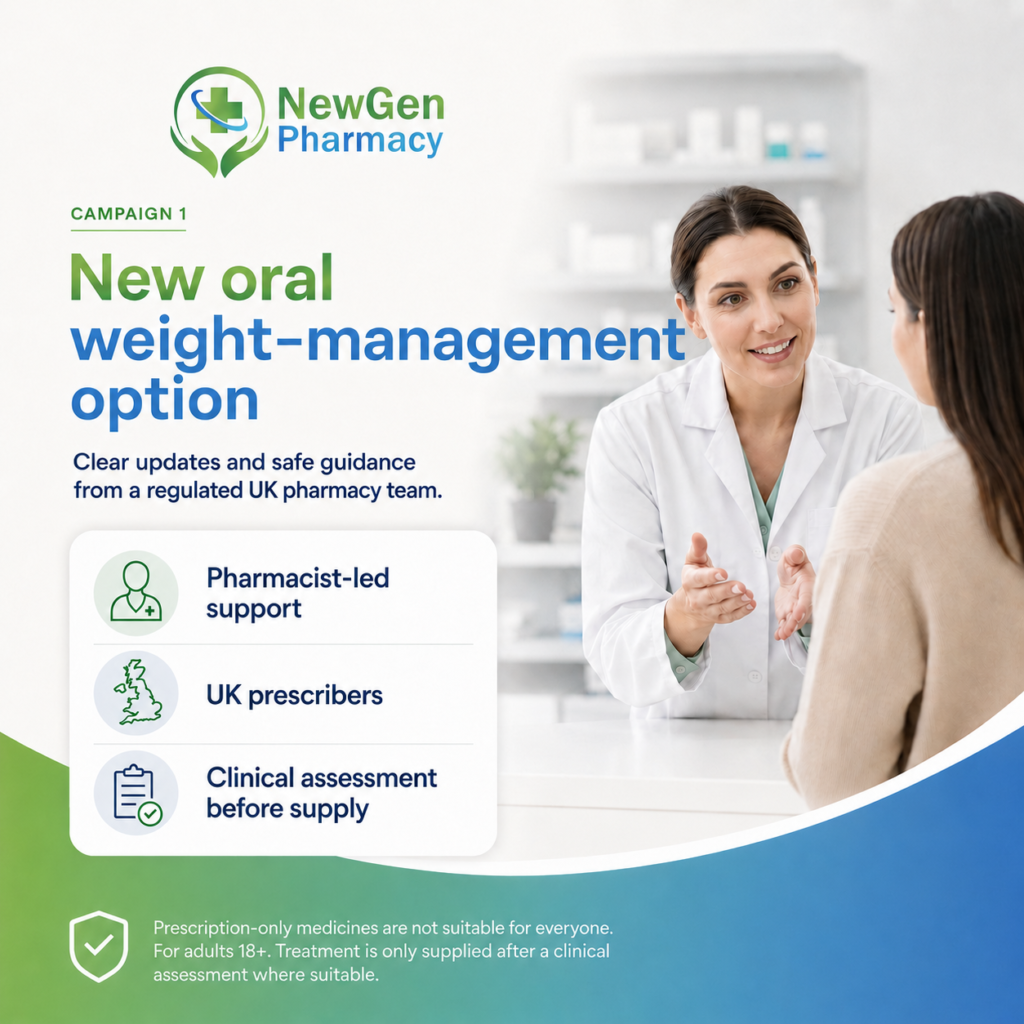
Suggested alt text: NewGen Pharmacy oral weight management support with pharmacist-led clinical guidance
What are oral weight management tablets?
Oral weight management tablets are medicines taken by mouth. This makes them different from injectable treatments, which are usually given under the skin.
Some weight management medicines belong to a group called GLP-1 receptor agonists. These medicines can support appetite control and help some people feel fuller for longer. They work best as part of a wider plan that includes balanced eating, physical activity and long-term habit changes.
You can read more about semaglutide on the NHS semaglutide medicine guide. The NHS explains that semaglutide can treat obesity when used with exercise and changes to diet.
The MHRA has approved the first GLP-1 tablet for weight loss in the UK. This approval is an important update, but it does not mean the medicine suits everyone. It remains a prescription-only medicine, so patients still need a proper clinical assessment.
If you want to explore support, you can visit NewGen Pharmacy’s weight management treatment service to learn more about our regulated pathway.
Why are people interested in tablet options?
Many people feel more comfortable with tablets than injections. Tablets may feel familiar and easier to include in a daily routine. Some patients also prefer to avoid needles where a suitable alternative exists.
A tablet option still needs careful use. It may come with specific instructions, possible side effects and suitability checks. A daily medicine may also require strong routine and consistency.
That is why a consultation matters. During a private assessment, a prescriber can review your health history, current medicines, weight-related health risks and treatment goals. This helps them decide whether treatment may be safe and suitable.
NewGen Pharmacy’s online consultations help patients access pharmacy support in a secure and confidential way.
How do GLP-1 weight management medicines work?
GLP-1 medicines act on areas involved in appetite and fullness. They may help some patients feel satisfied with smaller portions. For some people, this can support weight management when combined with healthy lifestyle changes.
Medication does not replace balanced meals, hydration, movement, sleep and support. Good nutrition matters because appetite changes can affect how much you eat. Eating too little may lead to tiredness, constipation, nausea or poor nutrient intake.
For practical food advice, read NewGen Pharmacy’s guide on what to eat during weight loss treatment. You may also find our article on lifestyle changes that support weight loss treatment helpful.
Are oral weight management tablets suitable for everyone?
No. Weight management medicines are not suitable for everyone.
A healthcare professional needs to check whether treatment is safe and appropriate. The review may include your medical history, current medicines, allergies, weight-related health conditions, BMI, treatment goals and risk of side effects.
The prescriber may also ask about pregnancy, breastfeeding, previous treatment, eating concerns or other health needs. These details help protect patients and reduce avoidable risk.
Some people may need GP advice before treatment can go ahead. Others may be told that a medicine is not suitable and that another approach would be safer.
The NICE guidance on semaglutide for managing overweight and obesity explains that treatment should sit alongside a reduced-calorie diet, increased physical activity and specialist support for eligible adults.

Suggested alt text: NewGen Pharmacy pharmacist-led weight management support and clinical assessment
Why clinical assessment is essential
Prescription-only medicines can carry risks, even when they help some patients. A medicine that suits one person may not suit another.
A clinical assessment helps the prescriber make a safe decision. It also gives you the chance to ask questions and understand what treatment may involve.
At NewGen Pharmacy, our weight management pathway focuses on:
- Confidential health questions
- Review by a qualified prescriber
- Suitability checks before treatment
- Advice on safe use where treatment is prescribed
- Clear information about possible side effects
- Ongoing pharmacy support where appropriate
- Signposting to GP, NHS 111 or urgent care when needed
You can book a consultation with NewGen Pharmacy if you would like to discuss weight management support with a regulated UK pharmacy team.
Tablet or injection: what is the difference?
The main difference is how the medicine is taken. A tablet is taken by mouth. An injectable treatment is usually given under the skin.
The routine may also differ. Some patients may prefer a daily tablet. Others may prefer a weekly treatment schedule. The right option depends on safety, suitability, availability, patient preference and prescriber judgement.
Do not switch from one prescription treatment to another without professional advice. A prescriber needs to confirm whether a change is suitable and explain how to do it safely.
If you already receive treatment and feel unsure about side effects or progress, read NewGen Pharmacy’s guide to common side effects of GLP-1 weight loss medications and contact the pharmacy team where needed.
What should patients know before registering interest?
Registering interest is not the same as starting treatment. It simply allows a pharmacy team to contact you with updates or information.
Before any prescription-only medicine can be supplied, a qualified prescriber must confirm that treatment is suitable. This step protects your safety and supports responsible care.
A good registration process should explain whether payment is required, how your data will be used, how to unsubscribe and whether treatment is guaranteed. It should also make clear that clinical assessment comes before supply.
At NewGen Pharmacy, we want patients to receive clear information before they make decisions about treatment. You can also read more about our team and services on the NewGen Pharmacy About Us page.
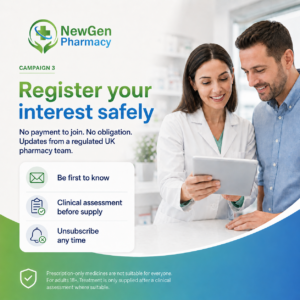
Suggested alt text: NewGen Pharmacy register interest safely for regulated weight management updates
Be careful with online adverts and social media claims
Patients should take care with online adverts, social media sellers or websites that appear to offer prescription-only weight management medicines without a proper consultation.
The GPhC guidance on weight management medicine advertising explains that adverts for named prescription-only weight management medicines must not target the public. These rules help protect people from unsafe or misleading promotion.
Be cautious if a website or seller offers treatment without a health assessment, promises guaranteed weight loss, uses pressure-selling language, or cannot show clear pharmacy registration details.
Safe pharmacy care should feel professional, transparent and measured. When something feels rushed or unclear, pause and seek advice.
What lifestyle changes still matter?
Medicine alone is not the full answer. Weight management usually works best when treatment sits alongside realistic daily habits.
A supportive plan may include balanced meals, enough protein, fibre-rich foods, regular hydration, gradual activity, good sleep and stress management. Small changes often feel easier to maintain than strict rules.
The goal is not perfection. It is to build routines that support health over time.
NewGen Pharmacy’s weight management support focuses on safe treatment decisions and practical guidance. We encourage patients to think about long-term wellbeing, not just short-term weight change.
What happens if treatment is not suitable?
Sometimes a prescriber may decide that treatment is not suitable. This can feel disappointing, but it is an important part of safe care.
Treatment may not be right because of a medical condition, medicine interaction, side-effect risk, pregnancy, breastfeeding or another health concern. In some cases, another route of care may be safer.
If treatment is not suitable, the pharmacy team can explain the reason and guide you towards the right support. This may include advice to contact your GP, NHS 111 or another healthcare service.
You can also contact NewGen Pharmacy through our contact page if you need help understanding which service may suit your needs.
How NewGen Pharmacy supports patients
NewGen Pharmacy provides regulated UK pharmacy services, including private healthcare support. Our weight management service puts safety, privacy and clinical review first.
Our team can help you understand available support, complete a confidential consultation and receive prescriber-led review. We can also explain possible side effects, safe use and follow-up steps where treatment is prescribed.
No prescription-only medicine suits everyone. No treatment should go ahead without assessment. A responsible provider should not promise guaranteed results.
To take the next step, visit NewGen Pharmacy’s weight management treatment page or book a private consultation.
Frequently Asked Questions
Are oral weight management tablets available in the UK?
The MHRA has approved the first GLP-1 tablet for weight loss in the UK. Availability, suitability and prescribing criteria still need confirmation through a regulated healthcare provider.
Can I get treatment without a consultation?
No. Prescription-only weight management medicines need a clinical assessment. A prescriber must check whether treatment is safe and suitable before supply.
Is a tablet safer than an injection?
Not always. Tablets and injections may have different routines, instructions and suitability factors. The safest option depends on your health, medicines and clinical review.
Can I switch from an injection to a tablet?
You may be able to switch in some cases, but only after prescriber review. Do not switch, stop or combine prescription treatments without professional advice.
Do weight management tablets guarantee weight loss?
No. Results vary between people. Treatment may support weight management for some patients, but it should sit alongside nutrition, activity and long-term lifestyle changes.
Are prescription weight management medicines for adults only?
Many prescription weight management medicines apply to adults only, but eligibility depends on the medicine licence, clinical guidance and prescriber assessment.
What should I do if I get side effects?
Contact the pharmacy team if side effects affect your wellbeing or treatment. Seek urgent medical advice if you feel severely unwell, have persistent vomiting, signs of dehydration, severe abdominal pain, chest pain, breathing difficulty or other urgent symptoms.
How do I know if a pharmacy is regulated?
A UK pharmacy should show clear registration details. You can check pharmacy registration through the General Pharmaceutical Council website.
When should I contact the pharmacy?
Contact NewGen Pharmacy if you have questions about weight management support, registration, consultation steps, side effects or ongoing care.
If you feel seriously unwell, contact your GP, NHS 111 or urgent care. In an emergency, always call 999.
Compliance note: This article is for general information only. It should not replace personal medical advice. NewGen Pharmacy does not promote prescription-only medicines to the public in a promotional way. Treatment options are only discussed after a suitable clinical assessment and only where safe, lawful and clinically appropriate. Prescription-only medicines are not suitable for everyone, and results vary.
Author & Content Writer: Dr Naeem Aslam