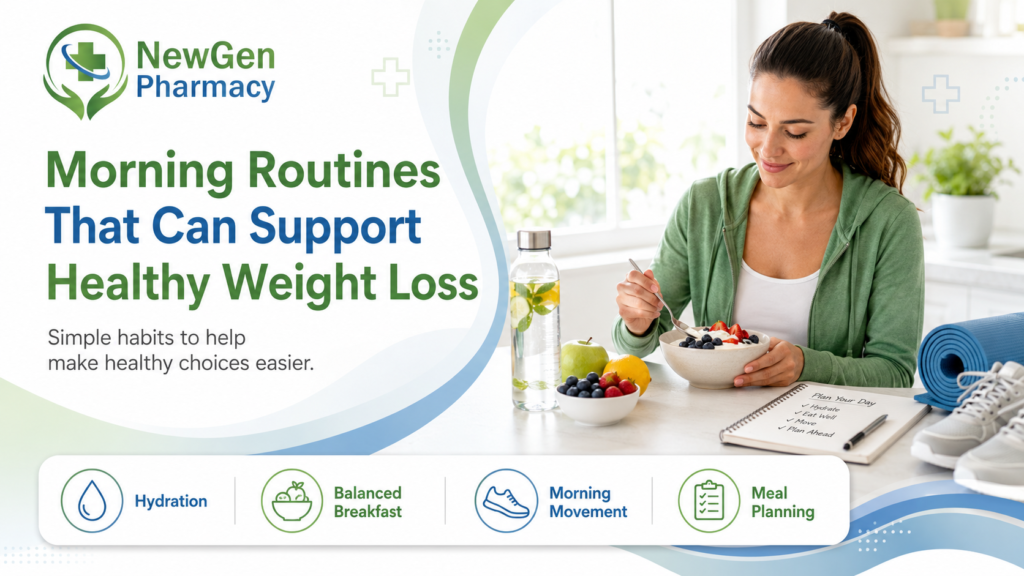
A morning routine can make healthy weight loss feel easier, calmer and more consistent. It does not need to be complicated. Small actions such as drinking water, eating a balanced breakfast, moving your body, planning meals and reducing rushed decisions can help set the tone for the rest of the day.
Many people struggle with weight management not because they lack motivation, but because daily life becomes busy. If the morning starts with stress, skipped breakfast, no plan for lunch and little time to think, food choices later in the day can become harder. Hunger may build up. Cravings may increase. Takeaways, snacks or larger portions may become more tempting.
A better morning routine does not need to be perfect. It should simply make healthier choices easier. The aim is to build habits that support energy, appetite, digestion, mood and long-term consistency.
The NHS Better Health weight loss guidance supports practical changes that people can maintain over time. The NHS Eatwell Guide also explains how different food groups can support a healthy, balanced diet. For movement, the NHS physical activity guidelines for adults explain why regular activity and strengthening exercises matter for health.
If you are considering extra support, NewGen Pharmacy’s weight management consultation page explains how pharmacist-led assessment and advice may help suitable patients.
Why Morning Habits Matter for Weight Loss
Morning habits can influence the rest of the day. A rushed morning may lead to skipped meals, low fluid intake, poor food choices and reduced activity. A more structured morning can help you feel more prepared.
Healthy weight loss usually depends on repeated habits. One healthy breakfast will not transform progress on its own. However, a routine that you repeat most mornings can support better choices over weeks and months.
A useful morning routine may help you:
Start the day hydrated
Eat more balanced meals
Avoid extreme hunger later
Plan lunch or snacks
Move your body earlier
Reduce stress and rushed decisions
Set realistic goals for the day
These habits can also support people who are using weight management treatment. Treatment may help some suitable patients manage appetite, but daily routines still matter. Food quality, hydration, movement, sleep and planning all support long-term results.
NewGen Pharmacy’s guide to lifestyle changes that support treatment explains why habits around food, activity, sleep and stress remain important during weight management.
Start With Hydration
Drinking water in the morning is a simple habit that can support weight management. Many people wake up mildly dehydrated, especially after a warm night, poor sleep, alcohol, or not drinking much the day before.
Hydration can support energy, concentration, digestion and bowel habits. It may also help you recognise the difference between hunger, thirst and tiredness.
You do not need to drink a huge amount at once. A glass of water when you wake up is a good starting point. If plain water feels difficult, you could try water with lemon, a sugar-free drink, or a warm drink without too much added sugar.
Hydration becomes especially important if you are eating less than usual or using treatment that affects appetite. Low fluid intake can contribute to headaches, tiredness, constipation and dizziness.
NewGen Pharmacy’s guide to protein, fibre and hydration explains why fluids, fibre and protein work together during healthy weight management.
Eat a Breakfast That Supports Fullness
Breakfast is not compulsory for every person, but it can be helpful for many. A balanced breakfast may reduce extreme hunger later in the day and help you make calmer food choices.
The best breakfast for weight loss is not always the lowest-calorie option. It should provide enough nutrition to support your morning and help you feel satisfied.
A useful breakfast often includes protein, fibre and fluids. Protein may help fullness and muscle maintenance. Fibre can support digestion and help meals feel more satisfying. Fluids support hydration and bowel habits.
Good breakfast options may include:
Greek yoghurt with berries and oats
Eggs on wholegrain toast
Porridge with fruit and seeds
Cottage cheese with fruit
Beans on wholegrain toast
A smoothie with yoghurt, fruit and oats
A small omelette with vegetables
Wholegrain cereal with yoghurt and fruit
The British Dietetic Association explains that a healthy breakfast can provide useful nutrients and sustained energy. This can be especially helpful if mornings are busy.
Do Not Let Breakfast Become Too Sugary
Some breakfasts look healthy but may not keep you full for long. Sugary cereals, pastries, sweet coffees, fruit juice and breakfast bars can add calories without providing lasting fullness.
This does not mean you can never enjoy these foods. It simply means they may not be the best everyday foundation if you are trying to build healthy weight loss habits.
A breakfast that is high in sugar and low in protein or fibre may leave you hungry again quickly. This can increase snacking or cravings later in the morning.
A simple improvement could be adding protein or fibre. For example, you could add Greek yoghurt to fruit, choose oats instead of sugary cereal, or add eggs to toast.
Small swaps can make breakfast more filling without making the routine strict.
Plan Your First Meal Before the Day Gets Busy
Many people make poorer food choices when they are rushed. If you wake up late, skip breakfast and leave without a plan, hunger may become stronger by lunchtime.
Planning your first meal can help. You might prepare overnight oats, boil eggs in advance, keep Greek yoghurt ready, or plan a simple breakfast you can repeat.
You do not need a different breakfast every day. In fact, having two or three reliable options can make mornings easier.
A repeatable breakfast is better than an unrealistic plan that you only follow once. Healthy weight loss works best when habits fit real life.
If you are using treatment and appetite is lower, NewGen Pharmacy’s article on what to eat while using weight loss treatment gives practical food ideas that can help you stay nourished.
Build Movement Into the Morning
Morning movement can support mood, energy and consistency. It does not need to mean a long gym session.
A short walk, gentle stretching, cycling, a home workout, light resistance exercises, yoga, Pilates or even walking to the shop can help. The best activity is one you can repeat.
Morning movement may also help people who struggle to exercise later in the day. Once work, family and responsibilities take over, exercise can be harder to fit in.
Start small. A ten-minute walk done regularly is more useful than an intense workout you cannot maintain.
If you have not exercised for a long time, have chest pain, severe breathlessness, dizziness, joint pain or a long-term medical condition, ask a healthcare professional before starting a new routine.
Include Strength Habits Where Possible
Strength-based activity can support healthy weight loss because it helps maintain muscle. Muscle supports movement, strength, balance and long-term function.
You do not need heavy weights to begin. Strength habits can include bodyweight squats, wall push-ups, resistance bands, carrying shopping, climbing stairs or supervised gym exercises.
A simple morning strength routine might take five to ten minutes. For example, you could do gentle sit-to-stands, wall press-ups, calf raises and light stretching.
This may not feel like much at first, but consistency matters. Small amounts of strength work can build confidence and make activity feel less intimidating.
Strength activity works best alongside enough protein, sleep and recovery.
Reduce Rushed Decisions
Rushed decisions can make weight management harder. When you feel stressed, hungry or unprepared, it becomes easier to choose whatever is quickest.
A morning routine can reduce decision fatigue. It can help you decide what you will eat, when you will move and what you will take with you before the day becomes busy.
Simple planning steps may include:
Preparing lunch the night before
Keeping fruit or yoghurt available
Filling a water bottle
Planning dinner before leaving home
Choosing a walking time
Packing medication or supplements if needed
Checking your calendar for busy periods
These actions may seem small, but they reduce the chance of relying on snacks, takeaways or skipped meals later.
Prepare Lunch or Snacks Early
A healthy lunch can support the rest of the day. If lunch is skipped or unplanned, hunger may build up in the afternoon or evening.
Preparing lunch in the morning can help you avoid last-minute choices. This does not need to mean cooking from scratch every day.
Simple options may include soup, a chicken or tuna wrap, lentil salad, beans on wholegrain toast, leftovers from dinner, a jacket potato, or yoghurt with fruit and oats.
Planned snacks can also help. Fruit, yoghurt, boiled eggs, hummus with vegetable sticks, soup, or a small handful of nuts may help prevent extreme hunger.
The goal is not to snack constantly. The goal is to avoid becoming so hungry that later choices feel harder to control.
Use the Morning to Support Evening Choices
Morning habits affect evening habits more than many people realise. If you skip breakfast, drink little water and eat a small lunch, you may feel very hungry later.
This can increase evening snacking, larger portions or takeaway cravings.
A balanced morning can reduce this pattern. Eating enough earlier in the day may help you feel more in control by dinner.
This matters because many people feel they do well during the day but struggle at night. Often, the evening problem starts earlier with missed meals, low protein, low fibre, dehydration or stress.
A good morning routine supports the whole day, not just the morning.
Set a Simple Daily Intention
A daily intention can help you focus without becoming strict. It should be realistic and specific.
For example:
Today I will drink two bottles of water.
Today I will walk for ten minutes.
Today I will include protein at breakfast.
Today I will prepare lunch instead of skipping it.
Today I will eat dinner without rushing.
This is not the same as setting extreme rules. The goal is to choose one helpful action that supports your wider plan.
Small intentions can build confidence. They can also help you notice progress even when the scale is slow.
NewGen Pharmacy’s article on healthy weight loss habits explains why realistic changes are usually more effective than short-term strict dieting.
Avoid Starting the Day With Guilt
Some people wake up feeling guilty about what they ate the day before. This can lead to skipped meals or overly strict rules in the morning.
That approach often backfires. Skipping meals to “make up for” yesterday may increase hunger and cravings later.
A better response is to return to routine. Drink water, eat a balanced meal, move your body if you can, and make the next helpful choice.
Weight loss is not built on perfect days. It is built on repeated returns to helpful habits.
If yesterday was difficult, today does not need to be extreme. It only needs to be steady.
Morning Routines During Weight Loss Treatment
If you are using weight management treatment, a morning routine can help you manage food, hydration and side effects more safely.
Some people notice reduced appetite, nausea, constipation or changes in meal size. A steady morning routine can make it easier to drink enough, eat balanced meals and monitor how you feel.
If you feel full quickly, smaller balanced meals may help. If you feel nauseous, lighter foods and small sips of water may feel easier.
Do not skip nutrition completely because your appetite is lower. Your body still needs protein, fibre, vitamins, minerals and fluids.
If side effects affect your ability to eat, drink or function, contact the pharmacy or seek medical advice. Treatment should support health, not make you feel seriously unwell.
What If You Are Not a Morning Person?
Not everyone enjoys mornings. You do not need to wake up at 5am or follow a strict routine to lose weight.
A useful morning routine can be short. It might take ten minutes. It might simply include water, a planned breakfast and packing lunch.
If mornings are difficult, prepare the night before. Put your water bottle out. Prepare breakfast. Pack lunch. Lay out clothes for a walk. Decide what your first meal will be.
This reduces pressure in the morning and makes the routine easier to follow.
Healthy habits should fit your life. They should not feel like punishment.
Practical Morning Routine Example
A simple morning routine could look like this:
Wake up and drink a glass of water.
Take any regular medicines as directed.
Eat a protein and fibre-rich breakfast.
Prepare lunch or a planned snack.
Walk for ten minutes or stretch gently.
Set one realistic intention for the day.
This routine can be adapted. Some people may eat later. Others may move first. Some may need to take medicines with food.
The exact order matters less than consistency. Choose a pattern that supports your health and fits your schedule.
When to Seek Professional Advice
You should seek advice if weight gain is sudden, unexplained or linked with symptoms such as tiredness, swelling, breathlessness, low mood, digestive symptoms or changes in appetite.
You should also ask for support if you have diabetes, high blood pressure, heart disease, kidney disease, eating disorder history, pregnancy, breastfeeding or significant long-term conditions.
If your morning routine involves extreme restriction, skipping meals regularly, fear of food, purging, or loss of control around eating, speak to a GP or mental health professional.
Weight management should support your physical and emotional wellbeing.
How NewGen Pharmacy Can Help
NewGen Pharmacy offers confidential weight management support where appropriate after clinical assessment.
Our pharmacy team can help patients understand how morning routines, food choices, hydration, movement and planning may support long-term progress.
Our pharmacists and clinicians can support patients with lifestyle advice, treatment suitability assessment, side-effect guidance, realistic expectations and signposting when GP or urgent care review is needed.
If you want to take the next step, you can book a confidential weight management consultation with NewGen Pharmacy.
You can also learn more about online consultations or contact NewGen Pharmacy if you have questions about services or next steps.
Frequently Asked Questions
What is the best morning routine for weight loss?
The best morning routine is one you can repeat. It may include water, a balanced breakfast, movement, lunch planning and one simple goal for the day.
Do I need to eat breakfast to lose weight?
Not everyone needs breakfast. However, many people find that a balanced breakfast helps reduce hunger, cravings and rushed food choices later in the day.
What should I eat in the morning for healthy weight loss?
A helpful breakfast often includes protein and fibre. Examples include Greek yoghurt with berries and oats, eggs on wholegrain toast, porridge with fruit, or beans on wholegrain toast.
Is morning exercise better for weight loss?
Morning exercise can help some people stay consistent, but the best time is the time you can maintain. Walking, stretching, cycling and strength exercises can all help.
How much water should I drink in the morning?
A glass of water when you wake up is a simple starting point. Your total fluid needs depend on your health, activity, weather and individual circumstances.
Can a morning routine help with evening snacking?
Yes. Eating enough protein and fibre earlier in the day, staying hydrated and planning meals can reduce extreme hunger later, which may help with evening snacking.
Should I skip breakfast if I ate too much the day before?
Usually no. Skipping meals to compensate can increase hunger and cravings later. It is usually better to return to balanced meals and normal routine.
What if I feel sick in the morning during weight loss treatment?
Try small sips of water and lighter foods if suitable. Contact the pharmacy or seek medical advice if nausea is persistent, severe, or affects your ability to eat and drink.
Can I drink coffee in the morning while losing weight?
Coffee can fit into a healthy routine for many people. Be mindful of added sugar, syrups, cream or high-calorie coffee drinks.
When should I ask for professional help?
Ask for help if you are not making progress, feel unwell, have side effects, have a long-term condition, or feel anxious or distressed around food and weight.
Final Thoughts
A morning routine can support healthy weight loss by making helpful choices easier. It does not need to be strict or complicated.
Hydration, balanced breakfast choices, movement, meal planning and simple daily goals can all support long-term progress. These habits may also help reduce rushed decisions, extreme hunger and evening snacking.
The best routine is one that fits your life and supports your wellbeing. Small changes repeated consistently often matter more than dramatic plans that only last a few days.
NewGen Pharmacy can help patients understand safe, realistic weight management options and build habits that support long-term health.
Compliance note: This article provides general information only. It does not promote prescription-only medicines publicly in a promotional way. A clinician or prescribing pharmacist can only discuss suitable treatment options privately after an appropriate assessment and only where treatment is safe, lawful and clinically appropriate.
Author & Content Writer: Dr Naeem Aslam