Handling Cravings in Week Two, Without Relying on Willpower Alone
Use this guide to understand your options and decide when personalised advice is the right next step.
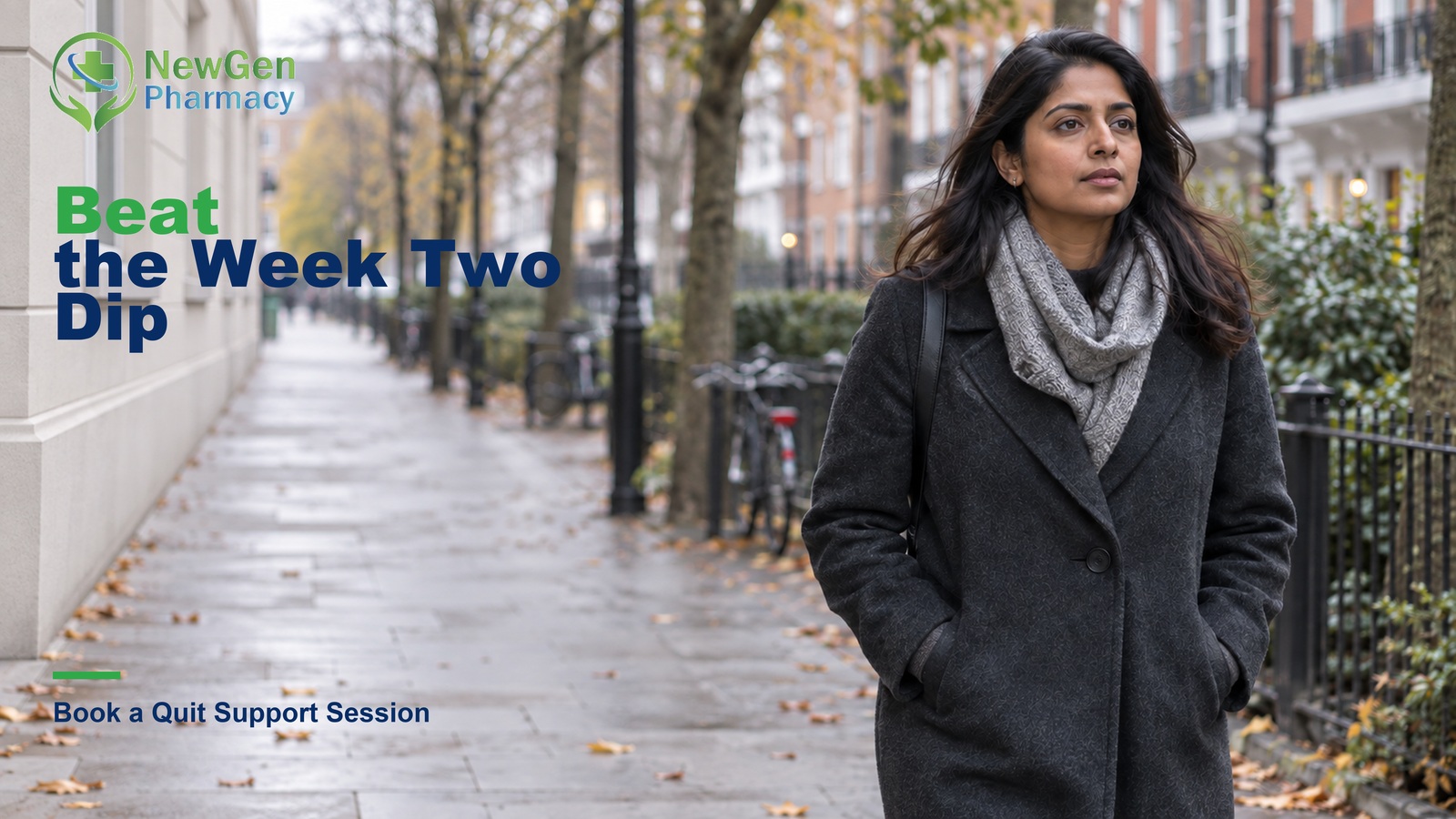
Handling cravings in week two after quitting smoking can be harder than expected. If it feels harder than week one did, that's not a bad sign. It's a predictable point in the process. Specific things help more than gritting your teeth through it.
This guide looks at why week two catches people out, and what actually works when willpower alone starts to run thin.
Handling cravings: why week two can feel difficult
Most of the physical nicotine withdrawal has passed by the second week, but the habit itself hasn't. Week one often runs on the motivation of a fresh start. By week two, that novelty has faded. The ordinary triggers of daily life, the drive home, a coffee break, a stressful call, start reasserting themselves.
This is precisely why quit attempts often fail in week two rather than week one. It isn't weaker willpower. It's a different, less obvious kind of craving taking over from the physical one.
Physical craving versus habit craving
Week one cravings are mostly physical, driven by nicotine leaving your system. Week two cravings more often come from habit and routine: a specific time of day, a specific place, a specific activity you used to pair with smoking.
Recognising which type of craving you're having changes what actually helps. A habit craving responds better to changing your routine than to gritting your teeth through it.
Identifying your own triggers
Common week-two triggers include:
- your usual smoking spot or break time at work
- having a coffee or a drink
- finishing a meal
- a stressful phone call or a difficult moment
- being around other smokers
Most people have two or three triggers that account for most of their cravings. Identify yours specifically. It's more useful than trying to prepare for every possible moment.
Social occasions and alcohol as a specific risk
Drinking lowers your guard around old habits. Alcohol and smoking are strongly linked for most former smokers. A pub, party or barbecue can undo weeks of progress in a single evening.
This risk is higher in week two than week one. The resolve of a fresh quit has usually softened by then.
Going into a social event with a plan helps. Know which moments will tempt you. Decide in advance how you'll handle them. Consider drinking less until the urge to smoke alongside a drink has faded.
Telling one trusted friend at the event helps too. They can distract you at the right moment, or step outside with you, so you're not managing it alone.
Breaking the pairing
Is a specific activity strongly paired with smoking in your mind? Changing something small about that activity can weaken the association. Take a different route. Drink your coffee somewhere different. Step outside for a walk instead of a break. All of this helps separate the trigger from the old habit.
It works because the craving is often tied to the routine itself, not just the nicotine.
What to do in the moment
A craving typically peaks and fades within a few minutes, even though it can feel much longer at the time. Have something specific ready to do in that window. That matters more than trying to simply wait it out.
Useful options include a short walk, a glass of water, chewing gum, or calling or texting someone. The goal isn't to distract yourself forever. It's to get through the few minutes until the craving passes.
Why "just one" is the riskiest thought
Week two is when the idea of "just one cigarette" tends to feel most convincing. The physical withdrawal has eased, and it feels like you're back in control.
This is usually the thought worth being most cautious of. One cigarette rarely stays one. For many people it restarts the cycle from the beginning rather than staying a one-off.
Nicotine replacement in week two
Using nicotine replacement therapy, patches, gum or lozenges? Week two is not the point to stop using it just because the physical urgency has eased. Stopping support too early is a common reason week two becomes the point people relapse.
Does your current product not feel like it's covering cravings at particular moments? Raise it with a pharmacist rather than assuming it isn't working at all.
Switching to vaping as a step-down option
Some people consider vaping instead of nicotine replacement products. NHS guidance recognises that e-cigarettes can help some smokers quit. They carry a fraction of the risk of smoking, though they aren't risk-free and aren't right for everyone.
Switching mid-attempt is different from starting on vaping from day one. Treat it as a deliberate choice, not a fallback grabbed in a moment of craving. A pharmacist can talk through whether it suits you better than what you're currently using. They can also help you plan how you'll eventually stop vaping too.
If you slip up in week two
A single cigarette doesn't undo your progress, and it isn't a reason to abandon the attempt. What matters is getting back to smoke-free as quickly as possible. Don't treat one slip as permission to fully restart.
Most people who eventually quit for good have at least one attempt along the way that included a slip like this.
Mood and irritability in week two
Some irritability and low mood can continue into week two as your brain adjusts to functioning without nicotine's effect on dopamine. This tends to ease further by weeks three and four.
Regular meals, staying hydrated, and getting enough sleep all make a genuine difference to how manageable this feels. None of them sound directly related to smoking, but they help anyway.
Sleep disruption and vivid dreams
Poor sleep is common in the first couple of weeks. Nicotine affects several brain chemicals that regulate sleep. Your body needs time to recalibrate once it stops getting a regular dose.
Some people also notice unusually vivid or unsettling dreams during this period. This is a recognised withdrawal symptom, not a sign anything is wrong. A consistent bedtime helps. So does cutting caffeine later in the day and avoiding screens right before bed.
If poor sleep is affecting how you cope during the day, mention it to a pharmacist. Raise it alongside anything else you're finding difficult.
Weight and appetite changes in week two
Appetite often changes around this point. Nicotine has a mild effect on metabolism, so some adjustment is normal as your body settles. Food can also start tasting and smelling stronger as your senses recover.
Try not to treat this as a separate battle on top of quitting. Keep meals regular. Have a healthy snack ready for moments you'd normally reach for a cigarette. Staying active helps too, even a short daily walk.
If weight is a significant worry for you, raise it with a pharmacist. Don't let it become a reason to reach for a cigarette instead.
Tracking your progress: apps, savings and small rewards
Seeing real progress helps motivation hold up. The NHS Quit Smoking app and similar tools let you log smoke-free days. They also track money saved and flag small health milestones as you reach them.
Setting aside the cash you'd have spent on cigarettes gives you something tangible to show for quitting smoking week two. A jar or a separate account both work fine. Some people set a small reward for reaching two weeks, then another for a month. It doesn't need to be expensive to work as a genuine incentive.
A two-week milestone is also worth marking for its own sake. Circulation and lung function are already improving by this point, on top of the money saved. Noticing that physical progress, not just the psychological win, gives you another reason to keep going when the routine still feels unfamiliar.
Looking ahead to week three and four
Finding week two difficult? Most people describe weeks three and four as noticeably easier again, once new routines have had time to properly replace the old ones. Our guide to Stoptober and the 28-day marker covers why this specific window matters for making a quit attempt stick long-term.
Quitting in pregnancy: what's different in week two
Pregnancy doesn't remove the week-two dip. Habit-driven cravings can feel just as strong as they do for anyone else, alongside extra motivation to see the quit through.
Nicotine replacement can be used in pregnancy. But the product and dose should always be agreed with a midwife, GP or pharmacist first, since pregnancy changes what's appropriate. NHS guidance on keeping well during pregnancy covers this in more detail. Specialist stop smoking support in pregnancy usually offers more frequent contact, since this stage is known to be harder.
Telling people you've quit
Some people find it easier to keep their quit attempt private, particularly in the first couple of weeks. Others find telling colleagues, friends or family builds useful accountability, since people around you can help you avoid trigger situations without you having to explain each time.
There's no right answer here. Choose whichever approach makes you more likely to stick with it, not whichever feels more impressive to announce.
How NewGen Pharmacy can help
Support through the harder middle stretch of quitting can make a real difference to whether it sticks.
NewGen Pharmacy can help with:
- advice on adjusting your nicotine replacement if cravings aren't being covered
- practical strategies for your specific triggers
- ongoing support if week two or three is proving difficult
You can book a consultation with our team at any point during your quit attempt, not just at the start.
Frequently Asked Questions
Why does week two feel harder than week one?
Physical withdrawal has mostly passed, but habit-driven cravings tied to your normal routine become more noticeable instead.
Should I still use nicotine replacement in week two?
Yes. Stopping too early, once physical urgency eases, is a common reason people relapse in week two specifically.
What's the best way to handle a craving in the moment?
Have something specific ready, a short walk, water, gum, or calling someone, since most cravings pass within a few minutes.
Is it true one cigarette won't hurt?
For many people, one cigarette restarts the full cycle rather than staying a one-off, which is why it's worth being cautious of that thought specifically.
What if I do have a cigarette in week two?
Get back to smoke-free as soon as you can. A single slip doesn't undo your progress or mean you've failed.
Is irritability in week two normal?
Yes, to a degree, as your brain continues adjusting. It tends to ease further by weeks three and four.
How do I know what's triggering my cravings?
Most people have two or three specific triggers, often tied to routine rather than nicotine itself. Noticing the pattern helps more than general willpower.
Does changing my routine actually help?
Yes. Cravings are often tied to the pairing between an activity and smoking, so changing something small about the activity can weaken that link.
Will it keep being this hard?
No. Most people find weeks three and four noticeably easier as new routines properly replace the old ones.
Should I talk to a pharmacist if cravings aren't easing?
Yes, particularly if your current nicotine replacement doesn't feel like it's covering specific moments.
Is it normal to gain a little weight while quitting?
A modest change in appetite is common and manageable, so it's worth planning for rather than treating as a separate problem.
Can I vape instead of using nicotine replacement in week two?
Some people do. NHS guidance supports vaping as a quitting aid, though it's worth discussing the switch with a pharmacist first.
Is disrupted sleep in week two something to worry about?
No. It's a common, temporary withdrawal effect that usually settles within a few weeks.
Compliance note
This article provides general health information only and does not replace medical advice, diagnosis, or treatment. Speak to a pharmacist or GP for advice suited to your own quit attempt, especially if you are pregnant or managing an existing health condition.