Stoptober 2026: Why This October Is the Best Time to Quit
Use this guide to understand your options and decide when personalised advice is the right next step.
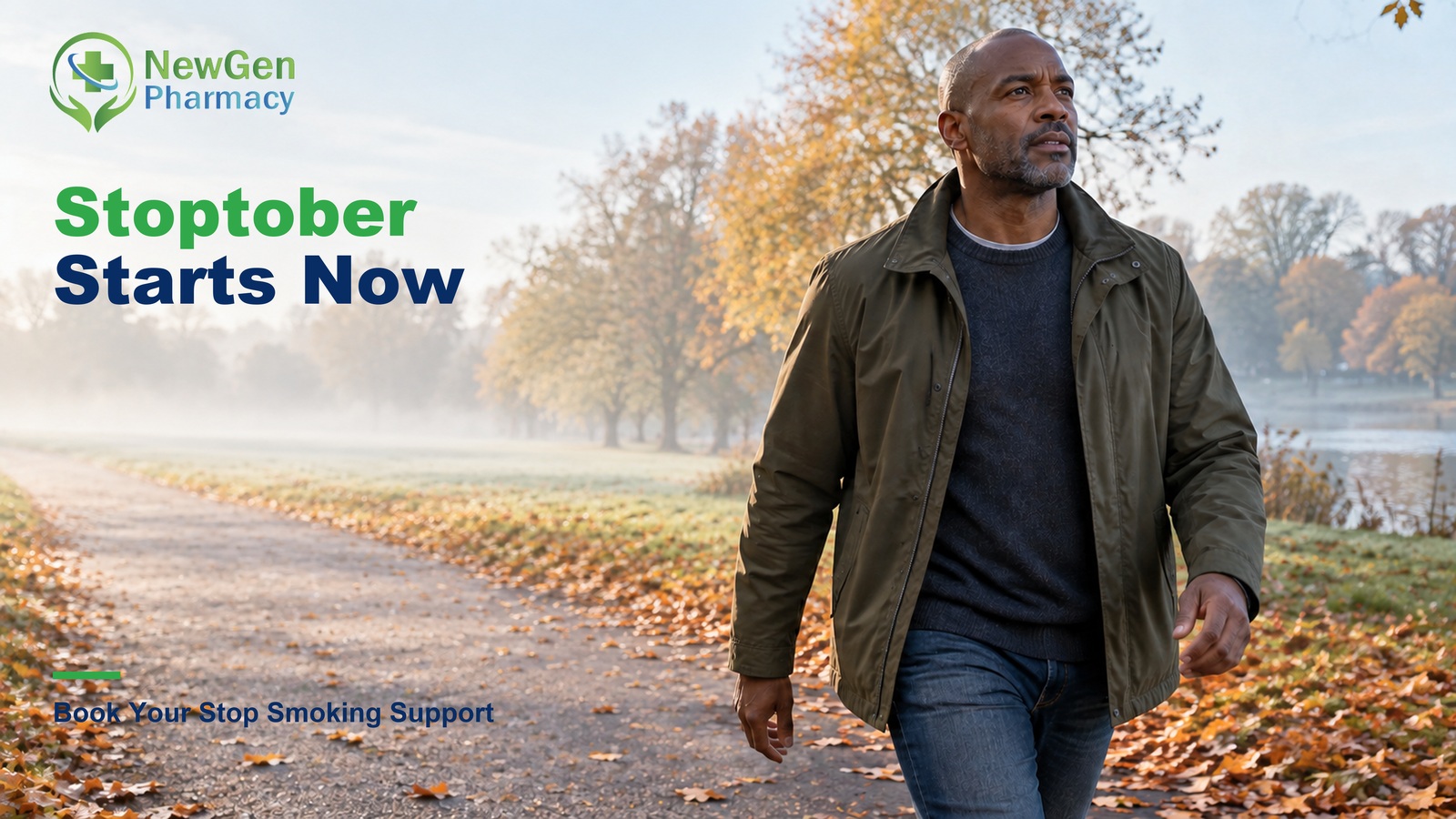
Stoptober 2026 runs throughout October. It exists because one simple pattern keeps showing up in the data: people who make it through the first 28 days smoke-free are far more likely to stay quit for good.
This guide looks at why the 28-day marker matters, what actually happens in your body along the way, and how to give this year's attempt the best chance.
Why 28 days is the number that matters
Public health campaigns settled on 28 days for a reason. Stay smoke-free for that long, and you're roughly five times more likely to quit for good compared with someone who tries for a shorter period.
It isn't an arbitrary round number. It's roughly how long it takes for the most intense physical cravings to fade. New, smoke-free routines start replacing old habits in that window too. The NHS's Better Health quit smoking service is built around the same 28-day principle.
Preparing before your quit day
A little preparation makes the first day easier. Before Stoptober 2026 starts, clear cigarettes, lighters and ashtrays out of your home, car and desk.
Tell people close to you that you're quitting, so they know not to offer you a cigarette and can back you up when it gets hard. Stock up on whatever you've chosen to help, whether that's nicotine replacement, sugar-free gum, or something to fidget with. Having everything ready before day one means you're not scrambling for support in the middle of your first craving.
What changes in your body, week by week
Within 20 minutes of your last cigarette, your heart rate starts to drop. Within 72 hours, nicotine leaves your body, and breathing tends to feel easier as airways start to relax.
Circulation improves within 2 to 12 weeks. Coughing and shortness of breath continue to improve within 3 to 9 months, as lung function recovers. These changes are cumulative. The longer you stay smoke-free, the more of them stack up.
Free tools and support during Stoptober 2026
You don't have to fund every part of quitting yourself. The NHS Quit Smoking app tracks your smoke-free days and savings, and sends daily encouragement during the weeks that matter most.
Local stop smoking services, run through your GP surgery or pharmacy, offer free one-to-one or group support alongside Stoptober 2026, and many people don't realise these exist until they ask. Combining a free tool like the app with in-person support from a pharmacist tends to work better than relying on either one alone. It costs nothing to ask what's available in your area before you start.
Why group quitting works better
Quitting alongside other people tends to work better than quitting alone. That might be a formal group, a workplace challenge, or simply friends quitting at the same time.
Shared accountability helps. So does comparing notes on cravings, and simply not being the only person turning down a cigarette at a social event. Stoptober's whole design leans on this, since a large number of people quit on the same date.
The first three days
The first 72 hours are usually the hardest, since nicotine withdrawal peaks here. Irritability, difficulty concentrating, and strong cravings are all common and expected.
Knowing this in advance helps. A craving lasts a matter of minutes, even if it doesn't feel that way at the time. Each one you get through makes the next slightly easier.
Sleep and mood in the first month
Withdrawal doesn't just affect cravings. Many people find their sleep and mood shift noticeably in the first few weeks.
Vivid dreams, waking more often, or feeling low or unusually short-tempered are all common as your body adjusts to functioning without nicotine. These effects generally ease as the weeks go on, in line with the same 28-day pattern that governs cravings. Keeping a normal bedtime routine and cutting caffeine in the evening helps more than it might seem, especially in weeks one and two.
Choosing your quit method
Nicotine replacement therapy, such as patches, gum or lozenges, can roughly double your chances of quitting successfully compared with willpower alone. Prescription medicines are also an option for some people.
There's no single right method. Pick one that fits your actual smoking pattern and stick with it. Don't go completely cold turkey if that hasn't worked for you before.
If nicotine replacement doesn't seem to be working
Still getting strong cravings on your current product? It's often a dose problem, not a sign the method has failed.
Patches, gum and lozenges come in different strengths, and many people start on one that's too low for how much they used to smoke. A pharmacist can review your usage and suggest a stronger product, a different combination, such as a patch alongside gum for sudden cravings, or a completely different option. Don't quietly give up on a method that isn't working. Ask before you assume nothing will help.
Common triggers in the first month
Certain situations tend to trigger cravings more than others in the early weeks:
- your usual smoking breaks at work
- having a drink socially
- stress or a difficult moment in the day
- finishing a meal
- being around other smokers
Plan ahead for these specific moments. Don't just hope willpower carries you through. It makes a real difference.
Quitting when others around you still smoke
Living or working alongside smokers adds a genuine extra difficulty. It doesn't make quitting impossible, but it does mean planning further ahead.
Ask a partner or housemate who still smokes to keep cigarettes out of shared rooms and to smoke outside during your first few weeks. At work, agree what you'll do during breaks that used to mean joining smokers outside, since the exact moment cigarette breaks happen is one of the highest-risk triggers of the day. Being upfront about needing this support tends to work better than trying to manage it silently.
Handling cravings as they come
A craving typically peaks and fades within a few minutes. Have something ready to do in that window: a short walk, a glass of water, calling someone, chewing gum. It gives you somewhere to put the urge until it passes.
Our guide on handling cravings in week two goes further into this once the first few days are behind you.
Weight and quitting
Some people gain a small amount of weight after quitting smoking. Nicotine suppresses appetite slightly, and food starts to taste better again once you stop.
This isn't inevitable, and it's a much smaller health risk than continuing to smoke. Keep meals regular. Have a plan for the cigarette-shaped gap in your routine, rather than filling it automatically with snacking.
Stopping smoking during pregnancy
Quitting during pregnancy brings faster, more specific benefits than at most other times. Stopping at any stage improves outcomes for both you and your baby, and it's never too late in pregnancy to see a benefit.
Specialist stop smoking support in pregnancy exists separately from general Stoptober 2026 support, with input tailored to what's safe to use while pregnant. If you're pregnant and want to quit, ask your midwife or GP for a referral rather than choosing a nicotine replacement product on your own, since not every option is suited to pregnancy.
If you slip up
A single cigarette after a period of not smoking doesn't undo your progress. It isn't a reason to give up on the attempt altogether. Most people who eventually quit for good have at least one attempt that included a slip.
What matters more is getting back to smoke-free as soon as possible. Don't treat a slip as permission to fully restart.
Vaping as part of quitting
Many people use vaping as a way to reduce or stop smoking. Current evidence suggests it's considerably less harmful than continuing to smoke. It isn't risk-free, and it isn't recommended for people who have never smoked.
Considering vaping as a quit method? Discuss it with a pharmacist so you choose an approach suited to how much you currently smoke. Action on Smoking and Health (ASH) publishes independent, evidence-based guidance on vaping and other quit methods if you want to read further before deciding.
Is it too late if you've smoked for decades?
It's a common reason people give for not trying. It isn't supported by the evidence.
Lung function and circulation start improving within weeks of quitting, whatever your age or smoking history. Long-term smokers still see a real drop in future health risk after quitting, even after decades. The benefit is smaller than quitting earlier would have given, but it's never zero, and it's never too late for it to be worth attempting during Stoptober 2026 or any other month.
Why Stoptober 2026 specifically
There's nothing medically special about October itself. What matters is the shared start date, and the extra support that's more visible during the campaign. Committing alongside a known, public effort tends to hold people more accountable than a private decision to quit "sometime soon."
If a previous attempt didn't work, that doesn't predict this one. Most people who successfully quit smoking do so only after more than one attempt.
How NewGen Pharmacy can help
Support during your quit attempt can make a real difference to whether it sticks.
NewGen Pharmacy can help with:
- advice on choosing the right nicotine replacement or medicine for your situation
- ongoing support through the first difficult weeks
- guidance if cravings or side effects aren't settling
You can book a consultation with our team to talk through the options before you start, or at any point during your quit attempt.
Frequently Asked Questions
Why specifically 28 days?
People who stay smoke-free for 28 days are roughly five times more likely to quit for good than those who try for a shorter period.
Is nicotine replacement therapy safe?
Yes, for most people. It's a recognised, effective way to manage withdrawal and roughly doubles your chances of success.
What if I've tried and failed before?
Most people who quit successfully do so only after more than one attempt. A previous attempt not working doesn't predict this one.
Will I definitely gain weight?
Not necessarily, and any weight gain is a much smaller health risk than continuing to smoke.
Is vaping a good way to quit?
It's used successfully by many people and is considerably less harmful than smoking, though it isn't risk-free.
What's the hardest part?
The first 72 hours, when nicotine withdrawal peaks, tend to be the hardest for most people.
Does quitting with other people actually help?
Yes. Shared accountability and support tend to make the early weeks noticeably easier.
What should I do if I have one cigarette during my quit attempt?
Get back to smoke-free as soon as you can. A single slip doesn't undo your progress.
How quickly does my body start to recover?
Some changes start within 20 minutes, with breathing and circulation improving over the following weeks and months.
Do I need a prescription to quit?
Not necessarily. Nicotine replacement products are available without one, though prescription options exist for some people.
Can I quit smoking while pregnant?
Yes, and quitting at any stage of pregnancy brings a real benefit, so ask your midwife or GP for tailored support.
What if my nicotine patches don't stop the cravings?
Ask a pharmacist to review the strength, since many people start on a dose that's too low for how much they smoked.
Compliance note
This article provides general health information only and does not replace medical advice, diagnosis, or treatment. Speak to a pharmacist or GP to find the quit method best suited to you.
One Response