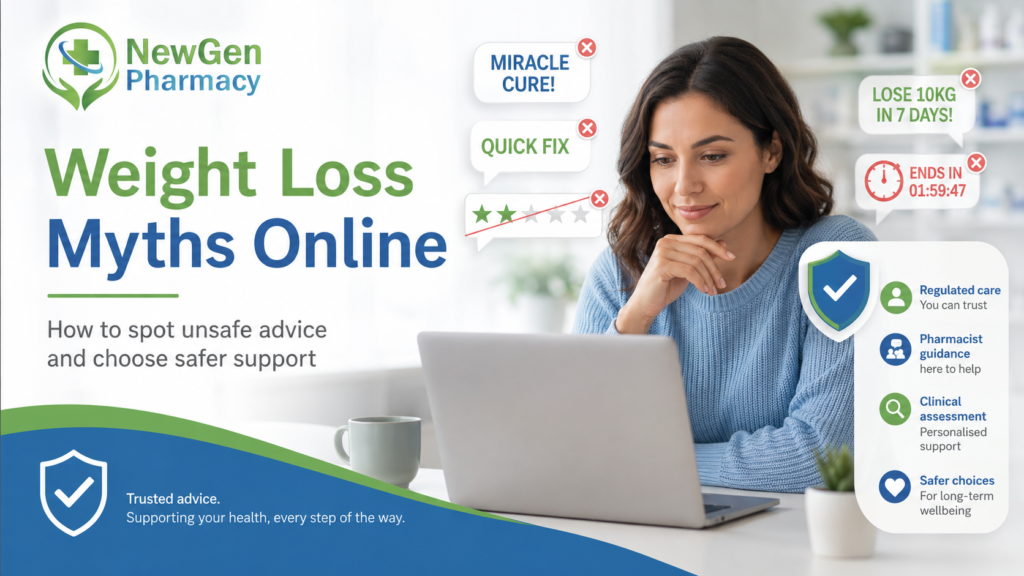
Weight loss advice is everywhere online. Social media videos, sponsored posts, private sellers, influencer routines, detox plans, supplement adverts and “miracle cure” claims can make it difficult to know what is safe and what is misleading.
Some advice may look professional but still be unsafe. Other claims may use medical language, before-and-after photos, fake reviews or urgent sales messages to make people feel pressured. When someone wants results quickly, these messages can feel tempting.
Safe weight management should never rely on fear, shame or unrealistic promises. A reliable plan should consider your health, medical history, medicines, eating habits, activity, sleep, stress and personal goals. If treatment is considered, it should happen only after an appropriate clinical assessment.
This article explains common weight loss myths, why misinformation can be harmful, and how patients can make safer choices online. It also explains why regulated pharmacy support matters when considering weight management treatment.
If you want a safe starting point, NewGen Pharmacy’s guide to safer weight management online explains what to check before trusting online advice or treatment services.
Why weight loss misinformation spreads online
Weight loss misinformation spreads quickly because it often promises something simple. Many online posts claim that one product, one food rule or one routine can change everything.
Real weight management is usually more personal. Progress can depend on age, hormones, sleep, stress, health conditions, medicines, activity, appetite, work patterns and family life. That makes honest advice less dramatic than online claims.
Social media also rewards short, confident messages. A video that says “avoid this food and lose weight fast” may get more attention than balanced advice about sustainable habits.
Some sellers use this to their advantage. They may promote unsafe supplements, unlicensed injections, fake medicines, extreme fasting plans or detox products without proper assessment.
NewGen Pharmacy’s article on healthy weight loss explains why gradual, realistic changes are safer than quick-fix promises.
Myth 1: Miracle cures can melt fat quickly
Many online adverts claim that a product can “melt fat”, “burn belly fat overnight” or “reset your metabolism”. These claims should raise concern.
No genuine healthcare professional should promise fast, guaranteed weight loss for everyone. Bodies respond differently, and safe progress usually takes time.
Miracle claims often ignore important factors such as medical history, eating patterns, medicines, hormone conditions, sleep, stress and emotional eating. They may also encourage people to spend money on products that have little evidence or possible safety risks.
A safer approach focuses on repeatable habits. This may include balanced meals, regular movement, enough protein, fibre, hydration, sleep and support where needed.
If a claim sounds too easy, too fast or too certain, pause before trusting it.
Myth 2: Detox teas and cleanses are needed for weight loss
Detox teas, juice cleanses and “cleanse kits” are common online. They often claim to remove toxins, flatten the stomach or restart weight loss.
Your body already has systems that process waste, including the liver, kidneys, lungs, digestive system and skin. Most detox products do not provide the special benefits they claim.
Some products may simply act as laxatives or diuretics. This can reduce water weight temporarily, but it does not mean body fat has reduced. It may also increase the risk of dehydration, diarrhoea, cramps, dizziness or medicine interactions.
Very restrictive cleanses can also make hunger worse. After a few days of low intake, some people feel tired, irritable and more likely to overeat later.
Instead of a detox, focus on normal meals that support fullness and energy. NewGen Pharmacy’s guide to protein, fibre and hydration explains how simple nutrition habits can support safer weight management.
Myth 3: Extreme fasting works for everyone
Some people choose fasting as part of their eating pattern. For others, extreme fasting can become unsafe or difficult to maintain.
Online advice often presents fasting as suitable for everyone, but this is not true. Long fasting periods may not be appropriate for people with diabetes, pregnancy, breastfeeding, eating disorder history, certain medicines, fainting episodes, complex medical conditions or high physical demands.
Extreme fasting can also lead to headaches, dizziness, low energy, poor concentration, irritability, constipation, disrupted sleep and stronger cravings.
A safer plan should match the person. Some patients do better with regular meals. Others prefer a structured eating window. The key is whether the approach is safe, nourishing and sustainable.
Before making major changes, especially if you have a medical condition or take regular medicines, speak to a pharmacist, GP or suitable healthcare professional.
Myth 4: Social media sellers are safe if reviews look good
Online reviews can be misleading. Some sellers use fake testimonials, edited photos, stolen images or paid comments to look trustworthy.
A social media account is not the same as a regulated pharmacy. Sellers on messaging apps, marketplaces or private groups may offer products without proper checks, prescriptions, storage standards or clinical assessment.
This is especially risky with prescription-only medicines. A seller who offers weight loss injections without a proper consultation, medical review or regulated pharmacy details should not be trusted.
The General Pharmaceutical Council explains that patients should check whether an online pharmacy is registered and that safe online services should clearly show regulation details. You can read more in the GPhC guide to buying medicines safely online.
NewGen Pharmacy’s guide to online pharmacy safety checks explains what to look for before using an online pharmacy website.
Myth 5: Fake injections are easy to spot
Fake weight loss injections are not always easy to identify. Packaging, labels and pens may look convincing, especially in photos or videos.
This can be dangerous. Fake medicines may contain the wrong ingredient, too much or too little active ingredient, no active ingredient, or harmful substances. They may also be stored incorrectly or supplied without safety checks.
The MHRA has warned the public about unsafe fake weight loss pens found in the UK and advises people to access these medicines only through a medical prescription and legitimate pharmacy routes. You can read the MHRA warning about unsafe fake weight loss pens.
Patients should be careful with any seller offering injections through social media, cash transfer, private messages or websites that hide pharmacy registration details.
If you think you have bought a fake medicine, do not use it. Seek medical advice if you feel unwell and report suspicious sellers through the MHRA’s service to report a suspicious online seller of medicines or medical devices.
Myth 6: Unsafe supplements are harmless because they are natural
The word “natural” does not always mean safe. Some supplements may interact with medicines, affect blood pressure, disturb sleep, cause digestive symptoms or contain undeclared ingredients.
Weight loss supplements can be especially risky when they promise strong effects. Products marketed as fat burners, appetite suppressants or metabolism boosters may contain stimulants or other substances that are unsuitable for some people.
Patients with heart problems, high blood pressure, anxiety, thyroid conditions, liver problems, kidney disease, pregnancy or regular medicines should be especially cautious.
Supplements can also distract from safer habits that are more likely to support long-term progress. These include meal structure, activity, sleep, stress management and professional support.
If you are considering a supplement, ask a pharmacist or healthcare professional first. This is especially important if you take prescription medicine.
Myth 7: Faster weight loss is always better
Fast results can feel motivating, but faster is not always safer. Very rapid weight loss may increase tiredness, muscle loss, nutritional gaps, constipation, gallstone risk, mood changes or weight regain.
A slower, steady approach often protects health better. It also gives people time to build habits they can continue.
The NHS Better Health guide to losing weight safely focuses on practical steps, healthier habits and gradual progress rather than extreme plans.
Progress should not only be measured by the scale. Waist measurement, energy, fitness, sleep, blood pressure, blood sugar, cholesterol, mobility and confidence can also matter.
A safe weight management plan should support health, not damage it.
Myth 8: One diet works for everyone
People often argue online about the “best” diet. Some promote low carb. Others promote fasting, calorie counting, meal replacements, plant-based eating or high-protein plans.
Different approaches can work for different people. The best plan is usually the one that is safe, balanced and realistic for the person following it.
A patient with PCOS may need support with insulin resistance and cravings. Someone working night shifts may need help with meal timing. A person with high cholesterol may need heart-health advice. Another patient may need support with emotional eating or weekend routines.
This is why personalised advice matters. A plan should consider your health history, medicines, preferences, culture, budget and routine.
NewGen Pharmacy’s article on why weight loss results vary explains why two people can follow similar habits and see different outcomes.
Myth 9: Prescription weight loss treatment works without lifestyle changes
Prescription weight management treatment is not a replacement for healthy habits. It may support eligible patients as part of a wider plan, but it still needs appropriate food choices, activity, hydration, sleep and ongoing review.
Some online adverts make medicines sound like simple lifestyle products. That is not appropriate. Prescription-only medicines should only be considered after a proper clinical assessment.
A clinician must review medical history, BMI, weight-related health risks, current medicines, side effects, contraindications and suitability. The patient should also understand how treatment works and what monitoring may be needed.
NewGen Pharmacy’s guide to private weight loss treatment online explains why clinical assessment and regulated pharmacy support are important.
Treatment may be considered after consultation where suitable, but it should only be supplied where safe, lawful and clinically appropriate.
Myth 10: If it is online, it must be legal
A professional-looking website does not guarantee safety. Some illegal sellers use medical wording, logos, fake reviews and copied pharmacy information to appear legitimate.
Before using an online pharmacy, check whether the pharmacy is registered with the GPhC. The GPhC explains that pharmacy registration information should appear on the website, often on the homepage or About section, and patients can check the pharmacy register.
You should also check whether the website asks proper health questions before offering treatment. A safe provider should not supply prescription medicine based only on payment or a short tick-box form.
Be careful if a website or seller:
- offers prescription medicine without assessment
- does not show pharmacy registration details
- uses pressure selling or countdown timers
- promises guaranteed results
- sells unusually cheap products
- asks for payment by bank transfer or private message
- claims no side effects
- does not provide clear contact details
- offers injections through social media
NewGen Pharmacy’s online pharmacy safety checks article can help patients understand what to check before trusting an online provider.
How to protect yourself from unsafe weight loss advice
A few simple checks can reduce risk. Start by asking who is giving the advice. A qualified healthcare professional should explain risks, limitations and suitability rather than promise perfect results.
Next, check whether the advice fits your health needs. A plan that ignores medical conditions, medicines, pregnancy, mental health, eating disorder history or symptoms may not be safe.
Look for balanced wording. Safe advice usually explains that results vary, lifestyle changes matter and treatment decisions depend on assessment.
Avoid sellers who make you feel rushed. Pressure selling is a warning sign, especially with prescription-only medicines or injections.
If you are unsure, speak to a pharmacist, GP or another healthcare professional before buying or starting anything.
How NewGen Pharmacy supports safer weight management online
NewGen Pharmacy provides regulated pharmacy support for patients who want a safer route to weight management advice and treatment where suitable.
Our team can help patients understand lifestyle changes, clinical assessment, treatment suitability and safety checks. We do not present weight management treatment as a guaranteed fix or a simple online product.
NewGen Pharmacy can support patients with:
- healthy weight loss advice
- private weight management consultations
- clinical suitability checks
- online pharmacy safety information
- support around treatment use where appropriate
- signposting when GP or urgent care advice is needed
Patients who want pharmacist-led support can use NewGen Pharmacy’s weight management consultation to start a confidential assessment.
Frequently Asked Questions
What are common weight loss myths online?
Common myths include miracle cures, detox teas, fat-burning supplements, fake injections, extreme fasting plans and claims that one diet works for everyone. Many of these claims ignore medical history, safety and long-term health.
Are detox teas safe for weight loss?
Detox teas are not needed for weight loss. Some may act like laxatives or diuretics, causing temporary water loss rather than fat loss. They may also cause side effects or interact with medicines.
Are weight loss injections sold on social media safe?
Patients should be very cautious. Prescription-only medicines should only come from regulated healthcare providers after proper clinical assessment. Social media sellers may supply fake, unsafe or unauthorised products.
How can I check if an online pharmacy is genuine?
Check whether the pharmacy is registered with the GPhC, displays clear regulation details, provides contact information and requires a proper clinical assessment before supplying prescription medicine.
Are natural weight loss supplements always safe?
No. Natural does not always mean safe. Some supplements may interact with medicines, affect blood pressure, cause side effects or contain undeclared ingredients.
Is fast weight loss dangerous?
Very fast weight loss can be risky for some people. It may increase tiredness, nutritional gaps, muscle loss, digestive symptoms or weight regain. A gradual, realistic plan is usually safer.
Can prescription weight loss treatment work without lifestyle changes?
Prescription weight management treatment should sit alongside lifestyle changes. Food choices, hydration, activity, sleep and clinical review still matter.
What should I do if I think I bought fake medicine?
Do not use the product. Seek medical advice if you feel unwell. You can report suspicious sellers or suspected fake medicines to the MHRA.
Why is clinical assessment important for weight loss treatment?
Clinical assessment helps check whether treatment is suitable and safe. A clinician needs to review medical history, medicines, BMI, weight-related health risks, contraindications and possible side effects.
Can NewGen Pharmacy help with safer weight management?
Yes. NewGen Pharmacy can provide pharmacist-led weight management support and clinical assessment where appropriate. Treatment options are only considered where suitable, safe, lawful and clinically appropriate.
Compliance note
This article provides general health information only and does not replace medical advice, diagnosis or treatment. Weight loss advice online can be misleading, and some products may be unsafe, fake or unlawful.
Prescription-only medicines should only be supplied by regulated healthcare providers after appropriate clinical assessment. Treatment may be considered after consultation where suitable and only where safe, lawful and clinically appropriate. Speak to a pharmacist, GP, NHS 111 or urgent care service where needed, especially if you feel unwell, have a medical condition, take regular medicines, are pregnant, have a history of eating disorders, or suspect you have taken a fake medicine.
Author & Content Writer: Dr. Naeem Aslam