Night-Time Snacking and Weight Loss: Why It Happens and What Helps

Night-time snacking is one of the most common challenges people face during weight loss. Many patients feel in control during the day but struggle in the evening after work, after dinner, while watching television, or when feeling tired and stressed. This pattern can feel frustra
Emotional Eating and Weight Loss: How to Build Better Patterns
Emotional eating is very common. Many people eat not only because they feel physically hungry, but also because they feel stressed, tired, bored, lonely, anxious, upset, or overwhelmed. Food can become a way to cope with emotions. It may also become a reward, a comfort, or a quic
Weight Loss After 40: Why Your Body May Respond Differently

Many people notice that weight loss feels different after 40. Habits that worked in the past may not produce the same results, and weight may become easier to gain and harder to lose. This can feel frustrating, especially if you feel that you are eating carefully or trying to sta
Weight Loss, High Blood Pressure and Heart Health: A Pharmacist-Led Guide
Weight management can play an important role in supporting heart health. This is especially true for people living with high blood pressure, raised cholesterol, type 2 diabetes risk, or other cardiovascular risk factors. However, anyone with heart or blood pressure conditions sho
Weight Loss Treatment and Type 2 Diabetes: What Patients Should Know
Weight management can play an important role in type 2 diabetes care. However, patients with type 2 diabetes need a careful and personalised approach before starting any weight loss treatment. If you have type 2 diabetes and are considering treatment, a clinician needs to review
When to Stop and Seek Medical Advice During Weight Loss Treatment
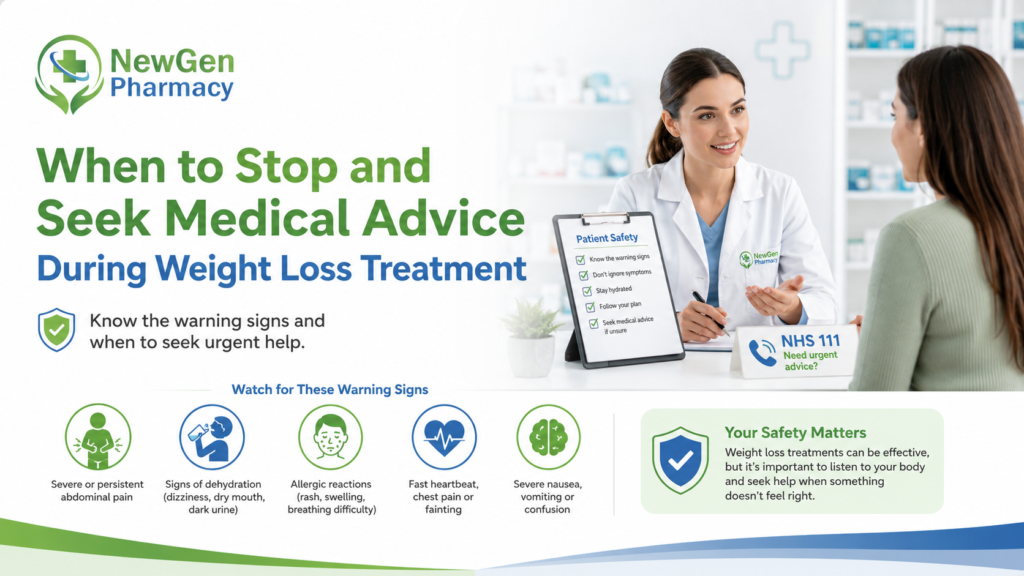
Weight loss treatment should support health and wellbeing. However, patients still need to know when symptoms require medical advice. Some mild side effects may improve with simple changes, but other symptoms need prompt review. This is especially important because weight managem
Constipation During Weight Loss Treatment: Causes, Prevention and When to Get Help
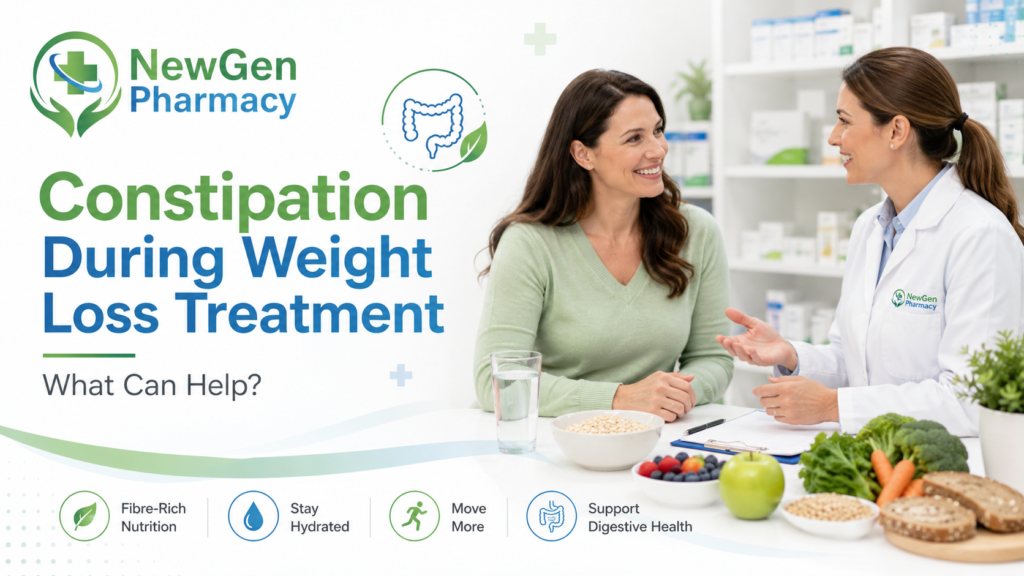
Constipation can happen during weight loss treatment, especially when appetite changes, food intake reduces, fluid intake drops, or activity levels fall. It can feel uncomfortable, frustrating, and sometimes worrying. However, many mild cases improve when patients act early and m
Feeling Sick on Weight Loss Treatment? Practical Steps That May Help
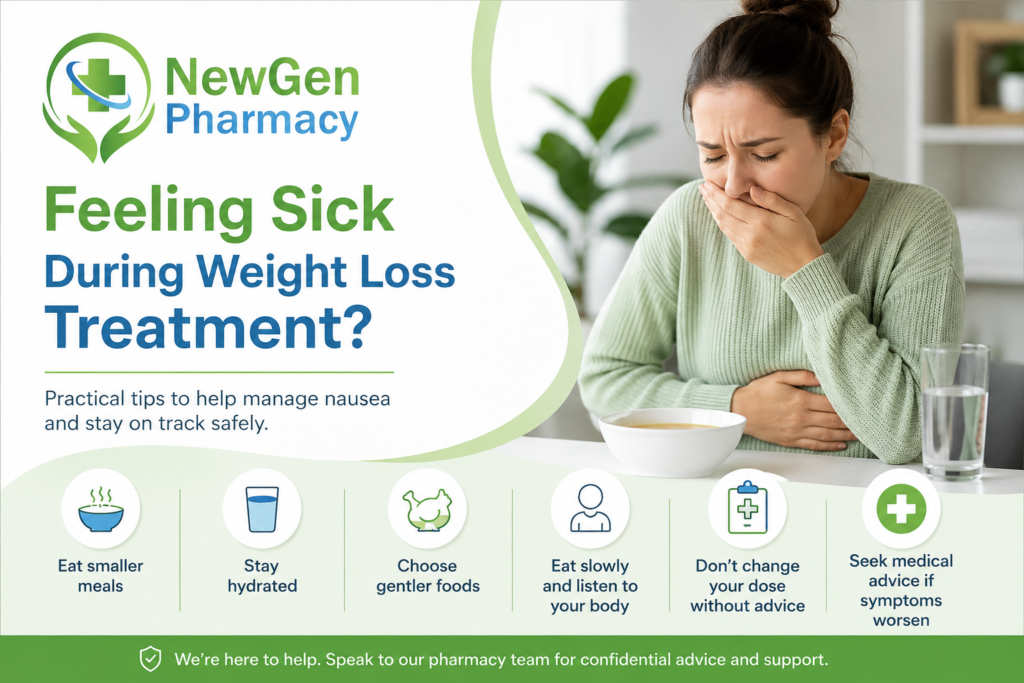
Feeling sick, nauseous, or unusually full can happen during some types of weight loss treatment. For many people, symptoms are mild and improve with small changes to food choices, meal size, hydration, and routine. For others, nausea may be more persistent and need advice from a
Eating Less Without Missing Key Nutrients: How to Stay Well During Weight Loss
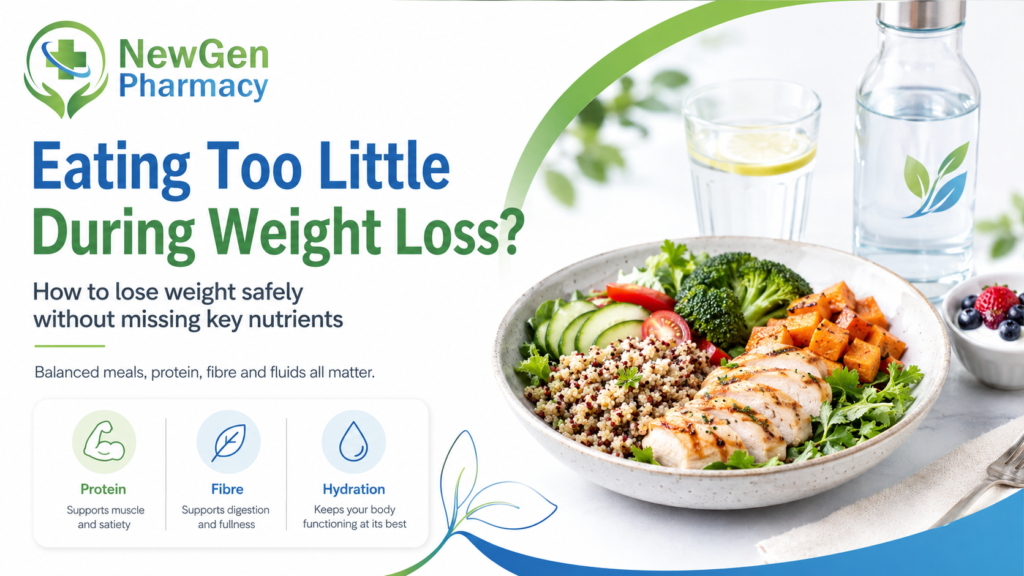
Eating less is often part of weight loss, but eating too little or eating poorly can cause problems. Healthy weight management should support your wellbeing, not leave you weak, dizzy, constipated, anxious around food, or missing important nutrients. This is especially important
Protein, Fibre and Hydration: The Simple Foundations of Weight Loss Support
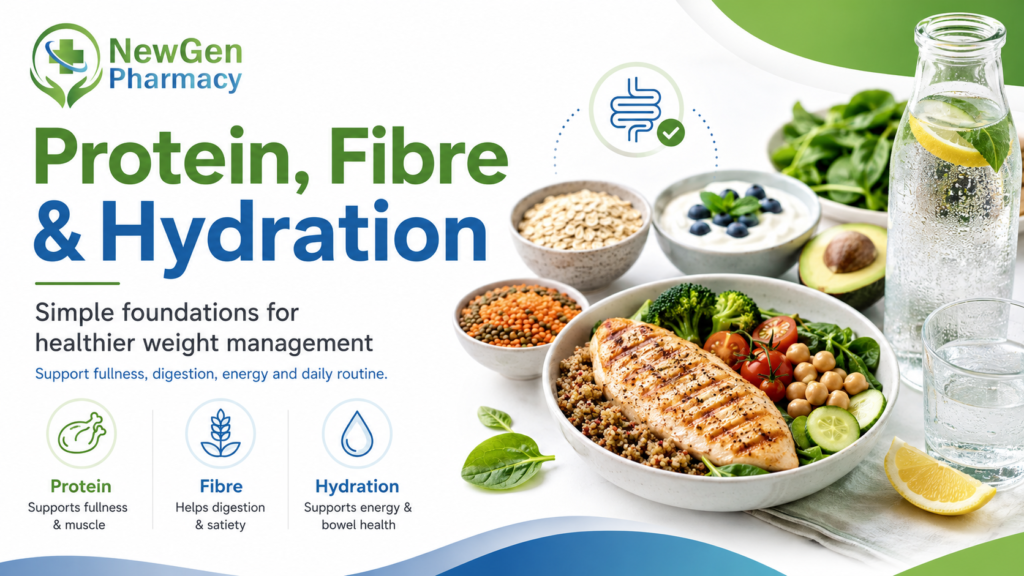
Weight management advice can sometimes feel complicated. Patients may hear about strict diets, calorie tracking, fasting plans, low-carbohydrate approaches, high-protein diets, supplements, and meal replacements. While some approaches may suit some people, many patients benefit m